Kaylee Mills Brenneman, LMHC
EMDR, DBT, CBT, Mental Health Counseling
Video visits across Florida · in person in Lakeland
Tampa residents · Florida telehealth (video)
Therapy by secure video for Tampa residents, with our therapy team, led by Kaylee Mills Brenneman, LMHC. No drive and no waiting room.


You’ll see Kaylee Mills Brenneman, LMHC, Diana Frances Smith, MS, RMFTI and 2 more.
Prefer a call first?
Request a visit
Tell us how to reach you and, if you like, what is going on. We confirm your coverage before your first visit.
Quick answer
Talk therapy for Tampa residents at Ascend Mind and Body is by secure video with our therapy team, led by Kaylee Mills Brenneman, LMHC, for anxiety, depression, relationships, life transitions, grief and stress. In-person sessions are at our Lakeland office, about 40 minutes away. Video sessions are for Florida residents, and the care coordinator gives you the first open times when you call. We work with many major commercial plans and offer self-pay options. Coverage varies by plan and service. Our team will confirm with you.
Pick a clinician and book a time that works for you.
EMDR, DBT, CBT, Mental Health Counseling
Video visits across Florida · in person in Lakeland
Registered marriage and family therapist intern
Video visits across Florida · in person in Lakeland
Registered mental health counselor intern
Video visits across Florida · in person in Lakeland
Booking opens the clinician’s Zocdoc calendar in a new tab, set to new-patient video visits. Prefer to talk to someone first? Use the form and a care coordinator will call you.
Four steps from booking to a plan you can follow, without leaving Tampa.
Pick a time on Zocdoc, or send the form and a care coordinator calls you back, usually within one business day.
Before the visit you receive a secure video link. Join from a phone, tablet or laptop, from a private spot in Florida.
Mostly a conversation with a purpose: what brings you in, what you want to change and how you would like to work together.
Most people start weekly, then space sessions out as things improve. Psychiatry can be added inside the same practice if medication may help.
Most Tampa patients choose video. If you would rather sit in the room, our Lakeland office is about 40 minutes away.
Recommended for Tampa
Serving Tampa, Hillsborough County
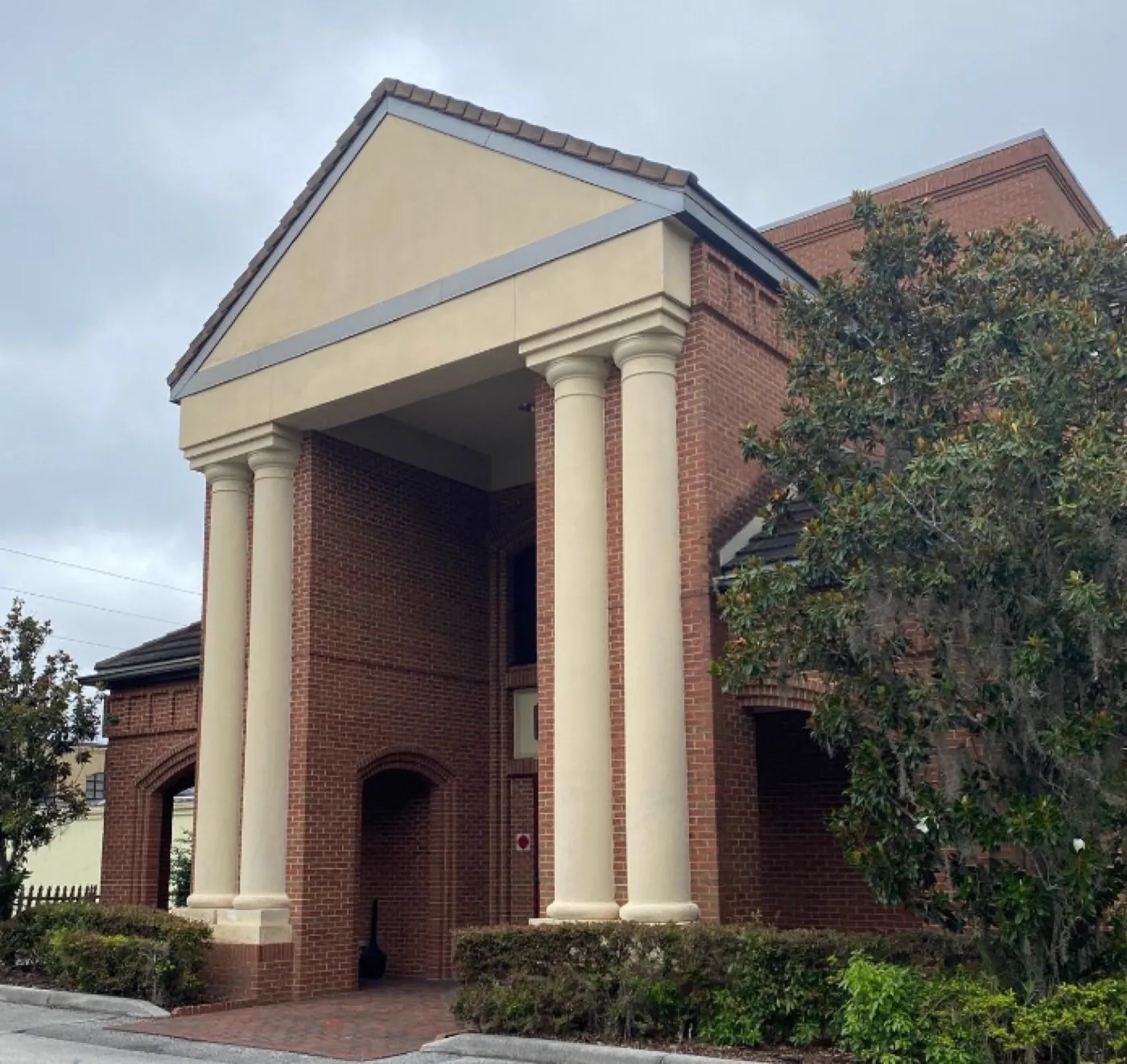
Prefer in person?
About 40 min from Tampa by car via I-4 E, outside rush hour
Tampa days are shaped by the road: I-275 into downtown, the Selmon Expressway, Dale Mabry at five o'clock. A weekly appointment that adds a drive on top of that is usually the first thing to get cancelled, which is the practical case for video. Your therapist joins from Lakeland, and you join from a private spot anywhere in Florida.
Three places Tampa clients make it work.
Why a statewide video team helps here. Tampa General Hospital's 2025 community health needs assessment, citing CMS provider registry data, counts about 721 Hillsborough residents for every mental health provider in 2024, against 693 for Florida overall. Behavioral health is also one of three priority areas the Healthy Hillsborough Collaborative chose for 2025. Video does not change those numbers, but it does mean you are not limited to therapists within driving distance of your neighborhood.
If you would rather be in the room. Face-to-face sessions are at our Lakeland office, about 40 minutes from central Tampa via I-4 E, measured outside rush hour.
Between sessions. Scheduled therapy is not crisis care. In an emergency, call 911; Tampa General Hospital on Davis Islands, St. Joseph's Hospital and AdventHealth Tampa all run emergency departments. The 988 Suicide and Crisis Lifeline answers calls and texts whenever a mental health crisis hits. When the person in crisis is a child or teen, Hillsborough County's youth Mobile Response Team is run by Ibis Healthcare. Partners and parents can look for family education and peer support through NAMI Hillsborough.
A call with the care team before booking is not a billed visit, so it is a low-stakes way to ask about fit. Ready to start? Book a video visit or request a callback, and tell the coordinator which hour of your week is easiest to protect.
We work with many major commercial plans and offer self-pay options. Coverage varies by plan and service. Our team will confirm with you.
Insurance questions go to our care team, who confirm your coverage with you before your first visit.
Call (863) 510-2624 or read how insurance works here.
The longer answers, one topic at a time.
You do not need a diagnosis or a polished explanation to begin. Most people come in because something feels heavier than it should: worry that will not switch off, a low mood that has lasted, a relationship under strain, or a change they did not choose. The first job is understanding what is going on, then matching you with the right approach and the right person.
Request a callbackAscend's therapy team is led by a Licensed Mental Health Counselor and Therapy Lead, with registered interns who practice under clinical supervision, as Florida requires for registered interns. When you call, a coordinator matches you with the right person for your concern and your schedule, and tells you whether your sessions will be in person at our Lakeland office or by secure video.
Kaylee Mills Brenneman, Ed.S, MEd, LMHC is a Licensed Mental Health Counselor and Therapy Lead with graduate training at the specialist level (Ed.S). She leads the therapy team, and her focus areas are DBT, CBT and mental health counseling. She is EMDR trained.
Alongside Kaylee, Diana Frances Smith, RMFTI, a Registered Marriage and Family Therapist Intern who works with couples and families by secure video, Skyler Anderson, RMHCI, a Registered Mental Health Counselor Intern whose focus is talk therapy and grief, and Ashley Huston, RMHCI, a Registered Mental Health Counselor Intern who is EMDR trained and provides talk therapy, practice under clinical supervision, as Florida requires for registered interns. Supervised intern sessions are a more accessible option, while the standard of care and documentation are the same.
Where therapy is not enough on its own, Ascend's psychiatry service for Tampa residents can evaluate medication for anxiety, depression, sleep problems, or other symptoms, coordinated inside the same organization. For a small group of adults with treatment-resistant depression that has not responded to therapy and standard medication, Ascend also offers ketamine therapy; it is given under the supervision of a licensed prescriber, it is never a first-line option, and individual responses vary.
At intake we ask what brought you in, how long it has been going on, what you have already tried, and your scheduling and budget constraints. You share only what you are ready to.
Worry, panic, and low mood often start with CBT; emotions that escalate quickly start with DBT-informed skills; obsessive thoughts and compulsions point to ERP; harsh self-criticism and old patterns often fit IFS; a specific traumatic memory may point to EMDR. The approach is chosen for you, not assigned at random.
If your situation needs something we do not provide, we will say so and refer you to the appropriate specialist inside Ascend or, if we genuinely cannot help, outside it.
If the approach or the fit is wrong after a few sessions, we change it, at no penalty. The fit between client and therapist is one of the strongest predictors of whether therapy helps.
Credential letters after a therapist's name are not decoration; they tell you exactly where someone is in their training and what oversight applies.
Both tiers deliver real, structured, evidence-based therapy. The differences are in licensure stage and independence of practice, not in whether the care is legitimate.
Tampa clients come to us for anxiety and panic, depression and low mood, relationship and family strain, life transitions, grief and loss, stress and burnout, and trauma. Each starts with the approach matched to what you bring in. Care is for adults 18 and older. For help deciding between therapy, medication or both, see anxiety and depression treatment in Tampa.
Constant worry, panic attacks, and avoidance, worked on with CBT and practical skills you use between sessions.
Read moreLow mood, lost interest, and the heaviness that makes ordinary days hard, worked on with structured, evidence-based therapy.
Read moreConflict, distance, or repeating patterns with a partner or family. Couples sessions are a separate service.
Read moreA move, a new role, a breakup, a diagnosis, or retirement that changes the plan.
Read moreThe loss of a person, a relationship, or the life you expected, given room without being rushed.
Read moreTrauma and PTSD care, including EMDR, has its own Tampa page with the details.
Read moreIf what you are experiencing feels like an immediate danger to yourself or someone else, call 988 or 911 now. For everything short of that, a first session is simply information, not a commitment.
Anxiety can look like constant worry, a racing mind at 2 a.m., panic attacks, or quietly avoiding the things that set it off. According to the National Institute of Mental Health, anxiety disorders are among the most common mental health conditions in U.S. adults. CBT works on the thought patterns and the avoidance that keep anxiety going, so your world stops shrinking around it. If obsessive thoughts and compulsions are part of the picture, ERP is the approach most often used. Read more about therapy for anxiety.
Depression is more than sadness. It often shows up as lost interest, poor sleep, low energy, and a flat sense that nothing will change. Structured therapy works on the patterns that keep it going and rebuilds routines one step at a time. If medication might help too, our psychiatry service can evaluate that inside the same practice. Read more about therapy for depression.
Conflict at home, distance from a partner, or family patterns that keep repeating can wear on everything else. Individual therapy helps you understand your side of the pattern and change what is in your control. When the work belongs with both partners, couples therapy for Tampa is a separate service.
A move to Tampa, a new job or a lost one, a divorce, becoming a parent, an empty nest, retirement, or a diagnosis that changes the plan can all knock you off balance, even when the change is a good one. Therapy gives you a place to sort out what you are feeling and decide what comes next. Read more about therapy for life transitions.
Grief does not follow a schedule, and it is not limited to death: the end of a relationship or the loss of the life you expected can hit just as hard. Therapy makes room for the loss without rushing you through it. Ascend is an LGBTQIA+ affirming practice, and care is delivered without anyone needing to explain or defend their identity first. Read more about grief and loss.
When work, caregiving, or a long stretch of pressure leaves you exhausted and short-tempered, therapy helps you separate what you can change from what you cannot, set workable boundaries, and recover basics like sleep. DBT-informed skills can help when emotions run hot.
 Illustrative
The match matters more than the acronym. What brought you in, not the one tool a practice happens to offer, should decide where you start.
CBT fits worry, panic, and depression; DBT-informed skills steady emotions that escalate quickly; ERP is the approach most often used for obsessive-compulsive symptoms; IFS fits harsh self-criticism and long-standing patterns; EMDR is used for traumatic memories that still feel raw. Most clients start with one primary approach, not all of them at once.
CBT looks at how thoughts, feelings, and actions feed each other, and gives you concrete tools to interrupt the loops that keep anxiety and depression going. Sessions are structured and practical, and much of the progress comes from small steps you try between sessions. It is one of the most widely studied forms of talk therapy.
Full DBT is a structured, multi-component program; our team uses DBT-informed skills, distress-tolerance and emotion-regulation techniques drawn from that model, for clients whose emotions escalate quickly or feel unmanageable. The goal is not to eliminate intense emotion, but to widen the gap between feeling something intensely and being overwhelmed by it.
ERP is the approach most often used for obsessive-compulsive symptoms. With your therapist, you approach the thoughts and situations that trigger the urge to check, clean, or seek reassurance, in planned steps you agree to in advance, and practice not answering the urge with the compulsion. Over time the anxiety loses its hold.
IFS treats the mind as made up of different "parts," some protective, some wounded, and works toward internal self-leadership rather than eliminating any part outright. It suits people who describe feeling "at war with themselves," including harsh self-criticism and patterns that started long ago. Its evidence base is newer than CBT's, and it is often combined with other approaches.
EMDR is a structured therapy for traumatic memories that uses bilateral stimulation, typically guided eye movements, while you briefly hold a distressing memory in mind. Two members of the team, Kaylee Mills Brenneman, LMHC, and Ashley Huston, RMHCI, are EMDR trained. Our PTSD and EMDR therapy in Tampa page explains it in depth.
A general starting guide, not a self-diagnosis tool. Many clients use more than one approach over time, and your therapist adjusts as the picture becomes clearer.
| If your main concern is | Approach most often used first |
|---|---|
| Constant worry, panic, or avoidance | CBT |
| Low mood, lost interest, or depression | CBT-based therapy, plus a psychiatric evaluation if medication may help |
| Emotions that escalate quickly or feel unmanageable | DBT-informed skills |
| Obsessive thoughts or compulsions | ERP |
| Harsh self-criticism or long-standing patterns | IFS |
| A traumatic memory that still feels raw | EMDR, covered on our PTSD and EMDR page |
| Strain with a partner | Individual therapy, or couples therapy as a separate service |
Trauma does not always show up as flashbacks. It can look like anxiety, a short fuse, trouble sleeping, or steering around anything that resembles what happened. Good trauma care builds stability and coping skills first and moves at a pace you can hold, so you are never pushed to relive more than you are ready for.
For Tampa clients, trauma-focused therapy and EMDR with our EMDR-trained therapists are covered in depth on PTSD and EMDR therapy in Tampa, including how the work is paced and where sessions happen. Our condition guides on PTSD and trauma therapy go further still.
No polished explanation is required. "Something is not right and I want help" is a completely normal starting point.
Before the visit. Fill out intake forms online, or call the office and we will help you match based on your situation and schedule. You do not have to write out the details of what is going on to book.
During your first session. Its length is confirmed when you book. Your therapist asks what brought you in, how it shows up day to day, and what you want to be different, at a level of detail you control. The first session is a two-way evaluation: you are assessing fit as much as your therapist is assessing your needs.
After the session. You will typically schedule your next visit before you leave. Weekly sessions are standard to start. If a specific approach such as CBT, ERP, or EMDR is recommended, your therapist explains what it involves, and gets your agreement, before starting it.
Most of the change happens between sessions: a skill practiced in a real moment, a small step toward something you have been avoiding, a conversation you finally have. Sessions are where you plan those steps and make sense of how they went. Your therapist checks in on the pace, and you can slow it down at any time.
The short answer: you can see us in person at our Lakeland office or by secure video anywhere in Florida, and many clients mix the two.
The American Psychological Association's telepsychology guidance supports video-based therapy as an effective way to deliver care for most outpatient concerns, and Florida allows telehealth therapy for clients who are physically in Florida. A South Tampa or Westchase client who cannot make the drive to Lakeland during a workday can do ongoing sessions by video, and someone who prefers a room can see their therapist at our Lakeland office. Clients east of the city can read about therapy in Brandon, and clients to the north about therapy in Lutz.
"Will my employer or family find out?" No. What you discuss in therapy is protected under HIPAA and Florida confidentiality law. The only exceptions are the standard, legally required ones: imminent danger to yourself or someone else, or suspected abuse of a child or vulnerable adult.
"What if I get overwhelmed in session?" Your therapist watches for that and has grounding tools ready, and you can pause or change the pace at any time.
"What if I am not sure therapy is what I need?" You do not need to have it figured out. Part of the first session is working out what would actually help, whether that is therapy, a psychiatric evaluation, or both. If the strain sits mostly between you and a partner, couples therapy for Tampa couples is the better place to start.
Talk therapy and psychiatry are separate services with separate scopes. Where Ascend differs from a standalone therapy practice is that both exist inside the same organization, so a Tampa client whose anxiety or depression might benefit from medication can be referred internally to our psychiatry team for an evaluation without starting over with a new intake. Each provider still makes independent clinical decisions; coordination just means faster, smoother handoffs.
For the small subset of clients with treatment-resistant depression who have not responded adequately to therapy and standard medication management, Ascend also offers ketamine therapy, evaluated and treated in person at the Wesley Chapel clinic. It is given under the supervision of a licensed prescriber for treatment-resistant depression and select indications; it is not a first-line option, individual responses vary, and it is never presented as a guaranteed fix.
Florida telehealth sessions at Ascend run through a HIPAA-compliant video platform, not a consumer video-call app. For your side of the call, find a private space where you will not be interrupted, use headphones if you are in a shared living situation, and treat the session with the same confidentiality expectations as an in-person visit. Your therapist will confirm your location at the start of each telehealth session, since Florida law requires the client to be physically present in Florida at the time of the session.
Insurance questions go to our care team, who confirm your coverage with you before your first visit. We will not tell you a plan covers something it does not. If you also need a psychiatric medication evaluation, that is a separate service and we will explain how it is handled.
The full fee for whichever option fits is shared with you before you book, so there are no surprises. Therapy is also an eligible expense under most HSA and FSA plans.
Insurance questions go to our care team, who confirm your coverage with you before your first visit.
We do not ask you to simply trust that things are improving. Your therapist may use brief, standardized measures, such as anxiety or depression questionnaires, at intake and periodically afterward, so both of you have an objective marker of change alongside how you subjectively feel. If those measures and your own sense of progress are not moving after a reasonable number of sessions, that is the trigger for the conversation about adjusting the method, switching clinicians, or referring out.
Call the therapy line or request a callback online. A therapy coordinator calls you within one business day.
The coordinator asks a few questions about what is going on and when you are free, then matches you with the right therapist and tells you whether sessions will be by video or in person in Lakeland.
Insurance questions go to our care team, who confirm your coverage with you before your first visit.
At a pace you control, with the length confirmed when you book. Weekly sessions are standard to start, and you can change the approach or the therapist if the fit is wrong.
A supervised registered-intern session is not a discount version of therapy; it is the same structured, evidence-based approach delivered by a clinician earlier in licensure and under active, ongoing supervision. The difference is licensure stage, not a lower standard of care.
Ascend has no Tampa therapy office: therapy clients are seen by secure video anywhere in Florida, or in person at our Lakeland office. Our Tampa office on Moran Road is home to primary care. Care is for adults 18 and older.
Ascend Mind and Body
832 Florida Ave S Ste 1, Second Floor
Lakeland, FL 33801
Phone: (863) 510-2624
Hours: Monday through Friday, 9:00 AM to 5:00 PM. Get directions.
| From | Measured drive |
|---|---|
| Tampa (city center) | About 40 minutes via I-4 E |
Clients from across Tampa and Hillsborough County, including Carrollwood, Westchase, New Tampa, Temple Terrace, South Tampa, and Hyde Park, meet their therapist by secure video, as can anyone in Florida.
Ascend's Tampa office on Moran Road is home to primary care; therapy is in person at our Lakeland office and by Florida telehealth statewide. Because the practice also runs psychiatry and, at Wesley Chapel, ketamine therapy, a Tampa therapy client who also needs a medication evaluation can be referred inside the same organization rather than starting over elsewhere.
Related Tampa care: Florida telehealth psychiatry for Tampa when medication support is indicated alongside therapy, and ketamine therapy for Tampa for treatment-resistant depression that has not responded to therapy and standard medication.
Therapy helps most people who stick with it, but it is not instant, it is not guaranteed, and it works best when the approach fits what you are dealing with and you can be honest with your therapist about how it is landing. Individual responses vary.
We are not going to promise that a set number of sessions will fix everything, or that any single approach works the same way for every person. Research summarized by the National Institute of Mental Health shows psychotherapy helps the majority of people who engage with it consistently, but helpful on average is not the same as guaranteed for you.
What we can tell you: matching the approach to the problem, and a good fit between you and your therapist, are two of the biggest levers in whether therapy helps. That is why we match at intake, and why switching approach or therapist is always on the table.
None of these mean therapy has failed; they usually mean the current approach or fit has, and changing it is a normal part of good care, not a last resort.
For a deeper look, see: PTSD, trauma therapy, anxiety, depression, grief and loss, and life transitions.
This page is educational and does not replace an individualized clinical evaluation.
Yes. Therapy is available by secure video anywhere in Florida, and in person at our Lakeland office, 832 Florida Ave S, Suite 1. We work with adults on anxiety, depression, relationship strain, life transitions, grief, stress, and trauma, and psychiatry is available in the same organization if medication support is indicated.
Our team draws on cognitive behavioral therapy (CBT), DBT-informed skills, Internal Family Systems (IFS), exposure and response prevention (ERP), and EMDR, along with trauma-focused care. The right starting approach depends on what brought you in, and intake matching identifies it rather than assigning one method to everyone.
At intake we ask what brought you in, what you have already tried, and your schedule and budget, then match you with the therapist and approach that fit. If the approach or the fit is wrong after a few sessions, we change it, at no penalty.
Kaylee Mills Brenneman, Ed.S, MEd, LMHC, a Licensed Mental Health Counselor and Therapy Lead, leads the team. Diana Frances Smith, MS, RMFTI, a Registered Marriage and Family Therapist Intern, sees couples and families, and Skyler Anderson, RMHCI, and Ashley Huston, RMHCI, are Registered Mental Health Counselor Interns. All three practice under clinical supervision, as Florida requires for registered interns. Kaylee and Ashley are EMDR trained.
Insurance questions go to our care team, who confirm your coverage with you before your first visit. We will not tell you a plan covers something it does not. If you also need a psychiatric medication evaluation, that is a separate service that may be billed differently, and we will explain it clearly.
Yes. Sessions run by secure video for clients who are physically in Florida, and research supports telehealth outcomes comparable to in-person care for many concerns. Many Tampa clients mix video sessions with in-person visits at our Lakeland office, and we will talk through which fits you.
In-person therapy is at our Lakeland office, 832 Florida Ave S Ste 1, Second Floor, Lakeland, FL 33801, about 40 minutes from central Tampa via I-4. Most Tampa clients meet their therapist by secure video; the Lakeland office is about 40 minutes east on I-4.
Its length is confirmed when you book. Your therapist asks what brought you in, how it shows up day to day, and what you want to be different, at a level of detail you control. You will usually schedule your next visit before you leave, and weekly sessions are standard to start.
It varies. Some people come for a focused stretch of weekly sessions on one problem; others stay longer to work on patterns that have built up over years. We do not promise a fixed timeline before a full assessment, and we review progress with you along the way.
Yes. Trauma-focused care and EMDR are available, and our PTSD and EMDR therapy in Tampa page explains how the work is paced and where sessions happen.
Often, yes. Where clinically indicated, medication can help with anxiety, depression, or sleep problems while therapy does the deeper work. Because Ascend also runs a psychiatry service, therapy and medication management can be coordinated inside the same organization instead of sending you to a separate practice. Each provider still makes independent clinical decisions.
No. What you discuss in therapy is protected under HIPAA and Florida confidentiality law. The only exceptions are the standard, legally required ones: imminent danger to yourself or someone else, or suspected abuse of a child or vulnerable adult. Your clinician reviews confidentiality and its limits in the first session.
Yes. Call (863) 510-2624 with questions about modality, telehealth versus in person, or which clinician fits before you book. That conversation does not commit you to anything; the first billed appointment is the initial session itself.
A reliable internet connection, a device with a camera and microphone, and a private space where you will not be interrupted. Sessions run on a HIPAA-compliant video platform, and Florida law requires you to be physically located in Florida at the time of the session.
The therapy described on this page is for adults 18 and older. If you are seeking care for a child or teen, call the office and we can point you toward the right resource.
Yes, as long as you are physically in Florida and somewhere you will not be overheard. A parked car works for many people, including a quiet upper level of a downtown garage, though it is worth testing the connection there first. A small meeting room at work is another option. What does not work is joining while you are driving on I-275 or the Selmon; sessions happen only when you are parked or sitting still. Ask the coordinator for a time that matches a gap you already have.
Call 911 in an emergency, or go to an emergency department such as Tampa General Hospital, St. Joseph's Hospital, AdventHealth Tampa or AdventHealth Carrollwood. The 988 Suicide and Crisis Lifeline takes calls and texts at any hour. If the person struggling is a child or teen, Ibis Healthcare runs Hillsborough County's youth Mobile Response Team. Our therapy team is not an emergency service, so once you are safe, tell your therapist what happened so the plan can be adjusted.
Yes. NAMI Hillsborough, the county's affiliate of the National Alliance on Mental Illness, is the place for relatives to look for education and peer support; check namihillsborough.org for what is running now. If you are also caring for an aging parent, Senior Connection Center is the aging and disability resource center for Hillsborough County, reachable through the Elder Helpline at 1-800-963-5337. If most of the strain sits between you and a partner, couples therapy by video is a separate service you can ask about.
Start with what brought you in. For a traumatic memory that still feels raw, Kaylee Mills Brenneman, LMHC, and Ashley Huston, RMHCI, both work with EMDR. For grief, Skyler Anderson, RMHCI, a registered mental health counselor intern, includes grief in her work. For strain with a partner or family, Diana Frances Smith, MS, RMFTI, sees couples and families. For anxiety, low mood or stress, any of the individual therapists can begin, and Kaylee also brings DBT and CBT training. Not sure? Send the form and a coordinator will match you.
Mainly two things: whether your sessions are with a licensed therapist or a supervised registered intern, whose sessions are offered at a lower rate, and the details of your own plan, which the care team checks with you. That is why no prices are printed here; you hear the exact fee before you book. Keep your insurance card and the plan holder's name nearby when they call, and say whether you want video from Tampa or sessions in Lakeland.
Every Ascend Mind and Body therapist holds a Florida license or a state registration: LMHC for Kaylee Mills Brenneman, RMHCI for Skyler Anderson and Ashley Huston, and RMFTI for Diana Frances Smith. You can look up any of those credentials on the Florida Department of Health's license verification search, the same check that works for any therapist you are considering in Tampa. Registered interns are listed there too; their registration means they practice under a qualified supervisor.
A care coordinator usually calls back within one business day of a request. Kaylee's and Skyler's booking buttons on this page open their live calendars, so you can see real openings yourself; Ashley and Diana are booked by phone or through a callback. Talking with the care team before you book is not a billed appointment, and the first charge is for the first session itself. Openings change from week to week, so the calendar or the coordinator gives the honest answer.
Book a video visit online, or send a request and a care coordinator will call you back. Insurance questions go to our care team, who confirm your coverage with you before your first visit.