
First, the thing that can't wait for a scheduled session. When someone is in immediate danger, the number to call is 911, not a booking line. The Suicide and Crisis Lifeline answers 24/7 at 988, by call or text. For substance abuse help, SAMHSA's National Helpline is 1-800-662-4357.
Fit beats proximity: choosing a therapist by specialty, not ZIP code
Therapy outcomes ride heavily on the match between you and the person across from you. Their training has to fit your problem, their style has to fit your temperament, and their calendar has to fit your life. When your candidate pool is limited to the offices near you, you compromise on at least one of those, and people in smaller Florida towns often compromise on all three.
Statewide telehealth removes the radius. A trauma survivor in a rural county can work with an EMDR-trained clinician who would otherwise be out of reach. A shift worker can schedule around a rotating week instead of around one office's lobby hours. Someone who has already burned through the local options gets a genuinely new start rather than a repeat.
That's the logic behind how Ascend matches patients. When our team calls you back, we ask what you're working through and what your schedule really looks like, then pair you with the clinician on our team whose training and availability line up, wherever in Florida you happen to live.
Statewide reach also protects the work you've already done. Life in Florida involves a lot of moving: a job shifts you from one coast to the other, a lease ends, a semester starts. When your therapist is licensed for the whole state and sees you by video, none of that interrupts therapy. The relationship you spent months building doesn't reset because your address did, and there's no scramble to find someone new in an unfamiliar town during what is often already a stressful transition.
Your Telehealth Therapy TeamThe therapists who cover the whole state

Skyler Anderson, RMHCI
Registered Mental Health Counselor Intern · Florida
A Registered Mental Health Counselor Intern in Florida focusing on trauma, PTSD, chronic illness, and anxiety. He's available statewide by telehealth, practicing under the licensed clinical supervision of Kaylee Mills Brenneman, LMHC; ask the care coordinator about current in-person options.
Accepting new patients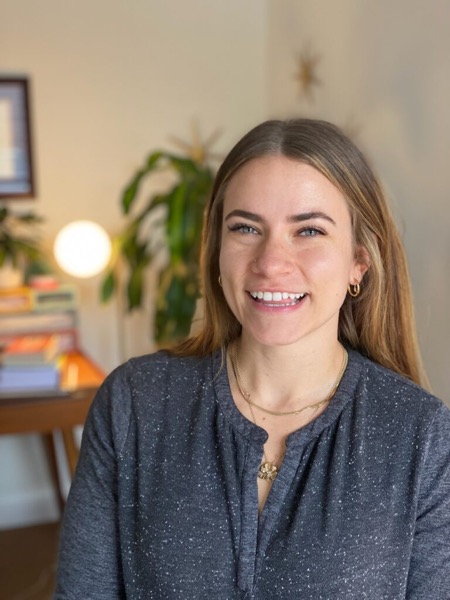
Kaylee Mills Brenneman, LMHC
Licensed Mental Health Counselor · Clinical Supervisor · Florida
A Licensed Mental Health Counselor and Clinical Supervisor, and the lead therapist on our Lakeland team. She takes on individual and family work, is in-network with UnitedHealthcare, and supervises the practice's graduate interns, whose sessions are self-pay.
Insurance accepted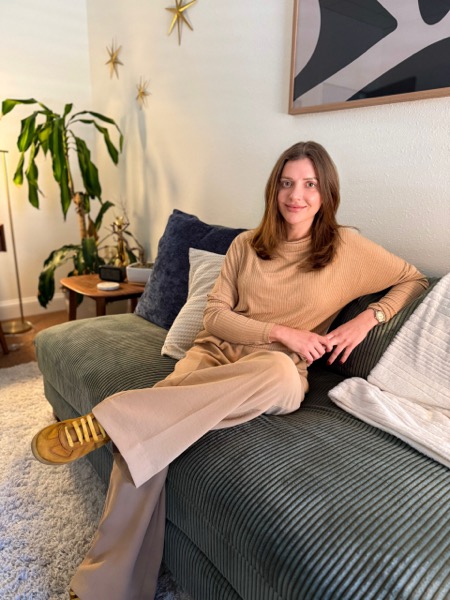
Ashley Huston
Graduate Student Intern under licensed clinical supervision · EMDR-trained
A graduate student intern practicing under licensed clinical supervision and trained in EMDR. Her work pairs EMDR therapy for trauma with mind-body approaches for ADHD, anxiety, and depression, offered at a reduced rate under supervision.
Reduced-fee supervised sessionsEvery clinician on the team is credentialed to see you anywhere in Florida over HIPAA-compliant video.
What people bring to these sessions
The concerns that walk through our virtual door most often:
- Depression and anxiety
- PTSD and trauma, with EMDR available
- Grief and loss
- Adult ADHD
- Chronic illness and health-related stress
- Adjustment disorders and life transitions
- Mood and stress regulation
- Family and relational concerns
One honest boundary: Ascend doesn't currently offer dedicated substance use counseling via telehealth. If a substance use disorder is the primary thing you need treated, SAMHSA's National Helpline at 1-800-662-4357 can refer you to a program built for it, and that referral will serve you better than a service pretending to be one.
The methods behind the conversation
Our clinicians work in CBT, DBT-informed therapy, EMDR, IFS, and ERP, and the format can be individual, couples, or family sessions, all over secure video. Which approach gets used, and in what mix, is a clinical decision made with you after intake rather than a menu you're expected to order from.
It's worth being straight about what any of this can deliver. Therapy helps a great many people, and specific methods carry meaningful research support for specific problems, but no honest clinic guarantees a result. What consistency, a well-matched clinician, and an evidence-based method reliably produce is a fair chance at real change, reviewed openly as you go.
Therapy with a prescriber down the hall, even when the hall is virtual
Here's the structural difference between Ascend and a therapy-only platform. Some portion of therapy patients eventually face a medication question: symptoms that aren't budging, sleep that won't stabilize, an old prescription that needs revisiting. On a standalone platform, that moment means finding a separate practice, repeating your history to someone new, and hoping your two clinicians ever compare notes.
At Ascend, therapy sessions are coordinated with our psychiatry team whenever medication management becomes part of the plan. Our Florida telehealth psychiatry service runs statewide on the same video platform, so the handoff is an internal conversation instead of a cold referral, and your therapist stays in the loop after it. The reverse path works too; psychiatry patients who need talk therapy get matched inside the practice.
How the first month usually goes
It starts with a callback from our team, where we match you with a Florida-licensed therapist and get you scheduled, usually within one business day. Intake forms arrive before your first appointment so the session itself isn't consumed by questionnaires.
The intake session is deliberately thorough: your situation, your history, and what you want out of this, without rushing and without judgment. From there you and your therapist build a treatment plan that fits your actual life, and settle into weekly or biweekly video sessions. Cadence gets revisited as things evolve; it's a plan, not a subscription tier.
Fees, superbills, and insurance, stated plainly
Telehealth talk therapy at Ascend is fee-for-service. Coverage for therapy varies by plan, and our insurance page covers the details; Kaylee Mills Brenneman is in-network with UnitedHealthcare, and supervised intern sessions with our graduate clinicians run at a reduced self-pay rate. For everything out-of-network, we provide superbills, and many insurance plans offer partial reimbursement when you submit one.
Exact pricing is walked through when our team calls you back, and you can get current rates any time by calling (863) 510-2624. No figure gets sprung on you after you've already invested in a first session.
Video, office, or a mix of both
Plenty of patients never want to see a waiting room again, and telehealth suits them completely. Others like a room with a door for the heavier sessions. You don't have to pick a side: the care coordinator can arrange office visits at our Wesley Chapel, Tampa, or Lakeland offices alongside video sessions, and you keep the same therapist either way.
Two practical notes. Florida licensure requires that you be inside Florida while your session takes place, wherever in the state that is. And the technical setup for video sessions is minimal: a private spot, a decent connection, and any phone, tablet, or computer with a camera.
Making a home session actually feel private
The most common worry about online therapy has nothing to do with technology. It's the question of where, exactly, you're supposed to talk about hard things when the house is full. Patients solve this in practical, unglamorous ways: a bedroom with a fan running for sound cover, a parked car in the driveway, headphones and a closed office door over a lunch break. None of that is a workaround; it's a normal part of how telehealth therapy gets done, and your therapist has seen all of it before.
It's worth naming the other side too. If your living situation never gives you a safe or private place to speak freely, say so when we call you back. That can be a reason to lean on in-person sessions at one of our offices, and sorting that out honestly at the start beats spending sessions half-guarded because someone might hear you through a wall.
If a session ever isn't enough, don't wait for the next one. Call or text 988 for the Suicide and Crisis Lifeline, call 911 in an emergency, or call SAMHSA at 1-800-662-4357 for substance abuse help.
Frequently asked questions about online therapy in Florida
Is telehealth therapy as effective as in-person therapy?
Research shows telehealth therapy produces comparable outcomes to in-person therapy for most outpatient presentations including anxiety, depression, PTSD, and grief. Some patients actually find it easier to open up from the comfort of their own space.
What types of therapy are available via telehealth?
Our telehealth therapists offer CBT, DBT-informed therapy, EMDR, IFS, and ERP. Individual therapy, couples therapy, and family therapy are all available via secure video.
Do you accept insurance for telehealth therapy?
Coverage for therapy varies by plan; see our insurance page. Other sessions are fee-for-service, with superbills provided for out-of-network reimbursement. Supervised intern sessions are available at a reduced rate.
Can I switch between telehealth and in-person sessions?
Yes. Many patients use a hybrid model: some sessions in person at our Wesley Chapel, Tampa, or Lakeland offices, and others via telehealth when it's more convenient. You can switch between formats with the same therapist.
How do I know if telehealth therapy is right for me?
Telehealth therapy works well for most people. It's especially convenient if you live far from our offices, have a busy schedule, or feel more comfortable in your own space. When our team calls you back, we can help you decide what format works best.