Kaylee Mills Brenneman, LMHC
EMDR, DBT, CBT, Mental Health Counseling
Video visits across Florida · in person in Lakeland
Lutz residents · Florida telehealth (video)
Therapy by secure video for Lutz residents, with our therapy team, led by Kaylee Mills Brenneman, LMHC. No drive and no waiting room.


You’ll see Kaylee Mills Brenneman, LMHC, Diana Frances Smith, MS, RMFTI and 2 more.
Prefer a call first?
Request a visit
Tell us how to reach you and, if you like, what is going on. We confirm your coverage before your first visit.
Quick answer
Our therapy team, led by Kaylee Mills Brenneman, LMHC, sees Lutz residents by secure Florida telehealth from our Lakeland office, with open times on the booking calendars below or by callback. If you would rather be seen in person, our Lakeland office is about 50 minutes from Lutz. Ascend has no Lutz office. Telehealth visits are for Florida residents. We work with many major commercial plans and offer self-pay options. Coverage varies by plan and service. Our team will confirm with you.
Pick a clinician and book a time that works for you.
EMDR, DBT, CBT, Mental Health Counseling
Video visits across Florida · in person in Lakeland
Registered marriage and family therapist intern
Video visits across Florida · in person in Lakeland
Registered mental health counselor intern
Video visits across Florida · in person in Lakeland
Booking opens the clinician’s Zocdoc calendar in a new tab, set to new-patient video visits. Prefer to talk to someone first? Use the form and a care coordinator will call you.
Four steps from booking to a plan you can follow, without leaving Lutz.
Pick a time on Zocdoc, or send the form and a care coordinator calls you back, usually within one business day.
Before the visit you receive a secure video link. Join from a phone, tablet or laptop, from a private spot in Florida.
Mostly a conversation with a purpose: what brings you in, what you want to change and how you would like to work together.
Most people start weekly, then space sessions out as things improve. Psychiatry can be added inside the same practice if medication may help.
Most Lutz patients choose video. If you would rather sit in the room, our Lakeland office is about 50 minutes away.
Recommended for Lutz
Serving Lutz, Hillsborough and Pasco Counties
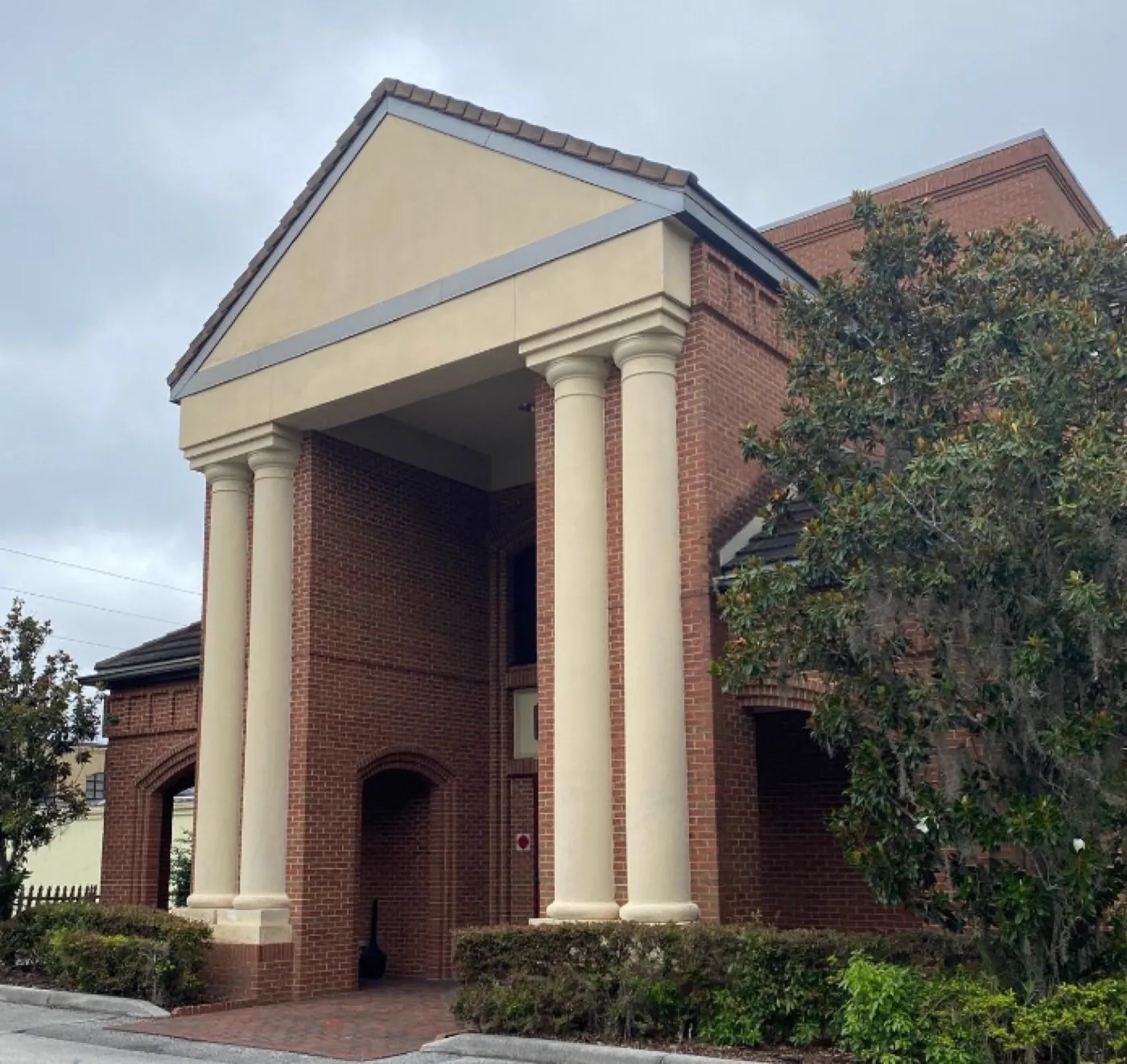
Prefer in person?
About 50 min from Lutz by car via I-75 S and I-4 E, outside rush hour
Lutz does not sit neatly in one county. The census community is in Hillsborough, while the Lutz ZIP codes run north into Pasco as far as SR 54, and which side you live on changes some of the local resources below. Your therapy does not change: sessions are by secure video with therapists licensed or registered in Florida, so a home off Dale Mabry Highway and one near SR 54 get the same team.
A standing weekly hour is easier to protect when it does not depend on US 41, I-275 or the Veterans Expressway. Take it from home, from a closed room at work, or from your car once it is parked; just be in Florida when the session starts. If you would rather meet in person, the Lakeland office at 832 Florida Ave S is about 50 minutes from Lutz outside rush hour, about 47 miles by I-75 S and I-4 E. See the Lakeland office.
Picking a starting point. Each card books one specific, named therapist rather than a rotating pool.
Local help between sessions. These are emergency and community resources, not Ascend Mind and Body services:
When you are ready, request a visit through the form, and tell the coordinator which side of the line you live on if you would like help finding county resources.
We work with many major commercial plans and offer self-pay options. Coverage varies by plan and service. Our team will confirm with you.
Insurance questions go to our care team, who confirm your coverage with you before your first visit.
Call (863) 510-2624 or read how insurance works here.
The longer answers, one topic at a time.
Start with geography. Lutz straddles the Hillsborough and Pasco line, which is part of why its errands and services scatter in several directions. Ascend has no Lutz office; our offices bracket the town, with Wesley Chapel (psychiatry) to the northeast and Carrollwood (primary care) to the south, while in-person therapy is at our Lakeland office. That is why most Lutz therapy clients meet their therapist by secure video.
Therapy is structured differently, and it's worth being precise about why. A therapy caseload doesn't need an exam room, a scale, or a blood draw. It needs the right clinician matched to the right person, meeting reliably, week after week. So Ascend runs its talk-therapy team as a telehealth-first service: the clinicians see Florida residents by HIPAA-secure video, and every supervised case runs under licensed clinical supervision. The practical result for someone in Cheval or anywhere else in the 33548 to 33559 ZIPs is that your weekly hour never depends on being somewhere by a set hour, and the roster you choose from is the whole team, not whoever happens to sit in the nearest suite.
If you genuinely want to be in a room with your clinician, in-person sessions are at our Lakeland office, about 50 minutes away outside rush hour; tell the coordinator when you call, and we won't promise a chair that doesn't exist in Lutz. There's no Ascend office here, and we won't imply one.
Therapy is unusual among health interventions in that the primary outcome measure is your own report of how you feel, which is exactly the faculty the problem tends to distort. That is a real methodological difficulty and it is why "am I actually getting better" is one of the hardest questions to answer honestly from inside it. There are, however, better and worse ways to try.
Brief standardized measures help more than people expect. A short depression or anxiety questionnaire, completed every few weeks, produces a line rather than a feeling, and the line is much harder to argue with than a memory. It routinely shows two things. That people in a bad week believe they have made no progress at all when the score says otherwise. And, occasionally, that someone who reports feeling fine has a score that has barely moved, which is worth knowing before another three months go by.
Function is the other measure, and arguably the better one. Not "do I feel happy" but: am I doing things I had stopped doing. Am I sleeping through more nights. Have I gone back to the gym, answered the messages, taken the call from my sister, gone to the event I would previously have cancelled. Symptom relief and functional recovery do not always move together, and the functional questions catch progress that the mood questions miss.
Timelines vary enormously and any specific promise about them should be treated with suspicion. Structured, focused work on a well-defined problem such as panic or a specific phobia can produce noticeable change within a couple of months. Trauma processing, long-standing patterns, and complex grief run longer. Nothing here is treated as certain to respond, and a clinician who tells you otherwise is selling something.
The intake conversation exists for the same reason. The research on what makes therapy work keeps circling back to the working relationship between client and therapist, and you cannot shortcut that by picking whoever is nearest. When intake is not constrained by a single office's staff, the question changes from "who has an opening near me" to "who actually fits this person": the trauma history, the preference for structure or space, the budget, the schedule.
There is also a privacy dividend that Lutz people mention unprompted. This is a place with long memories and overlapping circles, where the person ahead of you in the checkout line might coach your kid's team. A video session removes the small social calculus of an office visit entirely, which for some clients is the thing that finally makes calling feel doable. We think that is a perfectly good reason, and we do not need you to justify it.
What is fair to expect is a review. Somewhere around session six to eight, a good therapist will stop and take stock explicitly: here is what we set out to work on, here is what has moved, here is what has not, here is what I suggest we do about that. If that conversation has not happened by then, you are entitled to start it yourself. Therapy that continues indefinitely without anyone ever asking whether it is working is not neutral. It is a use of your time and money that nobody is auditing.
Lutz schedules have a particular texture: work in one county, school in another, and everything mediated by whichever artery is misbehaving that afternoon. A therapy habit survives that only if it's cheap to keep, in time as much as money. So the appointment structure here is built for repeatability. Same therapist, same weekly slot, a link that arrives on its own, and nothing else to manage. When something unmovable collides with your hour, a school event at the last minute, a shift swap, you reschedule by message instead of forfeiting the week.
What you need at your end stays minimal on purpose: a phone, tablet, or computer with a camera, a connection that can hold a video call, and a private corner of wherever you are in Florida that day. Clients have taken sessions from a home office off Lutz-Lake Fern Road, a break room with the door locked, and more than one parked car. Your therapist has seen it all and cares about exactly none of the scenery.
The point isn't convenience for its own sake. Therapy's benefit compounds with attendance, and attendance is a logistics problem long before it's a motivation problem. Solve the logistics once and the motivation gets a fair fight.
Four names you'd actually encounter. Kaylee Mills Brenneman, Ed.S, MEd, LMHC, is a licensed mental health counselor who leads the Ascend Lakeland therapy team and works in DBT, CBT and mental health counseling; she is also EMDR trained.
Skyler Anderson, RMHCI, focuses on talk therapy and grief. RMHCI stands for Registered Mental Health Counselor Intern, which we state plainly: Skyler has finished graduate training and is completing Florida's registered internship under clinical supervision, as the state requires for registered interns, and sessions are available at a reduced fee because of that stage of licensure. It's an honest trade, a rate that's easier to sustain in exchange for a clinician earlier in their career, with a licensed supervisor reviewing the work. Ashley Huston, RMHCI, a registered intern working under licensed clinical supervision, is an EMDR-trained clinician who provides talk therapy, and Diana Frances Smith, MS, RMFTI, a Registered Marriage and Family Therapist Intern booked by phone or callback, rounds out the roster with couples and family therapy.
The full roster with photos, modalities, and licensure lives on the providers page, filtered to therapy and counseling. Request a specific clinician when booking, or let intake do the matching; both routes are normal.
The caseload spans the whole outpatient range. On the anxiety side that means generalized anxiety, social anxiety, panic disorder, health anxiety, and agoraphobia. Depression shows up in several forms we treat: major depressive episodes, persistent depressive disorder, postpartum depression, and seasonal patterns that reliably arrive when the year darkens. When medication may help alongside therapy, see psychiatry in Lutz.
Trauma work is a particular strength of this roster, covering childhood trauma, accidents, medical trauma, the aftermath of domestic violence, combat-related PTSD, and complex trauma, with EMDR available for reprocessing. Grief and loss get real clinical respect here, including anticipatory grief, complicated grief, and pet loss, which people apologize for far too often. ADHD-related challenges, emotional dysregulation, executive function strain, relationship friction, are common threads among the working parents this practice sees, and if you've never had a formal ADHD evaluation, we refer for diagnostic testing rather than guessing. OCD is treated with Exposure and Response Prevention, the best-supported protocol for it. Life transitions, from divorce to retirement to a new baby, round out the list, and the team is LGBTQIA+ affirming with multiple providers trained in affirming care.
Across the roster the working methods are CBT, DBT, EMDR, IFS, and ERP. Your therapist will explain in ordinary language which of these fits your situation and why, before asking you to commit to any of them.
You should be skeptical of anyone who claims therapy over video is identical to therapy in a room, and equally skeptical of anyone who dismisses it. The outcome research to date, taken as a whole, tends to show video-delivered therapy performing comparably to office-based care for most outpatient concerns: anxiety, depression, trauma reprocessing, OCD, grief, life transitions. "Tends to" and "comparably" are doing honest work in that sentence. Studies report averages, your own result is your own, and no honest clinic can guarantee an outcome through either format.
The clearer boundary is acuity. Active suicidality that requires a higher level of care doesn't belong on a video call, and a clinician who sees that will move you toward the right setting rather than carry on. If you're in crisis as you read this, skip the intake queue entirely: call or text 988, the Suicide and Crisis Lifeline, any hour of any day, or call 911 for immediate danger.
The mechanics are deliberately boring. Individual sessions are 50 minutes; couples and family sessions get 60. Video runs on a HIPAA-secure video platform rather than a consumer video-call app. Before each appointment, a secure link arrives by email or text. Florida law requires you to be physically located in Florida at the time of each telehealth session, which your therapist confirms at the start. Clients nearby also see us for therapy in Land O' Lakes and therapy in Tampa, and in-person sessions are at our Lakeland office.
A typical first month looks like this: an intake session covering history, current symptoms, and goals; then weekly sessions while you and your therapist find the working rhythm. Some modalities, ERP especially, come with structured between-session practice. Others are quieter. Either way, by session four you should have a feel for whether the match is right, and saying "this isn't clicking" is useful clinical information, not rudeness. Rematching within the same practice is far easier than starting a new search from scratch.
How do you know it's working? Ask for that answer explicitly in the first session, because good therapy has observable markers: sleep that recovers, arguments that de-escalate sooner, a dreaded task started, a panic spiral interrupted earlier than last month. Your therapist should be willing to name what progress would look like for your specific goals and revisit that picture with you periodically. Vague forever-therapy isn't the model here. Neither is a promised timeline, since honest clinicians don't set delivery dates on human change, but you should always be able to say what you're both working toward and roughly how you'll know.
No numbers on this page, on purpose: a rate you read next to a stranger's blog post tells you nothing about what therapy will cost you, specifically, this year. Instead, a care coordinator confirms licensed-clinician session rates with you directly, and the team's supervised registered interns offer a reduced-rate tier that intake will match against your budget honestly. The insurance page keeps the current tier structure, and (863) 510-2624 reaches a person who can quote it plainly.
Insurance questions go to our care team, who confirm your coverage with you before your first visit. Bring your card to the call and it takes minutes.
Booking works two ways: that same phone number, or an online request through the new-patient page. The coordinator gives you the first open times with each clinician on that call.
No, and we would rather say so plainly. Ascend Mind and Body has no office in Lutz, so therapy for Lutz residents is by secure video. In-person therapy happens only at our Lakeland office on Florida Ave S, Second Floor, about 50 minutes from Lutz outside rush hour by I-75 S and I-4 E. Because that is a long weekly round trip, many people keep their sessions on video and make the drive only if being in the room matters to them.
Kaylee Mills Brenneman, LMHC, heads the team as Therapy Lead; EMDR, DBT, CBT and mental health counseling are her areas. For couples and family work there is Diana Frances Smith, MS, RMFTI, whose appointments begin with a callback. Skyler Anderson, RMHCI, a registered mental health counselor intern, does talk therapy with a focus on grief. Ashley Huston, RMHCI, is a supervised intern who works in talk therapy and EMDR. Everyone on the team works by video statewide, so living in Lutz never narrows your choice.
A care coordinator confirms licensed-clinician session rates (see the insurance page). Supervised registered intern sessions come at a reduced rate; the insurance page lists current tiers. Insurance questions go to our care team, who confirm your coverage with you before your first visit.
Research on outpatient therapy by video, for concerns like anxiety, depression, grief and trauma, generally finds results comparable to office visits, though nobody can promise how it will go for you personally. What changes for a Lutz resident is the logistics. Instead of about 47 miles each way to Lakeland, you close a door and open a link, which makes a steady weekly rhythm far easier to hold. If you are in crisis, scheduled video sessions are not enough; call or text 988, or call 911.
Yes. The Lutz ZIP codes 33548, 33549, 33558 and 33559 all count, whether your street falls in Hillsborough or in the northern band that crosses into Pasco. Keystone, Lake Magdalene, Odessa, New Tampa and Land O' Lakes are covered too. Video therapy follows Florida licensure rather than county lines, so the only requirement is being in Florida during each session. The county does matter for crisis and school resources, which is why the list on this page splits them.
If you book Kaylee Mills Brenneman or Skyler Anderson online from their cards, you go straight onto that therapist's calendar; Ashley Huston and Diana Frances Smith are booked by phone from theirs. If you send the request form instead, a care coordinator reaches out, usually within one business day, to ask what is going on and which hours you can keep. Either way, a secure video link reaches you before the first session, and it opens on a phone, tablet or laptop.
Anxiety in its common forms, including panic and agoraphobia; depression; trauma and PTSD; OCD; grief and loss; and life transitions like a job change, a divorce or a move across the county line. The team uses CBT, DBT and EMDR among other approaches, with Kaylee Mills Brenneman and Ashley Huston offering EMDR, Skyler Anderson focusing on grief and Diana Frances Smith working with couples and families. Your therapist explains why an approach fits before you start it.
That depends on which district runs the school. Hillsborough schools have a Student Services team, made up of the counselor, nurse, psychologist and social worker, that the district names as the first stop for mental health concerns, and a parent who requests a disability evaluation, verbally or on paper, starts a 30-calendar-day clock for a Child Study Team meeting. Lutz schools north of the county line belong to Pasco County Schools, so ask that school's staff how they handle it. Your therapist can help you prepare either way.
On the Hillsborough side, NAMI Hillsborough is the local affiliate for families touched by mental illness, and Senior Connection Center is the county's Aging and Disability Resource Center. North of the line, the Pasco equivalents are NAMI Pasco County Florida and the Area Agency on Aging of Pasco-Pinellas. Florida's Elder Helpline, 1-800-96-ELDER, reaches aging services from either side. None of these is part of Ascend Mind and Body, but they work well alongside therapy.
Whether one of our therapists can see your child depends on age and need, so ask the care team first. What is confirmed for young people is child and adolescent psychiatry: Margot Krahn, PMHNP-BC, sees ages 5 to 17 by video, or in person at the Wesley Chapel office about 15 minutes from Lutz by FL-54 E and FL-56 E outside rush hour. For learning or attention questions, psychological testing with Dr. Richard M. Marshall, a psychologist, is another route. A care coordinator can point you to the right one.
They are different offices. In-person therapy is only at the Lakeland office, about 50 minutes from Lutz outside rush hour by I-75 S and I-4 E. Psychiatry, if medication becomes part of the conversation, is in person at the Wesley Chapel office on Cashford Circle, about 15 minutes away by FL-54 E and FL-56 E, or by video. Your therapist and the psychiatric team work inside the same practice, so a referral does not mean starting a new search.
Yes. Couples and family work is the focus of Diana Frances Smith, an MS-level registered marriage and family therapist intern (RMFTI). Those sessions run 60 minutes, and partners can join from one screen or two, which helps if one of you works on the Hillsborough side and the other in Pasco. Booking with her starts with a phone call from her card. If you both prefer a room, she also sees couples at the Lakeland office.
Ask your therapist early on what progress would look like for your goals, then check against it. Useful signs are practical: sleeping better, avoiding less, arguments that cool off sooner, getting back to things you had dropped. Short symptom questionnaires repeated every few weeks can show change that one bad week hides. If several weeks pass with no movement, say so; adjusting the approach or trying another therapist on the team is a normal step, not a failure.
Book a video visit online, or send a request and a care coordinator will call you back. Insurance questions go to our care team, who confirm your coverage with you before your first visit.