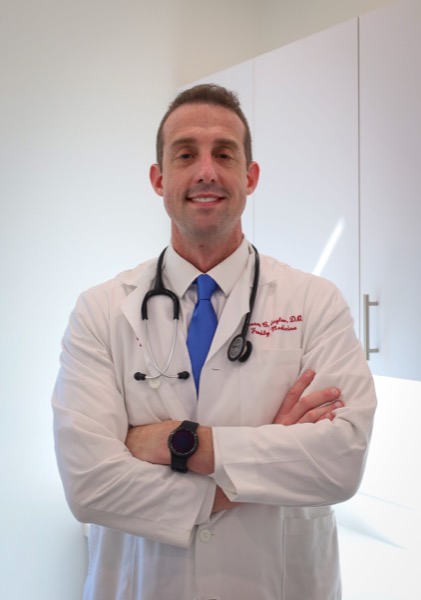
Ask about primary care in Plant City and you'll hear the same story told in two directions. Half the town looks west toward Brandon and the Tampa systems. The other half looks east into Lakeland and the Polk County systems. The Strawberry Festival town itself carries a fraction of the family-medicine capacity of cities its size on either side of it, so almost everyone ends up borrowing a doctor from someone else's metro. Ascend Mind and Body offers Plant City a specific version of that trade: Dr. Jason Saylor, DO, board-certified in family medicine with 17 years of experience, at our Lakeland office at 832 S Florida Avenue, with Tampa-Carrollwood as the alternative.
A town pulled between two medical orbits
Geography did this. Plant City sits almost exactly between Tampa and Lakeland, and the healthcare market organized itself accordingly. Neither metro's systems treat the town as their own. Clinics open in town and close again. Specialists cluster in both of the larger cities. For anyone living in the 33563 through 33567 ZIP codes, or out in Dover, the question was never whether you would look outside town for a doctor. It was which way, and to whom.
The split shows up in households rather than on a map. One family's records live in Hillsborough, the neighbours' in Polk, and plenty of people have a foot in both. None of this is anyone's fault. It's what happens when a working town grows up between two bigger gravitational fields.
That would be a mere inconvenience if medicine were transactional. It isn't. The split has a quieter cost that shows up years later, in your records.
What the split costs you when your chart lives in two places
Here's the failure mode we see in new patients from Plant City. The cardiology workup happened in one metro's hospital network. The urgent care visits scattered across whichever clinic was open that weekend, some west, some east. Labs were drawn under three different systems that don't talk to each other. When something finally goes wrong, no single physician holds the thread, and the patient becomes the unpaid courier of their own history, retelling it from memory at every desk.
There's a second cost that shows up at refill time. When no single prescriber owns the medication list, renewals scatter: blood pressure pills from one clinic, a thyroid dose from another, an urgent care somewhere adding an antibiotic that interacts with both. Reconciling that list once, then keeping it reconciled, is one of the least visible and most valuable things a steady family physician does.
Continuity is the entire point of primary care, and it's precisely what a split-orbit town loses by default. Our answer isn't to pretend the geography away. It's to give the thread one keeper. Dr. Saylor holds the chart, gathers the outside records with your written consent, coordinates whatever specialists you use on either side of the county line, and stays the constant while the rest rotates. One physician, one record, one person who knew you last year.
When a family doctor refers out, and when they shouldn't
One of the least visible differences between family physicians is where they draw the line between what they handle and what they send onward. Refer too little and problems get managed past the point of competence. Refer too much and you become a switchboard, and the patient ends up assembling their own care from four specialists who have never spoken to each other. Neither failure is obvious from the outside, which is why it is worth saying explicitly where the line sits here.
The large majority of adult medicine belongs in family practice and stays there. Blood pressure, cholesterol, type 2 diabetes for most patients, thyroid disease, most joint and back pain, common skin complaints, uncomplicated infections, the great bulk of preventive care, and a substantial share of anxiety and depression are all conditions a well-run primary care practice manages start to finish. Sending those out is not thoroughness; it adds cost, delay, and fragmentation for no clinical gain.
There is an equally real list that should go out promptly, and hesitating on it is a genuine failure. A suspicious mole or a lesion that is changing goes to dermatology. Rectal bleeding, unexplained weight loss, or a change in bowel habit goes to gastroenterology rather than getting a symptomatic prescription. Chest pain with concerning features goes to cardiology or the emergency room today. Diabetes that will not come under control despite escalating treatment belongs with endocrinology. Anything where the diagnosis has stopped making sense, or where the treatment is not doing what it should, deserves a second set of eyes rather than a third round of the same plan.
Between those two lists sits the interesting territory, where the answer is "manage here for now, with a specific trigger for escalating." That trigger should be named out loud. Try this for six weeks; if the pain has not improved, imaging and orthopedics. Treat this and recheck at three months; if the number has not moved, referral. The point is that the referral decision gets made against a stated threshold rather than against whoever's patience runs out first.
The other half of referring well is what happens afterwards. A referral that produces a consultation note nobody reads has accomplished very little. The specialist's findings should come back into one chart, get reconciled with the rest of your medications and conditions, and change the plan where they ought to. That coordination is the actual product of primary care, and it is the piece that goes missing when your care is spread across two counties and nobody owns the whole picture.
Ascend has no Plant City office. In-person visits happen at our Lakeland office at 832 S Florida Avenue, at Tampa-Carrollwood, 3971 Moran Road, Suite 101, or at Wesley Chapel, 27724 Cashford Circle, Suite 102. We serve the whole eastern Hillsborough and western Polk seam: Plant City proper, Dover, Seffner, Valrico, Mulberry, and the Lakeland ZIPs 33801, 33803, 33810, 33811, and 33813.
The physician who reads the whole chart before he changes it
Dr. Jason Saylor, DO trained at Philadelphia College of Osteopathic Medicine and has practiced for 17 years across urgent care and private settings. Board-certified in family medicine, he's the kind of physician who stayed a generalist on purpose. The osteopathic degree means the same full medical training as an MD plus additional work on the musculoskeletal system and a philosophy that refuses to treat lab values in isolation. Sleep, work stress, weight, digestion, family history: he treats them as one connected system, because they are.
What Plant City patients tend to mention after a first visit is simpler than any of that. He sits down. He listens past the chief complaint. He asks what you've already tried before adding anything new. In a market where the default visit is brief and interchangeable, an unhurried generalist reads as almost old-fashioned, which suits a town that hosts a century-old festival just fine.
Coordination here is concrete, not aspirational. With your written consent, records move to and from your cardiologist, endocrinologist, or any other specialist by secure portal or fax, and results land back in the one chart that holds everything else.
When mental health belongs in the picture, it doesn't leave the practice. Psychiatry with Anna Stouffer, PMHNP-BC, and the talk therapy team are both available to Plant City patients through Florida telehealth.
Managing diabetes, blood pressure, and thyroid across the seasons
Chronic disease management is the working core of the practice, and each condition gets its full apparatus rather than a refill-and-run. For hypertension that means real diagnosis, lifestyle work where it can carry weight, medication titration, and monitoring that notices drift early. Cholesterol care runs on lipid panels, family-history risk assessment, and a candid statin conversation instead of a reflexive prescription. Type 2 diabetes gets A1c management and thoughtful medication selection, metformin and the GLP-1 and SGLT2 classes among the options where appropriate, plus dietary counseling and referrals to ophthalmology and podiatry when the disease calls for them.
Hypothyroidism is followed with TSH monitoring, levothyroxine titration, and an eye out for Hashimoto's. Chronic pain gets non-opioid strategies first, with physical therapy referrals and disciplined medication management. Stable conditions settle into follow-ups every three to six months. And underneath the disease work runs prevention: annual physicals, age-appropriate cancer screening, vaccinations, baseline labs, and cardiovascular risk assessment, the unglamorous machinery that catches problems while they're still cheap to fix.
Sick visits fill the gaps between: respiratory infections, GI complaints, skin issues, injuries. Established patients can usually be seen the same week for those.
None of these conditions reward heroics; they reward attendance. The value compounds quietly, in a levothyroxine dose that's right because last year's TSH lives in the same chart, or an A1c drawn on schedule because someone's job is to notice it's due. Prevention works the same way, which is why the yearly physical stays on the calendar even in the years when you feel great.
First appointments here run long on purpose
Plan on 45 to 60 minutes for the first visit. That's not padding; it's the time a real intake takes. You'll do the paperwork online beforehand, assemble your medication list including the over-the-counter items and supplements, and bring your insurance card so benefits are verified before you're in the room. Dr. Saylor reviews the history end to end, performs the physical exam, orders whichever baseline labs are missing or outdated, and walks you through the plan while you can still ask questions. Afterward a written summary posts to your patient portal.
New-patient slots typically open within one to two weeks. If you need something sooner once you're established, call (813) 670-3331 in the morning and ask about same-day availability; the honest answer varies by day, but mornings are when it exists.
Bring the actual medication bottles if you can rather than a written list; strengths and formulations matter, and memory flattens them. If records from the Tampa side and the Lakeland side both exist, bring whatever fragments you hold. Signed releases handle the rest, and the chart that results is often the first complete one a split-orbit patient has had in years.
Lab logistics stay local. Quest Diagnostics and Labcorp both operate collection sites in Plant City and Lakeland, we route the order to whichever is handy, and most results reach your portal in one to three business days.
Video visits for a town that lives on the highway
Once you're established, Florida telehealth absorbs a surprising share of the routine: medication refills, stable chronic-disease check-ins, lab result reviews, and many simple acute issues. The line is clinical and firm. Anything requiring a hands-on exam, which includes annual physicals, new-patient evaluations, and any visit needing auscultation, palpation, or in-office testing, is done in person. Dr. Saylor sets your specific mix at the first appointment based on what's actually being managed.
For Plant City this matters more than it does in towns with a clinic on every corner. A February follow-up that would have meant a half-day out of town becomes a video call from your kitchen, and the one yearly in-person visit stays the only one.
Requirements are modest: a device with a camera, a decent connection, and your presence in Florida during the visit. When video turns out to be the wrong tool for the day's problem, the appointment moves to the office instead of getting stretched past what a screen can safely judge.
Insurance, self-pay, and straight answers before you book
For primary care, Dr. Saylor is in-network with Aetna, ChampVA, and UnitedHealthcare. Because network status varies by carrier and by plan, and because accepted plans change over time, call (813) 670-3331 with your card and we'll verify your benefits ahead of the appointment. One commitment worth stating: we do not bill out-of-network for primary care without a clear conversation about cost with you first.
Paying out of pocket, whether by choice or because a high deductible makes it the practical reality, works on quoted rates rather than a published sheet. The figure depends on the visit type, initial versus established, in person versus telehealth, and on any labs or procedures done that day, so the billing team confirms your exact cost when you call. Ask about the cash-pay options while you're on the phone.
If your employer switches plans in January, call again before your first visit of the new year. Carrier is only half the answer; plan-level details are where surprises live, and the team would rather re-verify twice than have you meet a bill you didn't expect.
When you're ready, book online or call. Bring the scattered records from both metros if you can get them. Consolidating the thread is the first thing we do.
Also see our nearby primary care options
Looking for in-person care, or comparing nearby options?
- Lakeland location: our Polk County office
- Primary care in Tampa: in-person at our Carrollwood office
- Primary care in Wesley Chapel: in-person at our Pasco County hub
- Primary care in Brandon: telehealth, eastern Hillsborough
- Primary care in Valrico: telehealth, eastern Hillsborough
For mental health alongside primary care, see psychiatry in Plant City (Anna Stouffer, PMHNP-BC, via Florida telehealth) or talk therapy in Plant City.
FAQs about primary care in Plant City
Why doesn't Ascend have a Plant City primary care office?
We focus on three physical locations (Wesley Chapel, Tampa-Carrollwood, and Lakeland). Ascend has no Plant City office. Our Lakeland office at 832 S Florida Avenue, Lakeland, FL 33803 is the closest in-person primary care clinic for most Plant City residents. Tampa-Carrollwood, at 3971 Moran Road, Suite 101, Tampa, FL 33618, is the other option.
Can primary care be done via telehealth?
Some primary care can - medication refills, stable-condition follow-ups, lab review, simple acute issues. Annual physicals and any visit requiring a hands-on exam need to be in person. Dr. Saylor sets the cadence and modality with you at your first appointment based on what you're being treated for.
How quickly can I get an appointment?
New patient appointments are typically available within 1-2 weeks. Established patients with acute issues can usually be seen the same week. Call (813) 670-3331 in the morning to ask about same-day availability.
Where do I get my labs drawn?
Quest Diagnostics and Labcorp both operate collection sites in Plant City and Lakeland. We send the orders to whichever location is most convenient. Results post to your patient portal within 1-3 business days for most panels.
What is the difference between a DO and an MD?
Doctors of Osteopathic Medicine (DOs) complete the same medical training as MDs plus additional training in the musculoskeletal system and a whole-person approach. DOs prescribe medication, order imaging, and refer to specialists exactly like MDs. The philosophical difference is integrative - treating the whole patient, not just the disease.
Will Dr. Saylor coordinate with my specialists?
Yes. With your written consent, we exchange records with your specialists by secure fax or portal. Care coordination is a core part of primary care, especially for patients with multiple chronic conditions or active treatment with cardiology, endocrinology, or other subspecialties.