
Looking for a psychiatrist in Clearwater? You can start this week.
Two named, board-certified psychiatric providers seeing Clearwater and Pinellas County adults by secure Florida telehealth, most within the week, while much of Tampa Bay quotes a three to six month wait. Depression, anxiety, ADHD, bipolar, PTSD.
- Seen within the week, not the seasonSame-day and next-day openings come up often across two providers.
- The same clinician every visitYou pick your provider before you book. No rotating panel, no next-available lottery.
- Bills insurance, or superbills for PPOIn-network coverage, and out-of-network superbills.
Free · Confidential
Request a callback
A patient coordinator calls you within one business day to check openings and confirm insurance. No cost, no obligation.
Got it. We will be in touch.
A patient coordinator will reach out within one business day. If you would rather not wait, call (813) 670-3005.

Pinellas is not short of psychiatrists. It is short of open panels.
Call around north Pinellas and you will hear two sentences over and over: "we are not accepting new patients right now," and "the soonest I have is in the spring." Those are not the same problem as a provider shortage, and they are not solved by adding another name to a directory. They are solved by capacity that is actually open. Two prescribers taking new Florida patients, plus visits delivered by secure video, is a direct answer to the sentence Clearwater adults keep hearing.
Request a callbackThe hard part in Pinellas is not finding a name. It is finding a name attached to a calendar that is open.
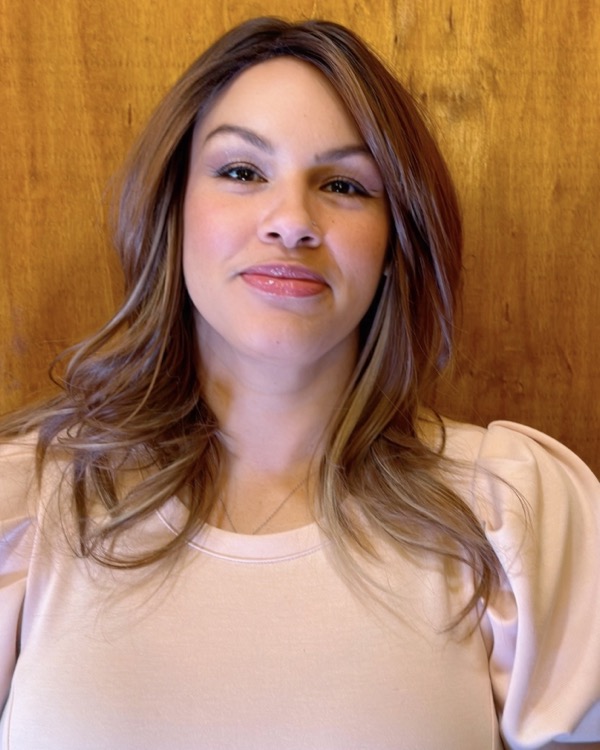
Ascend Mind and Body sees Clearwater and north Pinellas adults for psychiatry by secure Florida telehealth, with two named board-certified providers, Anna Stouffer, PMHNP-BC and Margot Krahn, PMHNP-BC. We handle diagnostic evaluation and ongoing medication management for depression, anxiety, adult ADHD, bipolar disorder, PTSD, and OCD. There is no Ascend office in Pinellas County; if you want a face-to-face visit, the nearest one is the Wesley Chapel flagship at 27724 Cashford Circle, Suite 102, Wesley Chapel, FL 33544. Most new patients start within the week, and we bill insurance. Call (813) 670-3005 or request an appointment online.
Clearwater is the Pinellas County seat, which means it has hospitals, group practices, and no shortage of listings. What it does not reliably have is a psychiatric prescriber who can put you on the schedule this month. That gap is why so many people end up cycling through a primary care provider's short-term prescription, a therapist who cannot prescribe, and a directory page that has not been updated since the practice closed its panel.
This page is written to answer the two questions a directory cannot. Who exactly would be treating me, and when could I actually start. You get two names, their credentials stated without softening, and a realistic timeline instead of a promise.
The credential piece first, because it changes what some people want to do next. Both providers are board-certified Psychiatric Mental Health Nurse Practitioners. Neither is a physician. In Florida a PMHNP evaluates, diagnoses, and prescribes psychiatric medication, including controlled substances when it is clinically appropriate, which covers the great majority of what outpatient psychiatric care consists of. If you specifically want an MD or DO, we would rather you know that in the first sixty seconds than discover it after a copay.
How soon a Clearwater adult can actually be seen
Most new north Pinellas patients get a first appointment inside of seven days. Cancellation slots open up across two calendars and sometimes land same-day or next-day. Against a regional norm of three to six months for a new psychiatric intake, a routine within-the-week start is the unusual part, not the exception. Call (813) 670-3005 early in the day and ask what is actually open.
People rarely search for a psychiatrist casually. The calls we take from Clearwater tend to arrive at a specific moment: a prescription is running out, a prior practice stopped taking the plan, a therapist has said the next step needs a prescriber, or somebody finally decided to deal with something they have been carrying for years and does not want to lose that decision to a queue.
Two structural things make a short wait real rather than advertised. The first is that two prescribers share the panel, so a gap on one calendar is genuinely bookable instead of theoretical. The second is that video removes geography from the equation. An opening on a Tuesday afternoon is reachable from a house in Countryside, a break room in Largo, or a quiet room in Safety Harbor, with nothing between you and the appointment but a link.
What a fast start is not: it is not urgent care, and it is not a crisis line. Starting a psychiatric medication under time pressure, without a real history, is worse than waiting a few extra days for a proper evaluation. If you are in immediate danger right now, call 988 or 911; that is an emergency and a scheduled appointment is the wrong instrument for it. For everything below that line, a quick route to a thorough first visit is exactly what this is built for.
Four things that shorten the wait
-
1
Two calendars, checked together
The coordinator looks at Anna's and Margot's schedules on the same call and quotes you the earlier of the two. Morning calls catch same-day cancellations most often.
-
2
Your address does not set the wait
Because visits are on video, a Clearwater or Dunedin address never costs you days. Any opening anywhere on the schedule is reachable from where you already are.
-
3
Benefits checked before the visit, not after
Your plan gets verified on that first phone call, so a coverage surprise does not push your start date into next month.
-
4
The first clinician is the ongoing clinician
Whoever evaluates you keeps you. A quick start is not worth much if the follow-up hands you to somebody new every quarter.
 Illustrative
The two prescribers you choose between
You pick a clinician before you book rather than being assigned one, and that clinician is the one you keep. Both are board-certified Psychiatric Mental Health Nurse Practitioners licensed in Florida, and both see Pinellas patients by video. Neither is a physician, which we state here rather than bury.
- Board-certified PMHNP-BC
- Florida-licensed APRN
- Prescriptive authority
- You choose, then you keep
Anna Stouffer, PMHNP-BC
Anna Stouffer, PMHNP-BC holds dual board certification as a Psychiatric Mental Health Nurse Practitioner and as a Family Nurse Practitioner (FNP-BC), with a Master of Science in Nursing and more than ten years of clinical work. She began in family medicine and moved into psychiatry, and that order matters in practice. Thyroid function, sleep disorders, chronic pain, and interactions with medications a patient is already taking are things she reads as part of the psychiatric picture rather than as somebody else's department. Her caseload is adult outpatient: depression, anxiety, adult ADHD, bipolar disorder, PTSD, and OCD. In her own words, "I believe every patient deserves to be heard, not rushed."
Anna also runs the in-person ketamine therapy program at Wesley Chapel for a narrow group of patients with treatment-resistant depression. It is a separate service from medication management, it requires an in-person visit, and it is not a starting point.
Margot Krahn, PMHNP-BC
Margot Krahn, PMHNP-BC is a board-certified PMHNP and Florida-licensed APRN with twelve years of clinical experience across the lifespan. She works with adults living with ADHD, anxiety, depression, bipolar-spectrum conditions, and trauma-related symptoms. She describes her approach plainly: "Every person deserves care that feels personal, respectful, and genuinely supportive. Meaningful change is always possible." Patients tend to describe her as unhurried and easy to be honest with, which matters more than it sounds when the whole treatment depends on accurate self-report.
Having two prescribers instead of one is the unglamorous reason a within-the-week start is realistic here. It is capacity, not a scheduling trick.
Nurse practitioner, not physician, and why we lead with that
A lot of practices let the word "psychiatry" do the work and never tell you what letters are behind the person on the screen. We would rather be the ones who say it.
- PMHNP-BC means a graduate-trained advanced practice nurse who has passed national board certification in psychiatric mental health. In Florida that clinician evaluates, diagnoses, and writes prescriptions, controlled substances included when the situation calls for it.
- APRN is the Florida license category. Prescriptive authority sits under the Florida Board of Nursing, not under a supervising physician's signature on every script.
- FNP-BC is the second certification Anna carries. It is why she can weigh a metabolic or endocrine explanation for a symptom instead of treating everything as psychiatric by default.
- MD or DO is a physician psychiatrist. We do not have one. If that is a requirement for you, say so on the phone and we will point you elsewhere rather than talk you out of it.
Someone typing "psychiatrist in Clearwater" is usually not trying to parse credential letters, and that is precisely why the distinction gets glossed. The work that most people mean by psychiatry, an accurate diagnosis and medication managed by somebody paying attention, is core PMHNP practice, and both of ours are licensed to do all of it. Being straight about the title is not a caveat we are apologizing for. It is the same honesty you should expect about everything else in your chart.
Want to be matched to Anna or Margot?
(813) 670-3005Ready to stop calling around?
Tell us what is going on and we will match you to Anna or Margot and check the soonest opening across both. The first conversation is information, not a commitment.
Florida telehealth statewide, with an in-person option at the Wesley Chapel flagship in Pasco County.
What we treat, and what we refer out
Adult outpatient psychiatry: depression including postpartum, anxiety and panic, adult ADHD, bipolar I and II, PTSD, OCD, and perinatal mood conditions. Not in scope: primary substance use disorder treatment, active psychosis, and eating disorders needing a higher level of care. If your situation belongs somewhere else, you will hear that on the first call rather than after three visits.
-
DepressionMost common
First episodes, long-running low mood, and postpartum depression, evaluated and then managed on an actual schedule.
Read more -
Anxiety
Generalized anxiety, panic, and social anxiety, with a written plan for what to do on the bad days.
Read more -
Adult ADHD
Evaluation for adults who were never assessed as children, then stimulant or non-stimulant management within the rules.
Read more -
Bipolar disorder
Bipolar I and II, including the lab monitoring some mood stabilizers require and where to get it done locally.
Read more -
PTSD
Medication for trauma-related symptoms, coordinated with trauma-focused therapy rather than standing in for it.
Read more -
OCD
Medication management for obsessive-compulsive disorder, which does most of its work alongside exposure-based therapy.
Read more
If what you are dealing with right now feels like immediate danger to yourself or anyone else, call 988 or 911. Short of that, a first evaluation commits you to nothing except information.
Depression, including the postpartum window
The range runs from a first depressive episode to a low mood somebody has quietly carried for a decade and stopped calling depression. The National Institute of Mental Health notes that for moderate to severe depression, medication combined with psychotherapy generally does better than either on its own, which is why a prescription here comes with a conversation about therapy rather than instead of one. Antidepressants usually need four to six weeks to show what they can do, and you will be told that at the visit where one is started, not left to wonder at week two. In the postpartum window we account for breastfeeding when it applies and coordinate with your obstetric provider. Any thought of harming yourself or your baby is an emergency: call 911 or go to the nearest emergency department.
Anxiety and panic
Generalized anxiety, social anxiety, and panic disorder are the single most common reason north Pinellas adults call. The usual approach is a daily SSRI or SNRI plus an explicit plan for what happens during a spike, and it does noticeably better when paired with CBT-based therapy. One thing we check before settling on a panic diagnosis: whether a cardiac workup has ever been done. Panic and cardiac symptoms overlap enough that assuming is not good practice, particularly in an older population.
Adult ADHD
Adults who suspect they have had ADHD since childhood but were never evaluated are a large share of new visits. The evaluation is a structured symptom history going back to childhood, a look at how symptoms are actually affecting work and relationships now, and a deliberate rule-out of the conditions that imitate ADHD, before medication is on the table at all. Stimulants are Schedule II controlled substances. Whether one fits your case, and whether the evaluation needs to happen in person, is a clinical judgment your provider makes and explains. An in-person visit at the Wesley Chapel flagship is available when that is what your situation requires.
Bipolar I and II
Getting the diagnosis right matters more here than almost anywhere else in outpatient psychiatry, because an antidepressant given alone to someone with bipolar disorder can destabilize the course. So the evaluation spends real time on periods of elevated mood, decreased need for sleep, and family history, not just on the depressive episode that prompted the call. Some mood stabilizers require baseline and periodic bloodwork. We order it, you can draw it at a lab near you in Clearwater or Largo, and we go through the results with you at follow-up instead of leaving them in a portal.
PTSD and trauma-related symptoms
Medication can take the edge off hyperarousal, nightmares, and the sleep destruction that makes everything else harder to treat. It does not process the trauma. That is what trauma-focused therapy is for, and we will say so directly rather than let a prescription quietly stand in for the work. Where a patient is already working with a therapist, we coordinate with written consent so the two halves are not operating blind to each other.
OCD
Obsessive-compulsive disorder frequently needs higher antidepressant dosing than depression does and a longer runway before a fair judgment can be made. Exposure and response prevention therapy is the piece that does most of the heavy lifting; medication is there to make the exposure work tolerable enough to actually do. If you are not in ERP yet, we will help you find it.
What sits outside our scope
Outpatient medication management is not the right level of care for a primary substance use disorder, for active psychosis, or for an eating disorder that needs medical monitoring or a structured program. We also do not provide psychological or neuropsychological testing. When one of those is the presenting need, the useful thing we can do is name it quickly and point you to the level of care that fits, which is a better outcome than three months of the wrong service.
What the first ninety days actually look like
 Actual Ascend office
Clearwater and north Pinellas psychiatric visits happen by secure Florida telehealth, usually starting within the week.
Ninety days is roughly how long it takes to know whether a first plan is the right one. Evaluation, then a medication chosen for your particular presentation, then scheduled check-ins that are long enough to catch what a rushed visit misses. No medication works for every person, and the first choice is a starting point rather than a verdict.
Visit one: the evaluation, 60 to 75 minutes
Longer than most first psychiatric appointments, on purpose. It covers symptom history and how far back it goes, sleep, substance use asked without judgment, medical conditions and every current medication, prior psychiatric trials and what happened with each, family history, and what you actually want to be different in six months. A rushed intake is the single most common reason a treatment plan misses, because the diagnosis it was built on was assembled in twelve minutes.
Weeks one and two: tolerability, not effectiveness
Early on we are watching whether you can live with the medication, not whether it is working yet. Most side effects that are going to appear show up in this window, and a fair number of them settle on their own. This is also when people quietly stop taking something because nobody told them the first two weeks can feel worse before better. You get a direct way to report that instead of waiting for the next appointment.
Weeks four to six: the first honest read
This is where an antidepressant or anti-anxiety medication has had enough time to show its effect. Sleep and appetite often shift before mood does, which is a useful early signal. At this visit we look at whether the target symptoms have moved, whether the dose is right, and whether what improved is what you actually came in for. Partial response at week six is common and is usually a dose question rather than a reason to abandon the medication.
Weeks eight to twelve: adjust, switch, or leave it alone
By now there is enough information to make a real decision. Adjust the dose, add or change something, or, if it is working, stop fiddling with it and move to a maintenance interval. Anything involving a controlled substance follows Florida and federal prescribing rules, which we work inside rather than around. We do not promise a controlled-substance prescription before an evaluation, and we cannot simply continue a prior provider's prescription without doing our own assessment first.
When ketamine therapy enters the conversation, and when it does not
For a small number of patients whose depression has not responded adequately to standard antidepressant trials, Anna Stouffer provides in-person ketamine therapy at Wesley Chapel. Ketamine is a Schedule III controlled substance. The ketamine used at Ascend is a compounded preparation that is not FDA-approved; no compounded medication is FDA-approved for any use. It is given under the supervision of a licensed prescriber for treatment-resistant depression and select indications. It is not a first-line option, individual responses vary, it is a separate program from routine medication management, and it requires travel to Wesley Chapel for in-person visits. Most patients on this page never need it, and it is not something we raise in the first ninety days.
Why the follow-ups are not ten minutes
Practices under volume pressure compress follow-up appointments to ten or fifteen minutes. That is enough time to ask whether the medication is working and adjust a number. It is not enough time to catch the side effect a patient assumed was unrelated, to notice that a medication was helping partially before it got abandoned, or to hear the thing somebody takes four minutes to work up to saying. Our follow-ups run twenty to thirty minutes and the initial evaluation runs sixty to seventy-five, because in psychiatry a slightly longer visit early is cheaper than a series of corrections later.
Video visits, and the things they genuinely cannot do
For diagnostic evaluation and ongoing medication management the clinical consensus supports video care. The exceptions are real but narrower than most people assume, and we would rather list them than pretend they do not exist.
The American Psychiatric Association has published guidance affirming telepsychiatry as an appropriate way to deliver outpatient psychiatric care to most adults. The parts that make up a psychiatric visit, the diagnostic interview, the medication discussion, the symptom check, and the working relationship itself, hold up on video without losing much.
Three things a video visit cannot do
- A physical exam. When one is clinically indicated, it has to happen somewhere with hands and a room. We coordinate that with your primary care provider or, if you use Ascend for primary care, inside our own system.
- A blood draw. Lithium levels, thyroid panels, metabolic monitoring: we order them and you draw locally in Pinellas, but nobody is drawing blood over a webcam.
- A hands-on safety assessment during an acute crisis. That belongs in an emergency department, not a scheduled video appointment, and we will say so in the moment rather than try to manage it on a call.
What video demonstrably does better is access. Time to a first appointment measured in days instead of seasons, the same prescriber every time instead of whoever the panel produced, and reach for people whose shift work, mobility, caregiving, or transportation would otherwise decide the question for them. In a market where in-person backlogs commonly run three to six months, that difference is frequently the difference between being treated and not.
What a Clearwater telehealth visit needs from you
A device with a working camera and microphone, an internet connection that holds, and somewhere private. Sessions run on Zoom for Healthcare under a signed Business Associate Agreement, which meets HIPAA's technical safeguards for protected health information, with the call encrypted. We take a backup phone number before every visit, so a dropped video call becomes a phone call rather than a cancelled appointment; Florida permits audio-only visits where video is not feasible and you consent. Florida law also requires that you be physically inside the state during the session, which your provider confirms at the start each time. That rule is about licensure, not about where you live, so a Clearwater patient on a work trip to Georgia needs to reschedule.
The in-person option, and who actually uses it
Face-to-face psychiatric visits happen at the Wesley Chapel flagship, which is where both providers hold their in-person schedule. In practice, most Pinellas patients never make that drive. The people who do are usually going for a specific reason: a clinical situation where an in-person evaluation is the right call, or pairing a psychiatric follow-up with in-person ketamine therapy on the same day. Every other visit, including the initial evaluation and every follow-up after it, can be done from home.
Coverage in Pinellas: carriers, employer plans, and military benefits
Psychiatry at Ascend is in network with Aetna, Cigna, UnitedHealthcare, TRICARE, ChampVA, and Oscar Health Plan. If your plan is not one of those, we are out of network and you would use a superbill. We check your specific plan on the phone before you book, and we will not tell you a plan covers something it does not.
Reading your card before you call
Most Pinellas residents are covered through an employer plan administered by a national carrier rather than a local one, so the useful question is not who signs your paycheck but which carrier's logo is on your card and what plan type follows it. The carriers listed above are in network for psychiatric care here. Two details on the card decide most of the rest: whether the plan is an HMO or a PPO, and whether behavioral health is administered by the same carrier or carved out to a separate behavioral health company with its own network. That carve-out catches people out constantly, and it is worth thirty seconds of looking before you assume anything.
Military, veteran, and retiree coverage
North Pinellas carries a substantial military and veteran population, including families connected to Coast Guard Air Station Clearwater and a large number of retirees who settled on this side of the bay. TRICARE and ChampVA are both in network for psychiatry here, which is worth knowing because behavioral health network gaps are a common frustration for beneficiaries in this county. If you are covered under either, say so on the first call so the coordinator can verify eligibility and referral requirements before scheduling rather than after.
What a superbill does and does not do
If your carrier is not on the in-network list, you pay at the time of service and receive an itemized superbill carrying the diagnosis code, the CPT code, the date, and the amount paid. You submit that to your insurer yourself. It is a reimbursement request, not a promise of payment. As a rule, PPO and POS plans carry out-of-network behavioral health benefits and HMO plans generally do not, and your plan sets both the reimbursement percentage and any separate out-of-network deductible. Call the number printed on the back of your card and ask one question: what are my out-of-network outpatient mental health benefits. Do that before your first appointment, not after.
Keeping your Pinellas primary care provider in the loop
Psychiatric medication does not behave well in isolation. Thyroid dysfunction can look exactly like depression, several blood pressure medications affect mood, and some antidepressants interact with anticoagulants. If your primary care is outside Ascend, which it will be for most Clearwater patients, we request records or send a treatment summary with your written consent so that the person managing your physical health is not finding out about a new psychiatric medication from a pharmacy printout.
Your Clearwater options, side by side
Each route has a real cost. Better to see them before you spend a week on the phone.
| Route | You know who you get | Face-to-face possible | Realistic time to first visit |
|---|---|---|---|
| Ascend Mind and Body | Choose one of two, then keep them | Yes, at Wesley Chapel | Usually within a week |
| National telehealth psychiatry brand | Assigned from a national panel | Video only, everywhere | Often days, but the panel decides |
| Pinellas hospital-affiliated group | Depends on assignment | Usually yes, locally | Commonly months |
| Directory listing you call yourself | Whoever answers | Varies by listing | Unknown until you have called several |
A national video brand signs you up quickly and then assigns whoever is available, with no in-person option anywhere. A local hospital group can see you in a room in Clearwater, but usually not this quarter. A directory is fast to read and tells you nothing about wait times until you have already spent an afternoon calling. We are the trade where you give up a nearby waiting room and get a named prescriber and a start date instead.
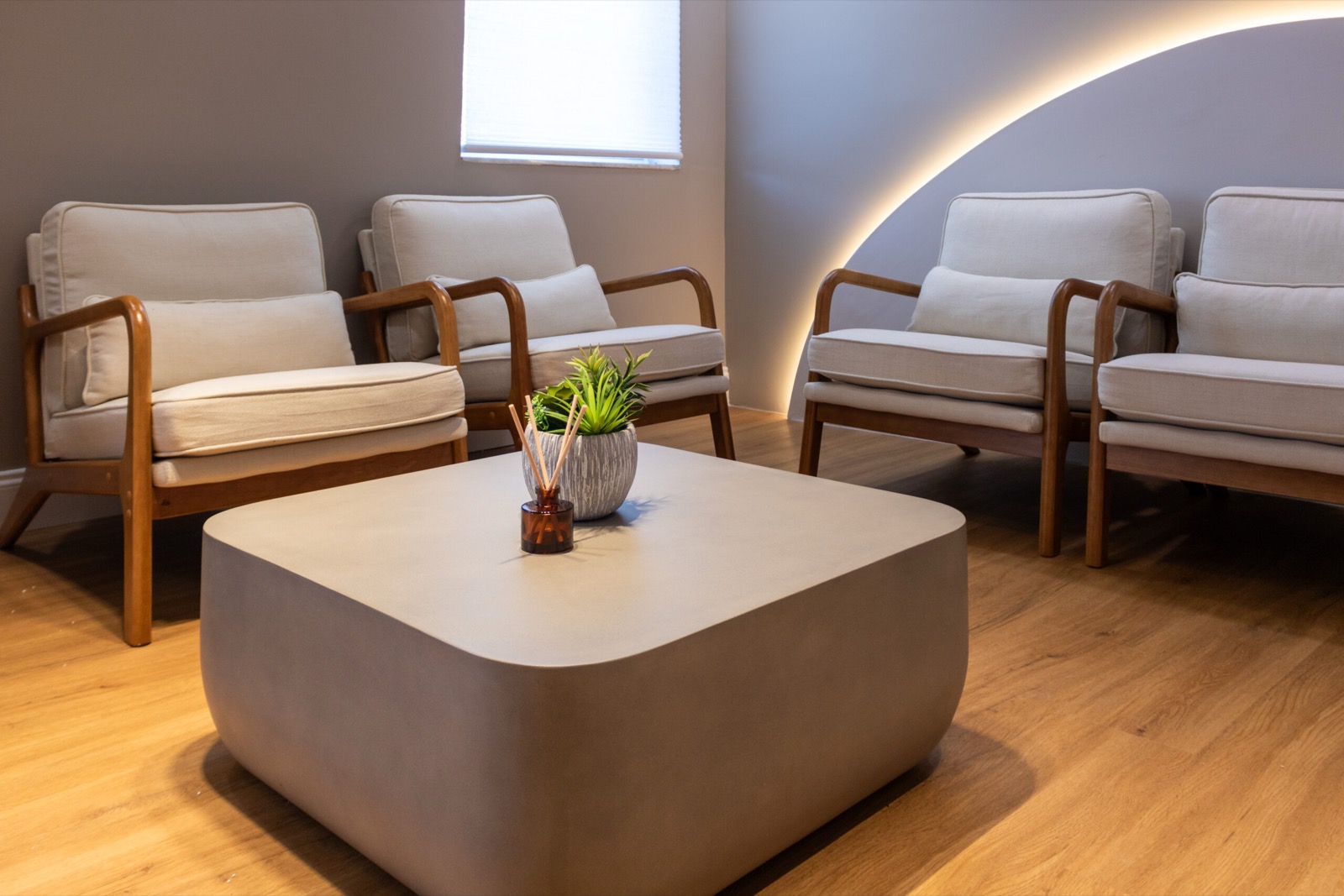 Actual waiting area
Clearwater and Pinellas psychiatric care is delivered by Florida telehealth. The nearest in-person option is the Wesley Chapel flagship, roughly an hour away.
There is no Clearwater office. Here is how the geography actually works.
Ascend has no location in Pinellas County. Clearwater and north Pinellas patients are seen by secure Florida telehealth from home. If you want a face-to-face psychiatric visit, the nearest one is the Wesley Chapel flagship in Pasco County, which is a genuinely cross-county drive of roughly an hour, not a quick trip. For the great majority of patients here, every visit stays on video.
Nearest in-person option: Ascend Mind and Body, Wesley Chapel
27724 Cashford Circle, Suite 102
Wesley Chapel, FL 33544
Psychiatry: (813) 670-3005
Hours: Monday through Friday, 8:30 AM to 5:00 PM.
How a medication trial is actually run
The word "trial" is doing real work in psychiatric prescribing, and most people have never had it explained. A trial is not "here is a prescription, come back sometime." It is a specific dose, held for a specific length of time, judged against a specific question. Getting any of those three wrong is the most common reason someone arrives believing that four medications have failed them when, on review, none of the four was ever given a fair test.
Duration comes first. Most antidepressant and anti-anxiety medications need somewhere between four and eight weeks at an adequate dose before anyone can say whether they work. Side effects, by contrast, usually announce themselves in the first week or two. That mismatch is cruel and it is also predictable, which is why we say out loud at the start that the early weeks may cost you something before they pay anything, and why the two-week check-in exists rather than a two-month one.
Dose comes second. An enormous share of "it didn't work" turns out to be "it was never raised past the starting dose." Starting doses are chosen to be tolerable, not to be effective. If the medication is being tolerated and the symptoms have not moved, the next step is usually more of it rather than something different, and stopping at the introductory dose wastes the six weeks you already spent.
The question comes third, and it is the one most often left vague. Before the trial begins we name what would count as an answer: sleeping through more nights than not, getting to work five days instead of three, panic episodes down from daily to weekly, the intrusive checking losing its grip on the evening. Those are things you can notice. "Feeling better" is not, and a target nobody can measure produces a decision nobody can defend.
At the end of a fair trial there are only a few honest outcomes: it worked and we hold, it partly worked and we optimize, it did nothing and we change, or it caused a problem worth more than the benefit and we change for that reason. Each of those has a different next move, and knowing which one you are in is exactly what a real trial buys you. Care that never reaches a verdict is not cautious care; it is just a longer version of not deciding.
North Pinellas communities we serve by telehealth: Clearwater, Countryside, Clearwater Beach, Dunedin, Palm Harbor, Ozona, Crystal Beach, Safety Harbor, Oldsmar, Tarpon Springs, Largo, Belleair, Belleair Bluffs, and Seminole. Licensure attaches to the state rather than the ZIP code, so any Florida resident can be seen on video regardless of neighborhood. Ascend's three physical offices are in Wesley Chapel, Tampa, and Lakeland.
Related care: psychiatry in St. Petersburg for south Pinellas, Florida telehealth psychiatry, and talk therapy when medication should be paired with therapy.
The limits, and what to do when this is not the right service
Psychiatric medication helps a great many people and it is not certain to help any particular person. The right medication is usually arrived at by adjustment rather than found on the first attempt, it works better alongside therapy than alone, and it depends entirely on you reporting honestly how things are actually going. And there are nights when the right answer is not an appointment at all.
We are not going to tell you that a prescription resolves everything, or that one medication behaves the same way in two different people. Responses vary by diagnosis, history, and biology. Antidepressants take weeks. Some medications require ongoing bloodwork. Controlled substances come with rules we follow rather than find our way around. What is genuinely inside our control is an accurate diagnosis, a medication matched to your actual presentation rather than to a category, and appointments long enough to catch what a hurried one misses. Those are the parts we take seriously, and they are the parts that decide most outcomes.
If tonight is an emergency, this page is the wrong tool
A scheduled appointment cannot help with something happening right now. If you or someone with you is in immediate danger, use these instead:
- Call or text 988 for the Suicide and Crisis Lifeline, any hour, from anywhere in Pinellas County.
- Call 911 or go to the nearest emergency department if there is immediate physical danger. Clearwater and north Pinellas have several emergency departments within a short drive, and any of them is the right destination in an emergency.
- Call 211 for Tampa Bay area community resources, including help finding crisis services, shelter, and support when the need is urgent but not a medical emergency.
None of that is a referral away from us. It is what to do in the hours when a scheduled visit is not the instrument you need. Once things are stable, a psychiatric evaluation is exactly the right next step, and it is the point of this page.
Signals it is time to change the plan
- An adequate trial has gone by and the symptoms you actually came in for have not moved.
- Side effects have started to outweigh whatever benefit you are getting.
- Something new has appeared, or something old has escalated, since the last visit.
- You are shading the truth with your provider about how you are really doing, or about whether you are taking it.
None of those mean psychiatric care has failed. They usually mean this particular medication or this particular dose has, and changing course is an ordinary part of the process rather than an admission of defeat. If what you need turns out to be outside what outpatient medication management can do, a primary substance use disorder, active psychosis, or an eating disorder requiring a higher level of care, we will say so plainly and point you toward the right level of care instead of taking on something we cannot do well.
FAQs about psychiatry in Clearwater
The questions north Pinellas callers ask before they decide.
Is there an Ascend psychiatry office in Clearwater?
No. Ascend has three physical offices, in Wesley Chapel, Tampa, and Lakeland, and none of them is in Pinellas County. Clearwater and north Pinellas adults are seen by secure Florida telehealth from home, including the initial evaluation and every follow-up. If you want a face-to-face psychiatric visit, the nearest option is the Wesley Chapel flagship at 27724 Cashford Circle, Suite 102, Wesley Chapel, FL 33544. Ascend has no office in Pinellas County.
How long is the wait for a first psychiatric appointment from Clearwater?
Most new north Pinellas patients are scheduled within seven days, and cancellation openings across two providers sometimes land same-day or next-day. The regional norm for a new psychiatric intake runs three to six months, so a routine within-the-week start is the part worth noticing. Calling early in the day is what catches a short-notice opening.
How long before we know whether a medication is working?
Most antidepressant and anti-anxiety medications need four to eight weeks at an adequate dose before the answer is clear, while side effects usually show up in the first week or two. That mismatch is why a check-in is scheduled at about two weeks rather than at the end. Before starting, we name what would count as improvement in terms you can actually observe, so the decision at the end of the trial is based on something measurable.
Are Anna Stouffer and Margot Krahn physicians?
Neither is a physician. Both are board-certified Psychiatric Mental Health Nurse Practitioners, PMHNP-BC, licensed in Florida as Advanced Practice Registered Nurses with prescriptive authority that includes controlled substances when clinically appropriate. Anna Stouffer also holds Family Nurse Practitioner certification. If seeing an MD or DO specifically matters to you, tell us on the first call and we will say so directly rather than blur it.
Can I pick which provider I see, or am I assigned one?
You choose before you book. The coordinator will describe both providers and check both calendars, and you decide. The clinician who does your evaluation is the clinician who keeps seeing you afterward. There is no rotating panel and no next-available assignment.
Which insurance plans are in network for psychiatry?
Aetna, Cigna, UnitedHealthcare, TRICARE, ChampVA, and Oscar Health Plan are in network for psychiatric care. Coverage still depends on your specific plan, so the coordinator verifies your benefits on the first call before anything is scheduled. If your carrier is not on that list we are out of network and you would pay at the time of service and submit a superbill.
I have TRICARE through a family member stationed in Pinellas. Does that work here?
TRICARE is in network for psychiatry at Ascend, and so is ChampVA. Mention it on the first call so the coordinator can confirm eligibility and check whether your plan option requires a referral or authorization before your first visit. Behavioral health network gaps are a common frustration for beneficiaries in this county, which is exactly why it is worth verifying up front rather than at check-in.
What happens in the initial evaluation, and how long does it run?
Sixty to seventy-five minutes. It covers your symptom history and how far back it goes, sleep, substance use, current medical conditions and every medication you take, previous psychiatric treatments and what happened with each, family history, and what you want to be different six months from now. Longer than most first psychiatric appointments, because a diagnosis assembled in twelve minutes is the most common reason a treatment plan misses.
How soon will I know whether the medication is working?
Roughly ninety days is the honest window for knowing whether a first plan is the right one. The first two weeks are about tolerability rather than effect. Weeks four to six give the first fair read on whether target symptoms are moving. By weeks eight to twelve there is enough information to adjust the dose, change the approach, or leave a working plan alone. No medication works for every person, and a partial response at week six is usually a dose question rather than a failure.
Can you prescribe ADHD or other controlled-substance medication by video?
Sometimes, and it depends on the clinical picture and on the state and federal rules that apply at the time. Stimulants are Schedule II controlled substances, and whether one is appropriate at all, and whether the evaluation must happen in person, is a clinical judgment your provider makes and explains to you. What we will not do is promise a controlled-substance prescription before anyone has evaluated you.
Can you just continue the prescription my previous psychiatrist was writing?
Not without our own evaluation first. We will absolutely take your history into account, and knowing what has already been tried is genuinely useful, but Florida and federal rules require an appropriate assessment before prescribing, and continuing a medication blind is not good care regardless of the rules. Bring the name, dose, and how long you have been on it, and the first visit will move faster.
Where do I get bloodwork done if my medication requires monitoring?
At a lab near you. Some mood stabilizers and a few other medications need baseline and periodic labs. We send the order, you draw at a convenient location in Clearwater, Largo, or wherever is easiest in the county, and the results get reviewed with you at your next appointment rather than dropped into a portal without explanation.
What if my video call drops in the middle of the appointment?
We collect a backup phone number before every visit precisely for this. If the video fails, your provider calls that number and the appointment continues by phone. Florida permits audio-only visits when video is not feasible and you consent to it, so a bad connection does not cost you the appointment or the slot.
Do I have to be in Florida during my appointment?
Yes. Florida licensure requires you to be physically located in the state during the visit, and your provider confirms your location at the start of each session. It is about where you are sitting, not where you live, so a Clearwater patient traveling out of state needs to reschedule rather than log in from the road.
Is the video visit private?
Sessions run on Zoom for Healthcare under a signed Business Associate Agreement, which meets HIPAA's technical safeguards for protected health information, and the call is encrypted. The other half is on your end: use a private space, headphones if anyone else is home, and a device you control. Plenty of patients take their appointment from a parked car, and that is a perfectly reasonable choice.
Do you treat postpartum depression and anxiety?
Yes. Postpartum depression and postpartum anxiety are treated as part of adult psychiatric care, with breastfeeding status accounted for when it applies and coordination with your obstetric provider where that helps. If symptoms ever include thoughts of harming yourself or your baby, that is an emergency: call 911 or go to the nearest emergency department rather than waiting for an appointment.
What is outside your scope, and what happens if that is what I need?
Outpatient psychiatric medication management is not the right level of care for a primary substance use disorder, for active psychosis, or for an eating disorder that requires medical monitoring or a structured program. We also do not provide psychological or neuropsychological testing. If one of those is what you need, you will hear it on the first call and get pointed toward the right level of care, which is more useful than three months of the wrong service.
Do you offer ketamine therapy, and would I qualify?
Ketamine therapy is a separate in-person program at Wesley Chapel, run by Anna Stouffer, for a narrow group of patients whose depression has not responded adequately to standard antidepressant trials. It is not a starting point and most patients on this page never need it. Ketamine is a Schedule III controlled substance. The ketamine used at Ascend is a compounded preparation that is not FDA-approved; no compounded medication is FDA-approved for any use. It is given under the supervision of a licensed prescriber for treatment-resistant depression and select indications. Individual responses vary, and eligibility is decided by clinical evaluation rather than by request.
What should I do tonight if things are urgent and I cannot wait for an appointment?
Call or text 988 for the Suicide and Crisis Lifeline, available any hour anywhere in Pinellas County. If there is immediate physical danger, call 911 or go to the nearest emergency department. For urgent community needs that are not a medical emergency, 211 connects you to Tampa Bay area resources. A scheduled psychiatric appointment is the right next step once things are stable, but it is not the tool for a crisis in progress.
One call is enough to find out where you stand
Tell us what is going on and we will match you to Anna or Margot and check the soonest opening across both. Most new patients are scheduled within the week, by secure Florida telehealth across Clearwater and Pinellas County.
In crisis right now? Call or text 988 anytime. Psychiatry appointments are not an emergency service.