TALLAHASSEE TELEHEALTH

Telehealth Psychiatry and Therapy for Tallahassee, FL

Psychiatric care at Ascend is provided by board-certified Psychiatric Mental Health Nurse Practitioners (PMHNP-BC), not physicians. In Florida an APRN can evaluate, diagnose, and prescribe, including controlled substances, under a prescriptive-authority framework overseen by the Florida Board of Nursing. We use the word psychiatrist because it is the term most people search.

Tallahassee is a government town wrapped around two universities. That produces a very specific mental-health problem: a large population with decent insurance, real confidentiality concerns, and a calendar that spikes hard in the spring.

Accepting Tallahassee Patients · Confidential Video Visits
TALLAHASSEE TELEHEALTH

Talk to a Florida-licensed clinician, privately.

No chart is opened and nothing is reported anywhere. We will match you with an Ascend clinician who has availability for Tallahassee, usually within a business day.

0/500
Or call directly: (813) 670-3005
Your information is kept confidential.
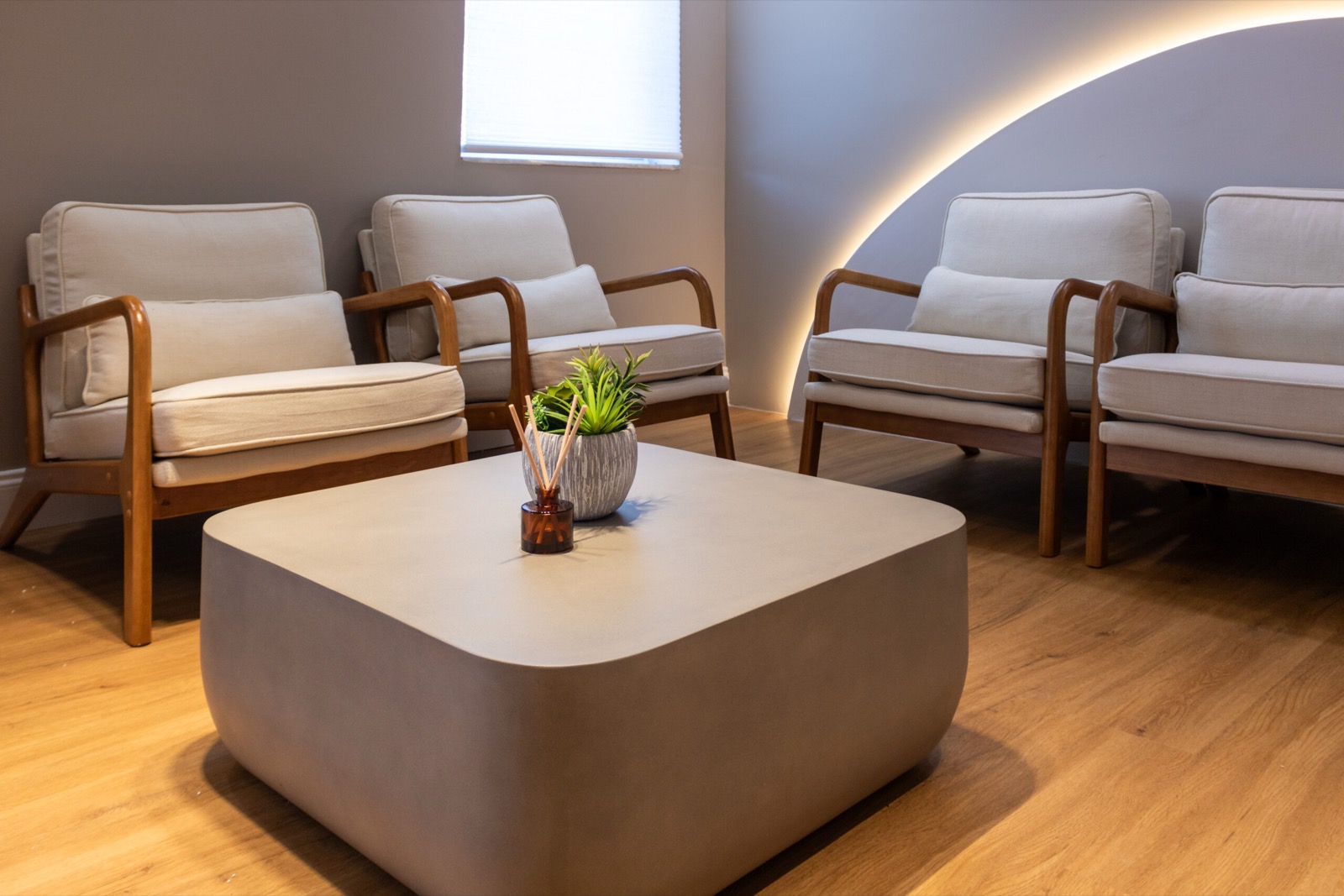
Telehealth consultation for a Tallahassee patient, calm and private home setting

A capital city with a capacity problem

Leon County is not short on health care in general. It has two hospital systems, two universities, and a medical school. What it is short on is adult outpatient psychiatry that takes insurance and has an opening this month. The federal designation of mental health professional shortage areas covers much of the Big Bend, and the counties around Leon - Gadsden, Jefferson, Wakulla, Liberty - have far less than Tallahassee does, which pushes their residents into the same queue.

The result is familiar to anyone who has made the calls: the practices that take your plan are closed to new patients, the ones with openings are cash only, and the wait between those two options is measured in months. Ascend Mind & Body sees Tallahassee adults by secure video from anywhere in the state, which does not fix the statewide shortage but does remove the geography from your side of it.

Confidentiality when you work for the state

This comes up in Tallahassee more than anywhere else we serve, and it deserves a direct answer rather than a reassuring one. Public employees, legislative staff, and university faculty often work in small, visible communities where the waiting room of a local practice is itself a disclosure. Several people have told us that the reason they had not sought care was not stigma in the abstract. It was that someone would be seen arriving.

Two related questions come up often enough to answer here. An employer does not receive notice that you are in treatment, and cannot obtain your record without your written authorization; what an employer may see, if you use employer-sponsored coverage, is aggregate claims data that does not name individuals. A security clearance does not require you to have avoided mental health care either, and the relevant federal questionnaire has for years excluded most counseling from what must be reported. If that question is the reason you have not booked, it is worth raising when we call you back rather than deciding alone.

A video visit removes that particular exposure. Your record is protected health information and stays that way. If you use insurance, a claim goes to your health plan, which is normal and is how coverage works - it does not go to your agency, your supervisor, or your department. If you would rather ask about that in detail before you commit to anything, the callback is a good place; it is a scheduling conversation, not an intake, and no clinical record is created.

Care that survives session, semester, and summer

Tallahassee runs on three calendars at once, and all three break continuity of care in different ways.

  • The legislative session. Roughly sixty days of long hours, compressed deadlines, and short sleep, followed by a crash. If you know it is coming, the plan can be built before it starts rather than repaired after.
  • The academic year. Graduate students and faculty hit predictable pressure at comprehensive exams, grant deadlines, and the end of each term.
  • The summer. Students leave, and so do a lot of staff. This is the one that quietly ends treatment, because a clinician you found in March cannot legally see you in July if you are sitting in another state.

That last point is worth planning around rather than discovering. A Florida-licensed clinician can see you when you are physically in Florida. If you leave for the summer, tell your prescriber in the spring so refills and the gap are handled deliberately.

What Tallahassee patients are usually seen for

Two populations dominate, and they present differently.

Working adults in government, law, and higher education. Most commonly generalized anxiety, depression, occupational burnout that has crossed into a clinical picture, and sleep that has not been right in years. Adult ADHD is frequently identified late here, often after a move from execution work into management work.

Graduate and professional students at FSU and FAMU. Anxiety, depression, and first presentations of OCD, often alongside a genuine question about whether what they are feeling is a disorder or simply the program. That question deserves an evaluation, not a guess.

Both groups have access to therapy and psychiatric care in the same practice, with a shared chart, so you are not the courier between two offices.

How the first two visits go

Visit one is a full psychiatric evaluation. It is longer than the follow-ups on purpose and covers history, current symptoms, medical conditions and prescriptions, sleep, substance use, and what you actually want to change. You leave with a plan and a scheduled next visit.

Visit two is where the plan gets adjusted based on what the first weeks looked like. From there, follow-ups are shorter and spaced according to what you are managing. Some people improve quickly and some do not; individual responses vary, and a clinician who tells you otherwise before meeting you is guessing.

Where video care stops

Ascend has no office in Tallahassee, and reaching our nearest in-person location is roughly four hours. That makes the boundary practical, not theoretical. Anything requiring a physical exam, in-office labs, or a procedure has to be handled locally or during a planned trip. Ketamine therapy is in-person only and takes place at our Wesley Chapel clinic. Acute crises are not a video appointment: call 988 or use the nearest emergency department.

What does work well over video is the large majority of outpatient psychiatric care - evaluation, diagnosis, medication management, and ongoing therapy - which is why it is the format most Tallahassee patients end up using for years.

Coverage

We are in network with a range of major commercial and government plans for psychiatry, and the list moves as credentialing does. Because Tallahassee has an unusual concentration of state and university plan options, the sensible step is to check the current insurance page and let us verify your specific plan before the first visit. Ask about your behavioral health benefit specifically; it is often structured differently from your medical benefit on the same card.

We see adults across Leon County and the surrounding Big Bend, including Midtown, downtown, Myers Park, Killearn, Buck Lake, and Gadsden, Wakulla, and Jefferson counties.

What to do while you are waiting on someone else's list

A lot of people reading this are already on a waitlist somewhere in town and are not sure whether to give up the place they have. The honest answer is: do not cancel anything until you have an actual appointment somewhere else. Waitlists in this region move unpredictably, and giving up a spot in March to chase a maybe is how people end up with nothing in July.

It is entirely reasonable to hold a local waitlist position and start with us at the same time. If the local practice comes through and you prefer it, transferring care is straightforward - ask us for a summary of your diagnosis, what has been tried, and current doses, and hand it over. Nobody here will make that awkward.

While you wait, a few things are worth doing because they make whichever first appointment you get substantially more productive. Write down when the current problem started and what was happening in your life at the time. List every psychiatric medication you have ever taken, roughly when, and why you stopped. Note your sleep in a rough way for two weeks - when you go to bed, when you actually fall asleep, when you wake. And write down the one thing you most want to be different in six months.

That is perhaps twenty minutes of work, and it reliably turns a first appointment from a fact-gathering exercise into a planning one. Details on what to expect are on our new patient page.

Tallahassee questions, answered directly

Confidentiality and the summer gap are the two that come up on almost every call.

Will anything about my treatment get back to my agency or my department chair?

No. Your clinical record is protected health information under HIPAA. An employer, an agency, or a university department does not get told that you are a patient, what you are being treated for, or what you are prescribed. The narrow exceptions are the ones that apply everywhere in medicine: a signed release you choose to give, a court order, or an imminent safety situation. Billing a health plan does generate a claim, which is why some patients ask about that specifically - the claim goes to the insurer, not to the employer's HR office.

I am on a state employee health plan. Does that change how this works?

It changes what you pay, not how the visits run. Behavioral health benefits differ between plan options, so verify your specific plan on our insurance page before booking. We check coverage ahead of the first appointment.

Can I keep the same clinician over the summer when I leave Tallahassee?

If you are physically in Florida, yes. Florida licensure follows where the patient is sitting during the visit, not where the practice is. If you spend the summer in Georgia or Alabama, we cannot see you during that stretch, and it is much easier to plan that gap in April than to discover it in June.

How is this different from the FSU or FAMU counseling center?

University counseling centers are built for short-term, session-limited support and campus crisis response, and they do that well. They are generally not built to carry a medication regimen for years, and most cap the number of sessions. We are an outpatient practice with no session cap and the same clinician each visit. Many students use both.

Every legislative session my sleep and mood fall apart. Is that a real thing to bring in?

Yes, and it is one of the more common patterns we hear from Tallahassee. A predictable annual stretch of long hours, high stakes, and short sleep is a legitimate clinical history, and it is worth planning for in February rather than treating in May.

Does Ascend have a Tallahassee office?

No. There is no Ascend location in Leon County and no in-person option in Tallahassee. Care for Tallahassee residents is delivered by secure video by Florida-licensed clinicians. Our physical offices are in the Tampa Bay area.

Get on the schedule this month

One call is enough to find out whether this fits, what your plan covers, and how soon a Florida-licensed clinician can see you.

Book an Appointment (813) 670-3005
Call NowBook Online