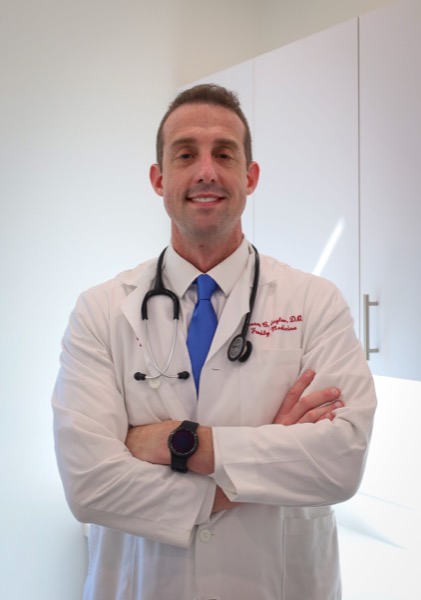
Finding primary care in Lutz has a peculiar shape. The town sits in a Hillsborough pocket between USF and the Pasco line, with its own ZIP codes and its own habits, and the medicine nearby skews heavily toward urgent care. Walk-in clinics are easy. A family doctor who knows your chart and can see you this week is not. Ascend Mind and Body treats Lutz from two offices: our Wesley Chapel office at 27724 Cashford Circle, Suite 102, and our Tampa-Carrollwood office at 3971 Moran Road, Suite 101. Dr. Jason Saylor, DO, a board-certified osteopathic family physician with 17 years of experience, sees patients at both.
What a sick visit can and cannot settle over video
The most common question about telehealth is also the most practical one: when I actually feel ill, is a video visit good enough? The honest answer is that it depends entirely on the complaint, and it is worth knowing the split in advance so you are not guessing at seven in the morning.
Video handles a large share of everyday illness well. Upper respiratory infections, sinus complaints, urinary symptoms in an otherwise healthy adult, most rashes when the camera is decent and the lighting is not terrible, pink eye, medication side effects, and the enormous category of "is this worth worrying about" all resolve fine on a screen. So does the follow-up question after an in-person visit, which is often the appointment that matters most and the one people are least likely to book.
What video cannot do is examine you, and there is a specific list where that matters. Abdominal pain needs a hand on the abdomen, because the location and character of tenderness is most of the diagnosis and no description substitutes for it. Chest pain of any kind belongs in person, or in an emergency room, depending on the details. Ear pain in a child needs the ear looked into. Anything requiring a throat swab, a urine sample, an in-office test, or listening to lungs is by definition an in-person visit. So is any injury where the question is whether something is broken.
There is also a category the format handles poorly for a subtler reason: the patient who does not look right. Experienced clinicians pick up a great deal from how someone moves into a room, their colour, their breathing, whether they are sitting oddly. A camera flattens all of that. If the description you give does not match how you appear on screen, expect to be asked to come in, and expect that request to be a good sign rather than an inconvenience.
In practice the sensible pattern is to start with a video visit when you are unsure, precisely because it costs so little to convert. Fifteen minutes on a screen either resolves the problem or produces a specific reason to be seen, and either outcome is better than sitting in a waiting room to discover you did not need to. Ascend has no office in Lutz itself; in-person appointments happen at our Wesley Chapel flagship, 27724 Cashford Circle, Suite 102, or at Tampa-Carrollwood, 3971 Moran Road, Suite 101, and Dr. Saylor sees patients at both. Tell the scheduler what your week looks like and they will slot you at whichever office fits it.
The revolving-door problem, and what we built instead
Here's the pattern people describe when they call us: they had a doctor, the doctor's schedule filled, follow-ups drifted to a rotating cast of extenders, and eventually every visit started from zero. Large panels do that. Some area practices run panels in the neighborhood of 3,000 patients per physician, and at that scale the twenty-minute visit becomes a triage exercise, not a relationship.
Our model is deliberately smaller. One physician. One chart that stays with him. A panel capped low enough that established patients with an acute problem can usually get in the same week, and new patients typically wait one to two weeks rather than a season. When you call (813) 670-3331 in the morning, the front desk can often tell you about same-day openings.
None of this is exotic. It's just family medicine run the way it worked before volume economics took over, and it changes what a visit can accomplish. A doctor who remembers that your blood pressure crept up last spring reads this spring's numbers differently.
Urgent care still has its place, and we'd never pretend otherwise. A Sunday laceration or a midnight fever needs whatever door is open. The trouble starts when walk-in medicine becomes the whole diet: nobody trends your numbers across visits, nobody flags the third sinus infection this year, and screening simply never comes up, because episodic clinics were never built to own the long arc. Lutz has plenty of the episodic kind. What it's short on is the kind that calls you back.
Chronic conditions need a doctor who remembers last year
The core of the practice is managing the conditions that never fully resolve, only stay controlled or drift. Hypertension gets diagnosed properly, tied to lifestyle where lifestyle is the lever, and titrated with actual monitoring instead of a yearly guess. High cholesterol gets a real conversation: lipid panel, family history, an honest look at whether a statin earns its place in your case. Type 2 diabetes management runs from A1c tracking through medication selection, including metformin and the newer GLP-1 and SGLT2 classes where they're appropriate, with referrals out to ophthalmology or podiatry when the disease demands them.
Thyroid disease is a quiet specialty of family medicine done well: TSH monitoring, careful levothyroxine adjustment, and a workup for Hashimoto's when the pattern suggests it. Chronic pain gets non-opioid approaches first, physical therapy referrals, and cautious medication management where medication belongs. Once a condition is stable, follow-up typically lands every three to six months, and much of that cadence can happen by video.
Prevention threads through everything: age-appropriate cancer screening, vaccinations, baseline labs, and cardiovascular risk assessment, anchored by the annual physical that keeps the whole picture current.
The common thread is trend lines. A single reading rarely decides anything in family medicine; the direction across a year usually does. Because one physician orders, reviews, and files every result, the drift that matters gets caught while it's still a conversation instead of a complication. That's also why we ask established patients to keep the annual physical sacred even in years when nothing feels wrong. Feeling fine and being fine overlap less than anyone would like.
What actually happens in the first 45 to 60 minutes
New-patient visits here run 45 to 60 minutes, which surprises people who've been trained by the seven-minute standard. The length isn't a luxury. It's the working time required to review a full history, examine you properly, go through every medication including the supplements you forgot were medications, and leave with a plan you understand.
Before you come in, you'll complete intake forms online and gather whatever records you'd like reviewed. Bring your insurance card so benefits get verified before you're sitting in the room wondering. During the visit, Dr. Saylor works through your history, does the physical exam, orders whatever baseline labs are missing or stale, and talks through the plan out loud: which screenings, which medications, which referrals if any. A written summary lands in your patient portal afterward, so nothing lives only in memory.
Lab draws are easy from Lutz. Quest Diagnostics and Labcorp both operate collection sites throughout the area, and we send orders wherever is convenient. Most results post to your portal within one to three business days.
Two practical notes from the front desk. First, the bring-everything instruction is literal: the pill bottles themselves beat a handwritten list, because doses and formulations hide in the fine print. Second, if a prior clinic holds records you can't easily retrieve, bring what you have and sign a release; chasing the rest down is our job, not yours.
Which visits can happen from your kitchen table
Florida telehealth is a real part of how established patients use this practice, and it's governed by a simple clinical line. Medication refills, stable chronic-disease follow-ups, lab reviews, and many simple acute issues work well over video. Anything that needs hands, meaning annual physicals, new-patient evaluations, or any visit requiring auscultation, palpation, or in-office testing, happens in person at Wesley Chapel or Tampa-Carrollwood.
In practice, most established patients settle into a rhythm of one in-person visit a year plus telehealth check-ins as needed. Dr. Saylor sets that cadence with you at the first appointment based on what's being treated, and it flexes when your health does. For someone managing a stable thyroid condition, that can mean a fifteen-minute video call instead of an afternoon given over to an appointment.
The setup asks very little of you. A phone, tablet, or computer with a camera generally covers it, and telehealth visits happen while you're physically in Florida. If the connection or the clinical picture turns out to need more than video can carry, the visit converts to an in-person appointment rather than a guess. Nothing about the format changes who's on the other end; it's the same physician either way.
Why the doctor is a DO, and what that changes for you
Dr. Jason Saylor, DO earned his Doctor of Osteopathic Medicine at Philadelphia College of Osteopathic Medicine and has spent 17 years in clinical practice across urgent care and private settings. He's board-certified in family medicine and sees patients in person at both the Wesley Chapel and Tampa-Carrollwood offices.
The DO credential trips people up less than it used to, but it's worth explaining. Osteopathic physicians complete the same medical training as MDs, plus additional training in the musculoskeletal system and a whole-person orientation. They prescribe, order imaging, and refer to specialists exactly as MDs do. Where the difference shows is in style: more of the visit spent on context, on what you've already tried, on how sleep and stress and work pressure and family history connect to the number on the lab report. Patients who've felt processed elsewhere tend to notice it immediately.
He also doesn't practice alone in the broader sense. Ascend runs psychiatry and talk therapy under the same roof, so when anxiety or depression is tangled into a medical picture, the handoff is internal. Psychiatry with Anna Stouffer, PMHNP-BC, is available to Lutz patients by Florida telehealth, as is the talk therapy team.
What we take, what we verify, and how paying works
Dr. Saylor is in-network with Aetna, ChampVA, and UnitedHealthcare for primary care. Network status varies by carrier and by plan, and accepted plans get updated over time, so the reliable move is to call (813) 670-3331 with your insurance card and let us verify your benefits before the appointment rather than after. We do not bill out-of-network for primary care without first having a clear conversation with you about cost.
If you're self-pay, or effectively self-pay because of a high deductible, rates depend on the visit type, whether it's an initial or established appointment, whether it's in person or telehealth, and what labs or procedures happen that day. Because of that, there's no flat-rate sheet published on the website. The billing team quotes the exact figure for your situation when you call, and it's worth asking about the cash-pay options while you have them on the line.
Getting started from Lutz
The mechanics are short. Call (813) 670-3331 or book online, pick whichever office suits your direction of travel, and plan for the long first visit. If the morning works better, say so when you call; established patients with something acute can often be seen the same week, and the schedule tends to be kindest early in the day.
Leaving another practice? Ask them for a records release before your first visit. With your written consent we can also request records on your behalf, and specialist notes keep flowing in both directions afterward by secure portal or fax. It's an unglamorous step that saves a surprising share of the first hour for actual medicine.
For readers comparing options across the area, the fuller picture lives on our Wesley Chapel primary care page, our Tampa page for the Carrollwood office, and the primary care service overview, which walks through the whole scope of what family medicine here includes.
Also see our nearby primary care options
Looking for in-person care, or comparing across Tampa Bay clinics?
- Primary care in Wesley Chapel: in-person at our Pasco County hub (legal practice address)
- Primary care in Tampa: in-person at our Carrollwood office
- Primary care in Land O' Lakes: neighboring Pasco County
- Primary care in Tampa: Hillsborough County
For mental health alongside primary care, see psychiatry at Ascend (Anna Stouffer, PMHNP-BC, via Florida telehealth) or talk therapy (therapy team via Florida telehealth).
FAQs about primary care in Lutz
Why doesn't Ascend have a Lutz primary care office?
We focus on three physical locations (Wesley Chapel, Tampa-Carrollwood, and Lakeland). Ascend has no Lutz office. Wesley Chapel, at 27724 Cashford Circle, Suite 102, Wesley Chapel, FL 33544, is the closest in-person primary care clinic for Lutz residents. Tampa-Carrollwood, at 3971 Moran Road, Suite 101, Tampa, FL 33618, is the other option.
Can primary care be done via telehealth?
Some primary care can - medication refills, stable-condition follow-ups, lab review, simple acute issues. Annual physicals and any visit requiring a hands-on exam need to be in person. Dr. Saylor sets the cadence and modality with you at your first appointment based on what you're being treated for.
How quickly can I get an appointment?
New patient appointments are typically available within 1-2 weeks. Established patients with acute issues can usually be seen the same week. Call (813) 670-3331 in the morning to ask about same-day availability.
Where do I get my labs drawn?
Quest Diagnostics and Labcorp both operate collection sites throughout the Lutz and Carrollwood area. We send the orders to whichever location is most convenient. Results post to your patient portal within 1-3 business days for most panels.
What is the difference between a DO and an MD?
Doctors of Osteopathic Medicine (DOs) complete the same medical training as MDs plus additional training in the musculoskeletal system and a whole-person approach. DOs prescribe medication, order imaging, and refer to specialists exactly like MDs. The philosophical difference is integrative - treating the whole patient, not just the disease.
Will Dr. Saylor coordinate with my specialists?
Yes. With your written consent, we exchange records with your specialists by secure fax or portal. Care coordination is a core part of primary care, especially for patients with multiple chronic conditions or active treatment with cardiology, endocrinology, or other subspecialties.