Kaylee Mills Brenneman, LMHC
EMDR, DBT, CBT, Mental Health Counseling
Video visits across Florida · in person in Lakeland
Clearwater residents · Florida telehealth (video)
Therapy by secure video for Clearwater residents, with our therapy team, led by Kaylee Mills Brenneman, LMHC. No drive and no waiting room.


You’ll see Kaylee Mills Brenneman, LMHC, Diana Frances Smith, MS, RMFTI and 2 more.
Prefer a call first?
Request a visit
Tell us how to reach you and, if you like, what is going on. We confirm your coverage before your first visit.
Quick answer
Our therapy team, led by Kaylee Mills Brenneman, LMHC, sees Clearwater residents by secure Florida telehealth from our Lakeland office, with open times on the booking calendars below or by callback. Ascend has no Clearwater office. Telehealth visits are for Florida residents. We work with many major commercial plans and offer self-pay options. Coverage varies by plan and service. Our team will confirm with you.
Pick a clinician and book a time that works for you.
EMDR, DBT, CBT, Mental Health Counseling
Video visits across Florida · in person in Lakeland
Registered marriage and family therapist intern
Video visits across Florida · in person in Lakeland
Registered mental health counselor intern
Video visits across Florida · in person in Lakeland
Booking opens the clinician’s Zocdoc calendar in a new tab, set to new-patient video visits. Prefer to talk to someone first? Use the form and a care coordinator will call you.
Four steps from booking to a plan you can follow, without leaving Clearwater.
Pick a time on Zocdoc, or send the form and a care coordinator calls you back, usually within one business day.
Before the visit you receive a secure video link. Join from a phone, tablet or laptop, from a private spot in Florida.
Mostly a conversation with a purpose: what brings you in, what you want to change and how you would like to work together.
Most people start weekly, then space sessions out as things improve. Psychiatry can be added inside the same practice if medication may help.
Therapy for Clearwater residents is by secure video, from our Lakeland office.
Recommended for Clearwater
Serving Clearwater, Pinellas County
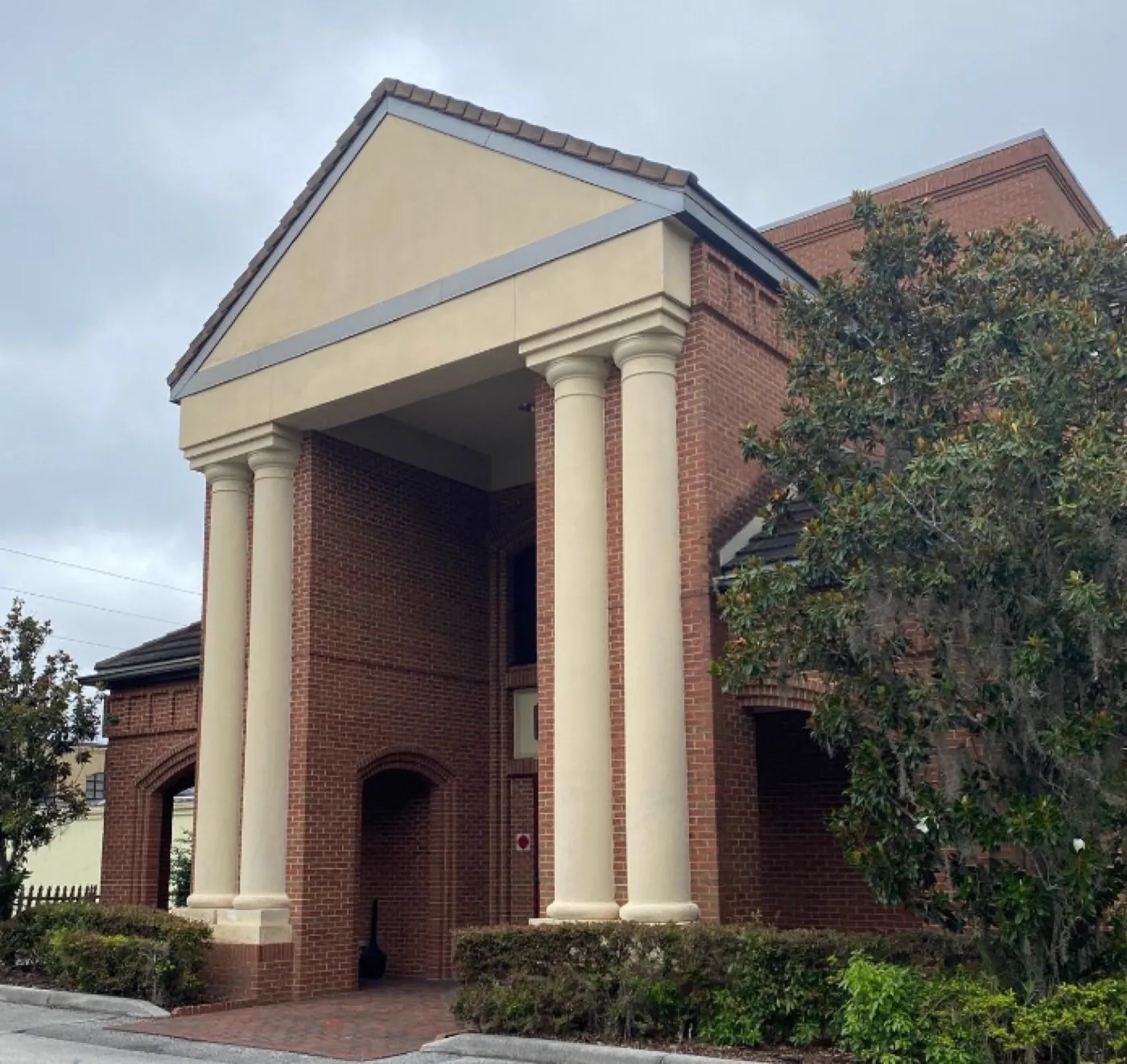
Where our team is based
For Clearwater residents, therapy is offered by secure video.
Our therapy team works from Lakeland, which is about 65 minutes from Clearwater by car via I-4 E, roughly 57 miles, measured outside rush hour. We would rather say that plainly than suggest a weekly drive most people could not keep. For Clearwater residents, therapy is a secure video session, and the planning is mostly about where and when you can talk.
If your workday is across the bay. When the job is in Tampa, the Courtney Campbell Causeway and SR-60 traffic can swallow an evening. A video session spares you the dash back to Pinellas to make an appointment. Ask for a slot that matches the edge of your workday, then take it from a closed office door, a borrowed conference room, or your car once it is parked. Never take a session while driving.
If you work the beach season. Hospitality and service schedules around Clearwater Beach, Island Estates and Sand Key can change week to week. Tell the coordinator up front which days tend to stay fixed, so your standing time lands on one of them and does not get bumped every time a new schedule is posted.
Pinellas resources that sit alongside our care.
To get started, book a video visit or request a callback. A coordinator will ask what is going on and which hours you can protect, then match you with a therapist.
We work with many major commercial plans and offer self-pay options. Coverage varies by plan and service. Our team will confirm with you.
Insurance questions go to our care team, who confirm your coverage with you before your first visit.
Call (863) 510-2624 or read how insurance works here.
The longer answers, one topic at a time.
Clearwater's therapy market has a churn problem, and it runs in both directions. People arrive here constantly: retirees settling near Sand Key, families relocating for work, snowbirds who stay six months and leave. Many of them arrive mid-treatment, hunting for someone new after leaving a therapist behind in Ohio or New Jersey. At the same time, local caseloads fill and close, and the directory listing that looked promising on Tuesday goes quiet by Friday.
Even when you get in somewhere, there's no promise the fit is right, and starting the search again from zero is exactly the kind of task an anxious or depressed brain is worst at.
A statewide telehealth practice changes the math in one specific way: the clinician pool isn't limited to who happens to keep an office within a fifteen-minute radius of Cleveland Street. Florida licensure attaches to the whole state. That means a Clearwater resident can be matched to a clinician by specialty and schedule rather than by street address, and the care coordinator can give you the first open times when you call. We won't promise a date before we have checked the calendar.
"Therapy" is not one thing, and the differences between approaches are not academic hair-splitting. Different problems respond to different structures, and a mismatch between the method and the problem is one of the quieter reasons a course of therapy goes nowhere. Here is the plain-English version of what the main approaches are actually for.
Cognitive behavioral work is the most studied and the most structured. It treats thoughts, feelings, and behavior as a loop and intervenes at the points where the loop can be broken, usually with specific between-session practice. It is a strong fit for anxiety, panic, depression, and insomnia, and it tends to suit people who want a clear rationale and measurable homework rather than open-ended exploration.
Exposure and response prevention is a specific cousin of that and is the treatment of record for obsessive-compulsive disorder. It works by deliberately approaching the trigger while declining the compulsion, and it is deeply counterintuitive, which is why it needs a clinician who knows it rather than a general practitioner improvising. Generic talk therapy for OCD frequently makes it worse by supplying reassurance, which is itself a compulsion.
Grief-focused counseling takes a different angle: instead of treating a loss as a symptom to remove, it makes room for it while you rebuild routines and relationships around what changed. It suits recent bereavement, anticipatory grief, and the kind of loss that has gone quiet but never settled.
EMDR is a trauma-focused protocol that processes specific memories using bilateral stimulation while the memory is held in mind. It has a substantial evidence base for post-traumatic stress and is often faster than talking a trauma through repeatedly. Dialectical behavior skills address emotion regulation, distress tolerance, and interpersonal effectiveness, and they help people whose difficulty is less about a single event than about the intensity and speed of their reactions.
Most experienced clinicians work integratively, drawing on several of these rather than applying one purely. What matters is that the choice is deliberate and explained. It is entirely reasonable to ask, in a first session, what approach your therapist plans to use and why that one for your problem. An answer you can follow is a good sign. A vague one is worth noticing.
Telehealth has a reputation problem it partly earned: big anonymous platforms where you're assigned a rotating counselor you never chose. That's not this. Clearwater clients at Ascend see a specific person, such as Skyler Anderson, RMHCI, a registered mental health counselor intern whose clinical focus is talk therapy and grief. Skyler practices under licensed clinical supervision on the talk-therapy team led by Kaylee Mills Brenneman, LMHC, from Lakeland.
We put the intern credential in plain view on purpose. RMHCI means a clinician who has finished graduate training and is completing supervised clinical hours toward full Florida licensure, with every case overseen by a licensed supervisor. For many clients that structure is a feature rather than a compromise: two sets of clinical eyes on your care, and a reduced session rate that makes weekly therapy sustainable. If you'd rather work with a fully licensed clinician, say so at intake and we'll match you accordingly, or browse the full roster on our providers page.
Either way, you'll know who you're meeting before the first video call connects, what their training is, and how they work. If the fit is wrong after a session or two, tell us. Rematching inside one practice is a phone call, not a brand-new search.
As for that first session, expect it to be quieter than you fear. Your clinician asks what brought you in, what you've tried, and what better would look like six months from now. You set the pace. Nobody digs for your childhood in minute nine, and nothing you share leaves the HIPAA-protected record. By the end you should have a rough sense of direction and a standing time slot, which is often the most therapeutic object a chaotic season can contain.
The research on telehealth psychotherapy has matured enough to summarize honestly. For many common outpatient concerns, anxiety, depression, grief, trauma work, and OCD treated with exposure and response prevention, published outcome studies generally report results comparable to in-person care. That's an encouraging pattern, not a guarantee. Individual responses vary, and no honest practice can promise you a particular outcome, on video or in a room.
Just as real are the limits. Telehealth is outpatient care. It is not appropriate for someone experiencing active suicidality who needs a higher level of care, and a video link is the wrong tool in an emergency. If that's where you are right now, call or text 988, or call 911. If during our work together your needs grow beyond what weekly outpatient sessions can hold, we'll say so directly and help you connect with the right level of support rather than quietly continuing something insufficient.
There's also the ordinary practical question: you need a private space and a reliable connection. A bedroom with a closed door works. So does a parked car outside your office in Countryside. Our team helps first-timers get set up before the initial session, and most people report the format stops feeling strange somewhere in the first two visits.
There's a particular loneliness that comes with living somewhere other people vacation. A lot of Clearwater's therapy demand grows out of transition: the retiree who moved to Belleair for the water and lost a thirty-year social web in the process, the spouse grieving alone in a new state, the family that relocated for a job and discovered that a beach within reach doesn't substitute for people who know you. Complicated grief after relocation and even pet loss, which can hit especially hard when the pet was the last thread to a previous life, show up in our Clearwater caseload again and again.
Seasonality plays its part too. The winter influx and spring emptying-out around Clearwater Beach and Island Estates reshuffles social circles twice a year, and service workers on the beaches live inside that churn rather than beside it.
Therapy doesn't fix geography. What it can do, often, is give the transition a place to be examined: the grief named as grief, the identity rebuilt on purpose instead of by default, the isolation addressed as a solvable problem rather than a personal failing. We serve all of Clearwater and its neighbors, from downtown near Coachman Park through Belleair Bluffs, Largo, Dunedin, Safety Harbor, Palm Harbor, Tarpon Springs, and Oldsmar. Any Florida resident is inside our license.
Our Clearwater telehealth caseload covers the full range of outpatient therapy:
Couples and relational work belongs on this list too. Relocation stress lands on marriages with particular force; when one partner chose the move to Florida and the other absorbed it, resentment tends to arrive about a year behind the moving truck. Couples sessions run 60 minutes over the same secure video setup, and both partners can join from different locations when schedules demand it.
The modalities behind that list are cognitive behavioral therapy (CBT), dialectical behavior therapy (DBT), EMDR for trauma reprocessing, internal family systems (IFS), and ERP. Which one fits depends on your presentation and your preferences, and that's a conversation, not an algorithm. The team also provides LGBTQIA+ affirming care, with multiple providers trained in affirming therapy. What we don't do here is diagnose you through a web page: nothing you read on this site replaces an actual evaluation with a clinician.
We keep the money conversation simple and up front. Session rates for licensed clinicians are confirmed by a care coordinator before you book, so you know the number before any commitment. Supervised registered intern sessions are offered at a reduced rate, which is often the difference between therapy every week and therapy when finances allow. Current tiers live on our insurance page.
Insurance questions go to our care team, who confirm your coverage with you before your first visit. Our coordinators can walk you through what to ask. For rates and the current intern tier, call (863) 510-2624.
Some people simply do better in person, and we'd rather tell you your real options than argue with your preference. Ascend has no Clearwater office. In-person sessions are at our Lakeland office; from Clearwater most clients stay on video. Clients across the bay also see us for therapy in St. Petersburg and therapy in Tampa. Clearwater patients who want face-to-face care can book their sessions at our Lakeland office, about 65 minutes away outside rush hour. The practice's therapy operation is anchored in Lakeland, where our therapy lead is based and where our Lakeland office sees patients at 832 S Florida Ave.
Plenty of clients split the difference: video for the weekly rhythm, an occasional in-person visit when it matters to them. Others start on video planning to switch, then never bother, because the format quietly earned their trust. Start wherever the barrier is lowest. Call (863) 510-2624 or request an appointment through our new patient page, and a coordinator will help you choose.
No. Ascend Mind and Body has no office in Clearwater or anywhere in Pinellas County. The only place we hold in-person therapy is our Lakeland office at 832 Florida Ave S, about 65 minutes from Clearwater via I-4 E outside rush hour. Because a weekly round trip of more than two hours is hard to sustain, therapy for Clearwater residents is offered by secure video, from any private spot in Florida.
The team is Kaylee Mills Brenneman, LMHC, the Therapy Lead, who works with EMDR, DBT, CBT and mental health counseling; Diana Frances Smith, MS, RMFTI, a registered marriage and family therapist intern for couples and family work; Skyler Anderson, RMHCI, a registered mental health counselor intern focused on talk therapy and grief; and Ashley Huston, RMHCI, a supervised intern who provides EMDR and talk therapy. None of them is based in Pinellas, so a Countryside or Island Estates address does not limit who you can see.
Licensed-clinician session rates are confirmed by a care coordinator (see our insurance page). Supervised registered intern sessions are offered at a reduced rate; see our insurance page for current tiers. Insurance questions go to our care team, who confirm your coverage with you before your first visit.
For most outpatient concerns, including anxiety, depression, grief and trauma work, studies generally find video therapy comparable to office visits, though individual responses vary. From Clearwater the realistic alternative is a drive of about 65 minutes each way to Lakeland, and steady weekly attendance tends to matter more than the room. Video is not the right setting for active suicidal intent; in that situation call or text 988, or go to Morton Plant Hospital's emergency center or another ER.
All of them, plus Countryside, downtown Clearwater and the rest of Pinellas. Our therapists are licensed or registered in Florida, so the only location rule is that you are physically in Florida during each session, which your therapist confirms at the start. Beach condos and rentals can have thin walls and shared balconies, so earbuds and a fan near the door help keep the conversation yours.
Use the request form on this page or call the therapy line shown at the top of it. A care coordinator calls back, usually within one business day, asks what is going on and which hours you can keep free around your commute or shifts, and matches you with a therapist. You receive a secure video link before the first session. Insurance questions go to the care team during that same call. That first conversation with a coordinator is not billed; the first billed appointment is the first session itself.
Yes. Relocation, a new job, retirement, seasonal work and the loneliness that can follow a move are all life transitions that therapy is suited to. The team also works with anxiety, depression, grief and loss, trauma and PTSD, OCD with exposure and response prevention, and relationship strain. A first session sorts out what is going on before any approach is chosen, so you do not need a diagnosis to book.
Morton Plant Hospital's Cantonis Emergency Center at 300 Pinellas St and HCA Florida Clearwater Emergency, a freestanding ER at 2339 Gulf to Bay Blvd, are both open 24 hours. Dial 911 when a life is at risk; for a mental health crisis, 988 answers calls and texts at any hour. For a child or teen, Eleos runs Pinellas County's youth Mobile Response Team. Scheduled therapy sessions are not an emergency service.
Yes. NAMI Pinellas County, Florida is the local affiliate of the National Alliance on Mental Illness and a starting point for relatives who want education or peer support. If a family member needs care of their own, Pinellas County's Care About Me line connects residents with a behavioral health specialist by phone, text or chat. For an aging parent, the Area Agency on Aging of Pasco-Pinellas can be reached through the Elder Helpline, 1-800-96-ELDER.
Tell the coordinator what you were working on, which approach you were using, such as CBT, EMDR or exposure work, and roughly how long you had been in treatment. If you like, ask your previous therapist for a short treatment summary and sign their release so it can be shared. Your new therapist reads it, checks how things stand now, and continues from there instead of starting from zero. Sessions begin once you are settled and physically in Florida.
Only while you are in Florida. State rules require you to be physically in Florida for every telehealth session, so a summer up north means planning ahead. Before you leave, you and your therapist can agree on a pause, a step-down in frequency, or a handoff to a clinician licensed where you will be staying, and pick a date to resume once you are back in Pinellas. Mention your travel months at intake so the plan fits them.
Yes. Diana Frances Smith, MS, RMFTI, holds Florida registration as a marriage and family therapist intern and works with couples and families over secure video. Partners can share one screen at home in Countryside or join from separate places, and a relative can log in from elsewhere in the state, as long as everyone is physically in Florida. Because the Lakeland office is about 65 minutes away, couples and family work for Clearwater residents is offered by video.
Start from the concern: EMDR for trauma is offered by Kaylee Mills Brenneman and Ashley Huston, grief is part of Skyler Anderson's work, and couples or family strain goes to Diana Frances Smith. Then ask a few questions in the first session. What approach would you start with for my problem? How often would we meet? Who oversees an intern's work? How will we know it is helping? Can I switch if the fit is wrong? Clear answers are a good sign.
Book a video visit online, or send a request and a care coordinator will call you back. Insurance questions go to our care team, who confirm your coverage with you before your first visit.