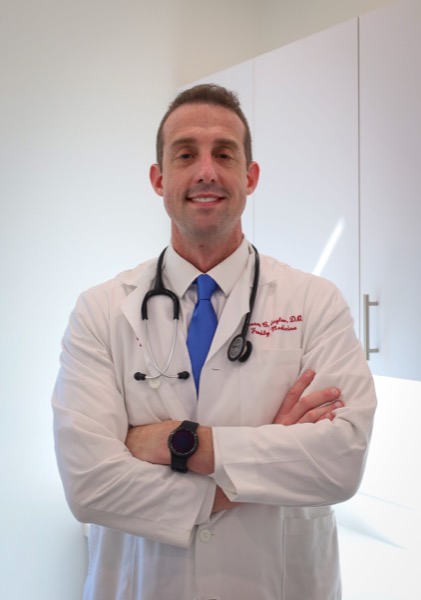
Let's argue the uncomfortable version first. Choosing primary care in Clearwater and ending up with a doctor in Tampa sounds backwards; Pinellas is dense with medical addresses, and Ascend has no office in the county. If a practice on this side of the bay gives you a physician who knows you, keeps your whole record, and can see you promptly when you're sick, take it. Seriously. This page exists for the people who went looking for exactly that and came back with a two-month wait and a rotating cast of providers. For them, Ascend Mind and Body offers Dr. Jason Saylor, DO, board-certified in family medicine with 17 years in practice, at our Tampa-Carrollwood office at 3971 Moran Road, Suite 101, with telehealth doing most of the recurring work so the in-person visit becomes a once-a-year commitment. Call (813) 670-3331 or book online.
What northern Pinellas is rich in, and what it's actually short on
From Belleair up through Dunedin, Safety Harbor, Palm Harbor, and Oldsmar, there's no shortage of medicine. Urgent cares are everywhere. Several large hospital systems anchor the county, and their logos are on half the medical buildings you pass. What's scarce is a very specific thing: a small-panel family physician who is accepting new patients, whose schedule allows an unhurried visit, and who will still be your doctor in five years. Big systems route you to whoever has an opening that month. High-volume practices deliver competent medicine in slots too short for context. The relationship, the part that makes primary care work as a discipline, is the piece that keeps going missing.
Scarcity of relationship, not scarcity of clinics, is the honest description of the northern Pinellas market. Once the problem is named that way, the map opens up. A physician across the county line who actually offers the relationship beats fifteen closer addresses that don't.
Worth naming, too, is what the relationship is made of, since the word gets thrown around loosely in healthcare marketing. It means the physician who orders your labs is the one who reads them, remembers last year's numbers, and notices the drift between them. It means your full medication list lives in one chart instead of being reassembled from memory in a hallway off Gulf-to-Bay. It means the person deciding whether your chest tightness is reflux or something worth chasing has examined you before, more than once, and knows your baseline. None of that can be delivered by a rotation of well-meaning strangers, however conveniently located they are.
A Clearwater patient's year with Ascend, sketched out
Here's the actual shape of the arrangement, because an out-of-county physician only makes sense if you can see how rarely you need to be in the room. Once a year, the annual physical happens in person at Carrollwood, 3971 Moran Road, Suite 101. New-patient evaluations work the same way, since both require hands-on examination. If a mid-year problem needs palpation, auscultation, or in-office testing, that is another in-person appointment, at Carrollwood or at our Wesley Chapel office at 27724 Cashford Circle, Suite 102, whichever fits.
Everything else in a typical year happens over Florida telehealth, available to established patients for medication refills, stable chronic-disease follow-ups, lab review, and simple acute issues. Your blood work doesn't travel either; Quest Diagnostics and Labcorp both run draw sites across Clearwater, Largo, and Dunedin, orders go to whichever is handy, and results reach your patient portal within 1 to 3 business days for most panels. For a stable patient, the whole year can amount to one in-person appointment plus a handful of video check-ins from home. Dr. Saylor sets that cadence and modality with you at the first appointment based on what you're being treated for; it flexes when your health does.
Prevention and chronic care with the loop closed
The clinical substance is deliberately unglamorous. Hypertension managed as a cycle of diagnosis, lifestyle work, medication titration, and monitoring rather than a once-a-year reading. High cholesterol tracked with scheduled lipid panels, an honest conversation about statins, and attention to family-history risk. Type 2 diabetes followed by A1c with medication chosen across metformin, SGLT2, and GLP-1 classes as appropriate, dietary counseling included, and referrals to ophthalmology or podiatry when the disease demands them. Hypothyroidism means TSH monitoring and careful levothyroxine adjustment, with Hashimoto's evaluated where it belongs in the differential.
Add chronic pain handled non-opioid first with PT referrals and cautious prescribing, plus preventive screenings: age-appropriate cancer screening, vaccinations, baseline labs, and cardiovascular risk assessment. What ties it together is follow-through. Labs get drawn, results get read by the same physician who ordered them, doses get adjusted, and the recheck lands on the calendar before you hang up. Acute problems, respiratory infections, GI complaints, skin issues, injuries, are folded in as they arise rather than outsourced to whoever happens to be open.
Preventive screening, by decade
Preventive care is one of the few places in medicine where the right answer depends heavily on your age and very little on how you feel. What follows is the general adult picture. Personal and family history moves several of these earlier, so treat it as the shape of the schedule rather than your schedule.
Twenties and thirties. Blood pressure at least every couple of years, and yearly once it starts creeping. A cholesterol and glucose baseline, earlier if there is family history of early heart disease or diabetes. Cervical cancer screening on its own interval. Sexually transmitted infection screening based on actual risk rather than assumption. For anyone who might become pregnant, this is also when a preconception conversation belongs, because several common medications and several uncontrolled conditions are much better addressed before conception than after.
Forties. The decade where quiet things start. Colorectal cancer screening now begins at 45 for average risk, and the choice between a colonoscopy and a stool-based test is a real conversation rather than a default. Mammography starts in this decade, with the exact year and interval worth discussing rather than assuming. Diabetes screening becomes routine rather than risk-based, and a formal cardiovascular risk estimate starts to be worth calculating, because this is the decade where a statin decision genuinely turns on the arithmetic.
Fifties and sixties. Lung cancer screening enters the picture for adults with a substantial smoking history, and it is badly underused; if you smoked heavily and quit, ask, because a low-dose CT is one of the highest-yield screening tests available to that group. Prostate cancer screening becomes a shared decision rather than a reflex. Bone density enters the conversation. Shingles and pneumococcal vaccination have their own age thresholds. Hepatitis C screening is recommended once for essentially every adult and is still missed constantly.
Seventies and beyond. The logic inverts. Several screening tests stop making sense at the point where the harms of finding something arrive sooner than the benefits, and continuing to order them out of habit is its own kind of poor care. What replaces them is more valuable: falls risk, cognitive change, hearing and vision, and above all a hard look at the medication list, since the number of prescriptions tends to climb while the ability to tolerate them quietly declines.
The reason to have one physician holding this is that the schedule is cumulative. It only works if somebody is tracking what was done, when, and what comes next, which is exactly what gets lost in care delivered by whoever had an opening.
Where this arrangement isn't the right fit
Honesty cuts both ways, so here are the cases where you should probably stay local. If you expect frequent unscheduled in-person visits, if getting to another county is a genuine barrier for you, or if a hands-on exam is likely to be a monthly rather than yearly event, a Pinellas-based practice serves you better, and primary care in St. Petersburg or a clinic in your own neighborhood is the right call. Telehealth also has hard edges: annual physicals and anything requiring an in-person exam can't happen over video, full stop, and this practice won't pretend otherwise.
The patients this model fits are the ones it was built for: adults managing one or a few chronic conditions, people who value seeing the same physician every time, and households that would rather do routine follow-ups from a laptop in Safety Harbor than spend an afternoon in a waiting room. If that's you, the geography is a smaller obstacle than it first appears. And if you're genuinely unsure which camp you're in, say so on the phone; the front desk would rather talk you out of a poor fit honestly than book an appointment that serves nobody. A practice that intends to keep patients for a decade can afford to lose the ones it was never right for.
Your first appointment at Tampa-Carrollwood
Booking runs through (813) 670-3331 or the online form, with new-patient slots typically available within 1 to 2 weeks. Intake paperwork happens online beforehand. Come with your medication list including supplements and over-the-counter items, any prior records worth reviewing, and your insurance card, benefits get verified before you're seen.
Budget 45 to 60 minutes in the room. Dr. Saylor takes the full history, examines you, works through whatever prompted the visit, and orders baseline labs if yours aren't current. You leave with a written plan in your patient portal, and the follow-up rhythm gets set then and there: stable chronic conditions typically recheck every 3 to 6 months, mostly by video for Pinellas patients, with the annual physical as the fixed in-person anchor.
One scheduling note earned by experience: mid-morning and early-afternoon slots are the easiest to keep for patients coming from out of county, and the front desk will steer you there if you ask. And if you fall ill mid-year, you're not stranded by geography; established patients with acute issues can usually be seen the same week, frequently by video first to sort out whether an in-person exam is even needed.
The physician: Dr. Jason Saylor, DO
Dr. Saylor is a board-certified osteopathic family medicine physician, a graduate of Philadelphia College of Osteopathic Medicine, and Ascend's Chief Medical Officer, with 17 years of clinical experience spanning urgent care and private practice. Osteopathic training covers everything MD training does, prescribing, imaging, referrals, all of it, with added depth in the musculoskeletal system and an orientation toward treating the person rather than the diagnosis code. In practice that means visits where sleep, stress, work, and family history get real airtime, because context is usually where the answer lives.
He personally sees patients at both Tampa-Carrollwood and Wesley Chapel, and when a case needs cardiology, endocrinology, or another subspecialty, records are exchanged with your written consent by secure fax or portal. Specialist coordination isn't an add-on service; for patients juggling multiple conditions it's most of the value of having one physician at the center. Your Pinellas-side specialists stay your specialists; the point is that someone reads all their notes together, notices when two plans quietly contradict each other, and says so.
Insurance status and what happens before you're billed
For primary care, the practice is in-network with Aetna, ChampVA, and UnitedHealthcare. That status varies by carrier and plan and the accepted list is updated regularly, so the working rule is simple: call (813) 670-3331 with your insurance card before the visit and the team verifies your benefits ahead of time. Out-of-network billing for primary care never happens here without a clear conversation about cost first.
Self-pay patients and people with high deductibles are handled the same transparent way. Rates depend on visit type and on any labs or procedures done at the appointment, which is why no flat-rate sheet appears on the website; the billing team quotes the exact figure when you call, and cash-pay options are worth asking about on that call.
Nearby alternatives on both sides of the bay
This page serves Clearwater (33755, 33756, 33759, 33761, 33763, 33764, 33765, 33767), Clearwater Beach, Belleair, Dunedin (34698), Largo, Safety Harbor (34695), Oldsmar (34677), and Palm Harbor (34683, 34684). Comparing further afield: primary care in Tampa covers the Carrollwood office directly, primary care in Wesley Chapel covers the Pasco hub, primary care in St. Petersburg serves southern Pinellas, and primary care in Brandon serves eastern Hillsborough.
Mental health support is available without leaving the practice: psychiatry in Clearwater with Anna Stouffer, PMHNP-BC, and talk therapy in Clearwater with the therapy team, both via Florida telehealth, which for Pinellas patients means no in-person appointment at all. Primary care tends to be where those conversations start, and having the referral live inside the same practice means it actually goes somewhere.
Also see our nearby primary care options
Looking for in-person care, or comparing across Tampa Bay clinics?
- Primary care in Tampa: in-person at our Carrollwood office
- Primary care in Wesley Chapel: in-person at our Pasco County hub (legal practice address)
- Primary care in St. Petersburg: also Pinellas County, southern end
- Primary care in Brandon: eastern Hillsborough County
For mental health alongside primary care, see psychiatry in Clearwater (Anna Stouffer, PMHNP-BC, via Florida telehealth) or talk therapy in Clearwater (therapy team via Florida telehealth).
FAQs about primary care in Clearwater
Why doesn't Ascend have a Clearwater primary care office?
We focus on three physical locations (Wesley Chapel, Tampa-Carrollwood, and Lakeland). Ascend has no Clearwater office. Tampa-Carrollwood, at 3971 Moran Road, Suite 101, Tampa, FL 33618, is the closest in-person primary care clinic for Clearwater residents. Wesley Chapel, at 27724 Cashford Circle, Suite 102, Wesley Chapel, FL 33544, is the other option.
Can primary care be done via telehealth?
Some primary care can - medication refills, stable-condition follow-ups, lab review, simple acute issues. Annual physicals and any visit requiring a hands-on exam need to be in person. Dr. Saylor sets the cadence and modality with you at your first appointment based on what you are being treated for. For Pinellas patients, the typical cadence is one annual in-person visit plus telehealth check-ins for stable follow-ups.
How quickly can I get an appointment?
New patient appointments are typically available within 1-2 weeks. Established patients with acute issues can usually be seen the same week. Call (813) 670-3331 in the morning to ask about same-day availability.
Where do I get my labs drawn?
Quest Diagnostics and Labcorp both have draw sites across Clearwater, Largo, and Dunedin. We send the orders to whichever location is most convenient. Results post to your patient portal within 1-3 business days for most panels.
What is the difference between a DO and an MD?
Doctors of Osteopathic Medicine (DOs) complete the same medical training as MDs plus additional training in the musculoskeletal system and a whole-person approach. DOs prescribe medication, order imaging, and refer to specialists exactly like MDs. The philosophical difference is integrative - treating the whole patient, not just the disease.
Will Dr. Saylor coordinate with my specialists?
Yes. With your written consent, we exchange records with your specialists by secure fax or portal. Care coordination is a core part of primary care, especially for patients with multiple chronic conditions or active treatment with cardiology, endocrinology, or other subspecialties.