Kaylee Mills Brenneman, LMHC
EMDR, DBT, CBT, Mental Health Counseling
Video visits across Florida · in person in Lakeland
St. Petersburg residents · Florida telehealth (video)
Therapy by secure video for St. Petersburg residents, with our therapy team, led by Kaylee Mills Brenneman, LMHC. No drive and no waiting room.


You’ll see Kaylee Mills Brenneman, LMHC, Diana Frances Smith, MS, RMFTI and 2 more.
Prefer a call first?
Request a visit
Tell us how to reach you and, if you like, what is going on. We confirm your coverage before your first visit.
Quick answer
Our therapy team, led by Kaylee Mills Brenneman, LMHC, sees St. Petersburg residents by secure Florida telehealth from our Lakeland office, with open times on the booking calendars below or by callback. If you would rather be seen in person, our Lakeland office is about 55 minutes from St. Petersburg. Ascend has no St. Petersburg office. Telehealth visits are for Florida residents. We work with many major commercial plans and offer self-pay options. Coverage varies by plan and service. Our team will confirm with you.
Pick a clinician and book a time that works for you.
EMDR, DBT, CBT, Mental Health Counseling
Video visits across Florida · in person in Lakeland
Registered marriage and family therapist intern
Video visits across Florida · in person in Lakeland
Registered mental health counselor intern
Video visits across Florida · in person in Lakeland
Booking opens the clinician’s Zocdoc calendar in a new tab, set to new-patient video visits. Prefer to talk to someone first? Use the form and a care coordinator will call you.
Four steps from booking to a plan you can follow, without leaving St. Petersburg.
Pick a time on Zocdoc, or send the form and a care coordinator calls you back, usually within one business day.
Before the visit you receive a secure video link. Join from a phone, tablet or laptop, from a private spot in Florida.
Mostly a conversation with a purpose: what brings you in, what you want to change and how you would like to work together.
Most people start weekly, then space sessions out as things improve. Psychiatry can be added inside the same practice if medication may help.
Most St. Petersburg patients choose video. If you would rather sit in the room, our Lakeland office is about 55 minutes away.
Recommended for St. Petersburg
Serving St. Petersburg, Pinellas County
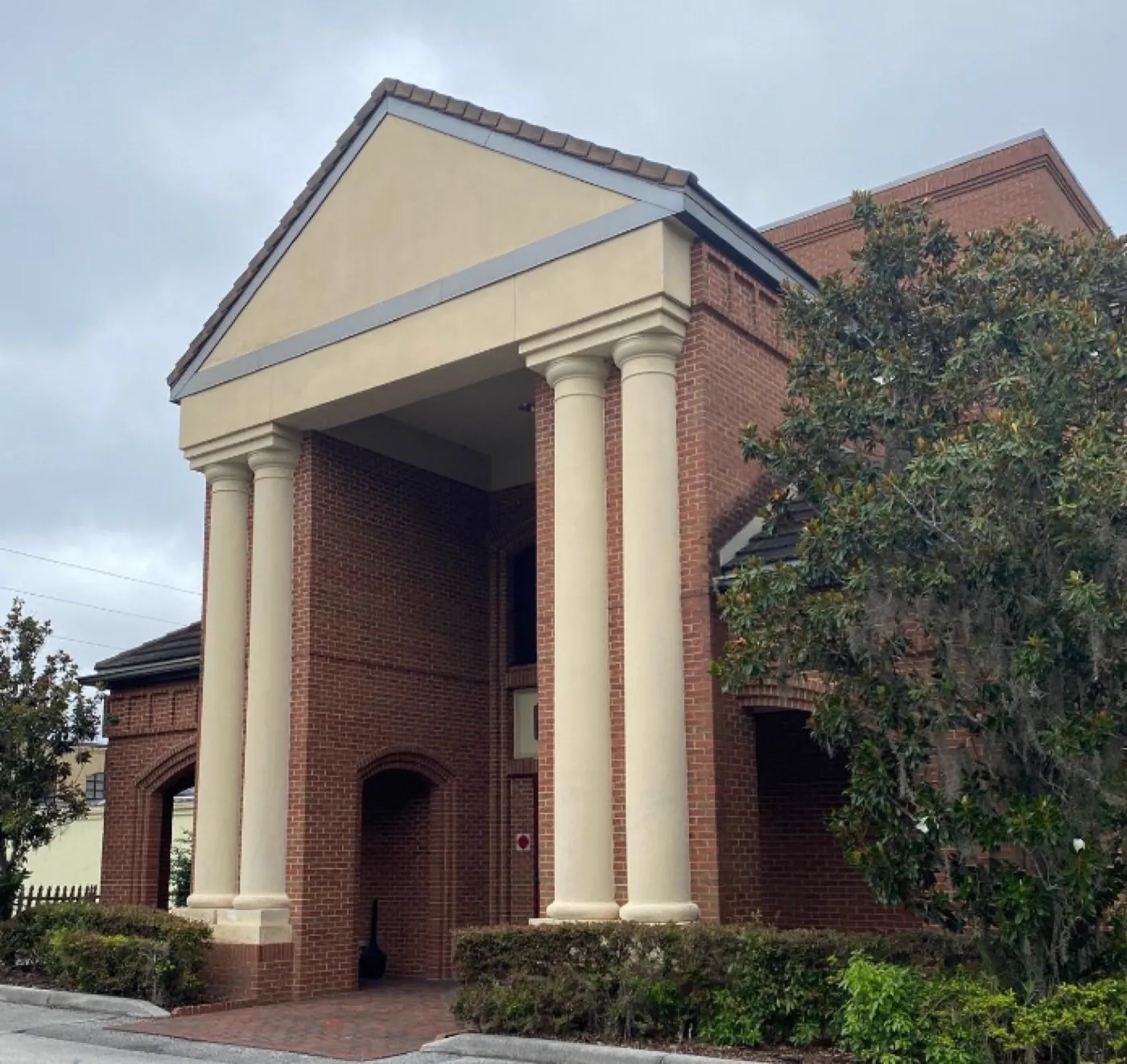
Prefer in person?
About 55 min from St. Petersburg by car via I-4 E, outside rush hour
Our therapists are based in Lakeland, a drive of about 55 minutes from St. Petersburg outside rush hour and close to 58 miles by way of I-4 E. Few people can hand over two hours of a weekday for one session, so for St. Pete residents the realistic offer is secure video. The in-person option at the Lakeland office is there for anyone who wants it.
If your week runs across the water, over the Howard Frankland on I-275 or along Gandy Blvd, a midday session from a private room at work keeps the bridge out of it. In Historic Old Northeast, Crescent Lake or Historic Kenwood, a closed bedroom door and headphones usually cover privacy, and a parked car works when the house is full. Wherever you join from, you need to be in Florida when the link opens.
Who to start with.
Help in Pinellas County between sessions. None of these is run by Ascend Mind and Body:
To begin, send a request from the form; a care coordinator will match you with a therapist and a time that holds up through your week.
We work with many major commercial plans and offer self-pay options. Coverage varies by plan and service. Our team will confirm with you.
Insurance questions go to our care team, who confirm your coverage with you before your first visit.
Call (863) 510-2624 or read how insurance works here.
The longer answers, one topic at a time.
Run the experiment most St. Pete residents have already run. Pick six promising profiles from a directory. Call all six. In a typical week, two return the call, one has an opening, and the opening exists because somebody else quit. So the clinician you end up with was selected by the least clinical variable imaginable: whose Tuesday at 4 happened to free up.
That's the paradox of a deep market. When a city has this many therapists, the directories become a wall of near-identical profiles, every one warm-toned and welcoming, none of them telling you who actually has room, who genuinely specializes in what you're carrying, or what a session will cost until you're already on the phone. The search itself becomes a small administrative job, and the people most in need of therapy, the depressed, the anxious, the freshly grieving, are the people least equipped to run it.
We built the intake process to absorb that job instead of assigning it to you. One call. A coordinator asks what you're dealing with, what kind of clinician you want, and what your budget looks like. Then you're matched deliberately rather than by cancellation. The coordinator gives you the first open times with each clinician on that call, because timing is usually the whole ballgame.
Let's grant the obvious: if a well-matched, fully licensed clinician in Old Northeast has an opening this week at a rate you can carry, taking it is a perfectly good decision. We're not going to pretend proximity is worthless. Walking to therapy past the banyans on a February morning in St. Pete is genuinely pleasant. Clients nearby also see us for therapy in Clearwater and therapy in Tampa, and in-person sessions are at our Lakeland office.
Proximity just turns out to be the weakest of the variables that predict whether therapy helps. Fit matters more: the working alliance between you and this specific person, their actual training in your actual problem. Availability matters more: weekly sessions that start now versus excellent care that starts in eight weeks. Continuity matters more: a clinician who won't discharge you when you move from Snell Isle to Seminole, because a Florida telehealth license travels with you anywhere in the state.
Distance stopped correlating with those things the moment sessions moved onto secure video. The clinician three blocks away and the clinician in the next county are the same number of clicks from your couch. Once that's true, the honest question shifts from "who is closest" to "who is right, and who has room." Those are the two questions our matching process is built around, and we'd rather compete there than on geography we don't own.
There's a privacy angle particular to a walkable city, too. St. Pete's neighborhoods are villages; the person leaving a counseling office downtown will eventually stand behind their therapist at the Saturday Morning Market. Some people shrug at that. For others, especially professionals whose clients live in the same few square miles, a clinician who exists entirely outside their daily orbit is the feature that finally makes therapy feel safe to start.
St. Pete clients at Ascend are matched to a named clinician before anything begins, such as Skyler Anderson, RMHCI, whose clinical focus is talk therapy and grief. RMHCI is Florida's registered mental health counselor intern credential: graduate training complete, now accruing supervised hours toward full licensure, with every case reviewed under licensed clinical supervision, on the therapy team led by Kaylee Mills Brenneman, LMHC.
We state that plainly because vagueness about credentials is how this industry loses trust. The supervised-intern structure carries real advantages, a reduced session rate and a second licensed clinician effectively attached to your care, and real tradeoffs, which is exactly why it's disclosed rather than buried. Prefer a fully licensed therapist? Say so at intake; the roster, with photos, modalities, and licensure, is on our providers page.
And if the match misses, you say so and we rematch. Inside one practice that's a scheduling change. Out in the directory wilderness, it's starting the six-voicemail experiment over from zero, which is precisely the failure mode that keeps people stuck with a mediocre fit for years.
Worth knowing before session one: the opening appointment is an unhurried conversation, not an interrogation. Your clinician wants the shape of the problem, the history of what has and hasn't helped, and your own theory of what's going on, because clients usually have one and it's usually worth hearing. Treatment planning grows out of that first hour rather than being imposed on it. If EMDR or ERP is on the table, you'll hear why, what the protocol involves, and what the research does and doesn't support, before anything begins.
Here's a scenario every experienced therapist recognizes. Months into good therapeutic work, it becomes clear that medication deserves a real conversation: the depression isn't lifting, the panic is winning, sleep has collapsed. In a solo practice, that moment triggers a referral to another practice, a records release, and weeks of two clinicians who've never spoken trying to coordinate through you.
Ascend is a multi-specialty Florida medical practice. Psychiatry lives inside the same practice as talk therapy, reachable at (813) 670-3005, and the practice also runs primary care. When a therapy client needs a psychiatric evaluation, the handoff happens inside one organization instead of across a fax line. That's not a promise that medication will be recommended, or that it will help if it is; prescribing decisions belong to the prescriber after an evaluation, and no honest clinic guarantees outcomes from any treatment. It's a statement about plumbing: fewer dropped balls, less repeating your story from scratch, and clinicians who can actually confer about your care with your consent.
For a lot of the people reading this page, that coordination is the deciding argument, because they've lived the alternative. The therapist in the standalone office three blocks away may be excellent. What that office usually can't offer is a psychiatric colleague down the same organizational hallway. The reverse flow matters just as much: psychiatric patients whose prescriber believes talk therapy should be part of the picture get connected to our therapy team without leaving the practice, so the two halves of treatment stop being strangers to each other.
The effectiveness question deserves a direct answer. For most outpatient concerns, anxiety, depression, trauma-focused therapy, OCD treated through exposure and response prevention, grief, and life transitions, the published research to date generally finds video-delivered therapy comparable to in-person care. Comparable in studies is not a guarantee for you personally. Responses to therapy vary person to person, and anyone promising otherwise is selling something.
The limits are equally direct. Outpatient telehealth is not the right level of care for active suicidality; if that's tonight's reality, call or text 988 or call 911 rather than booking anything. And should our work reveal that you need more support than weekly video sessions provide, we'll tell you and help you get there.
Mechanics, briefly: 50-minute individual sessions, 60 minutes for couples and family work, conducted over a HIPAA-secure video platform rather than a consumer video-call app. A secure link lands in your email or texts before the session. If you eventually want a face-to-face visit, Ascend has no St. Petersburg office; in-person sessions are at our Lakeland office, about 55 minutes away outside rush hour. If sitting in a room together matters to you, tell the care coordinator when you book and your sessions can be set there.
The caseload from St. Petersburg spans the full outpatient range:
Couples and relational therapy rounds out the list. Two people in a stressed marriage rarely have identical schedules, and the video format quietly solves a logistics problem that sinks a lot of couples work: one partner can join from the house in Shore Acres while the other signs in from an office downtown, and the session still happens. Relational sessions get the longer 60-minute block.
The toolbox is CBT, DBT, EMDR, IFS, and ERP, applied by presentation and preference rather than by default. Care is LGBTQIA+ affirming, with multiple providers trained in affirming therapy, which matters in a city with St. Pete's queer community. One boundary worth naming: reading this page can't diagnose you, and it isn't meant to. Diagnosis happens in an evaluation with a clinician, not in a browser tab.
We see clients from Shore Acres to Pinellas Point, Disston Heights to Downtown, Crescent Lake, Tyrone, Kenwood, Pinellas Park, and everywhere between. A Florida address is the only geographic requirement.
No number games here, and no digits on this page either, because rates change and stale numbers mislead. The structure: licensed-clinician session rates are confirmed with you by a care coordinator before you book anything. Supervised registered intern sessions run at a meaningfully reduced rate, listed by tier on our insurance page, and for many clients that tier is what makes weekly therapy financially sustainable rather than occasional.
Insurance questions go to our care team, who confirm your coverage with you before your first visit. Your policy, not the practice, decides your benefit, so have your insurance card handy for that conversation. Insurance questions go to our care team, who confirm your coverage with you before your first visit. You can also request an appointment online through our new patient page and have that conversation afterward.
One quiet advantage of the money conversation happening before the match: nobody ends up three sessions deep with a clinician they can't afford. Budget is part of the intake questions on purpose, and answering it honestly costs you nothing except a mismatch you would have regretted.
The thing that most reliably degrades a video therapy session is not the technology. It is the room. A little deliberate setup makes a real difference to what the hour is capable of, and almost nobody is told this in advance.
Privacy first, because it determines what you are willing to say. A door that closes matters more than a nice background. Headphones matter more than a good camera, both because they keep your side of the conversation from carrying and because they make the therapist's voice feel closer than laptop speakers ever will. If the household makes a truly private room impossible, a parked car is a legitimate and widely used option; plenty of good work has been done in driveways. If you are worried about being overheard, say so at the start, and the session will be adapted rather than pushed through.
Position the camera at roughly eye level rather than looking up at you from a lap, because a great deal of what a clinician reads is in the face and posture, and a phone propped low delivers mostly ceiling. Front-facing light is better than a window behind you, which turns you into a silhouette. Both of those take thirty seconds and improve the session more than any equipment purchase would.
A few practical things worth doing once. Test the link and the sound before the first appointment rather than at the appointment. Put the phone on do-not-disturb but keep it reachable, so a dropped connection can be recovered by a quick call. Ask, at the first session, what happens if the video fails mid-hour, because there should be a plan and knowing it removes a small background anxiety.
Two habits people find useful and stumble into by accident. Leave a few minutes on either side rather than joining from one meeting and leaving for another; the hour lands differently when it is not sandwiched. And do not multitask, which sounds obvious and is astonishingly easy to do at home. Sessions taken while half-watching a screen or half-listening for a delivery deliver about half the value.
Florida law requires you to be physically inside Florida during each session, and your therapist confirms your location at the start. That is a licensure requirement rather than a formality, and it applies whether you are at home or traveling within the state.
Not anywhere in Pinellas County. Ascend Mind and Body has no St. Petersburg office, so St. Pete residents work with our therapists by secure video. The only in-person setting is the Lakeland office at 832 Florida Ave S, Second Floor, about 55 minutes away outside rush hour by I-4 E. Most weekly schedules cannot absorb that drive, which is why video is the default here, but Lakeland stays open to you if sitting in the room matters.
Any of the four on the therapy team. Kaylee Mills Brenneman, LMHC, is the Therapy Lead and practices EMDR, DBT, CBT and mental health counseling. Diana Frances Smith, MS, RMFTI, works with couples and families under her registered marriage and family therapist intern credential, and she is booked by callback. Skyler Anderson, RMHCI, a registered mental health counselor intern, provides talk therapy and grief work. Ashley Huston, RMHCI, is a supervised intern offering EMDR and talk therapy. The booking cards on this page let you pick one directly.
Licensed-clinician session rates are confirmed by a care coordinator (see our insurance page). Supervised registered intern sessions are offered at a reduced rate; see our insurance page for current tiers. Insurance questions go to our care team, who confirm your coverage with you before your first visit.
Distance is only one factor. For many outpatient concerns, studies generally find video therapy works about as well as sessions in a room, though results vary and no one can promise yours. What tends to matter more is your fit with a particular therapist and whether you can keep a steady weekly time. Video lets you choose for fit and schedule rather than by distance, and some people simply prefer a therapist who is not part of the neighborhood where they shop and work.
Yes, every St. Petersburg neighborhood is covered, including Downtown, Historic Old Northeast, Historic Kenwood, Crescent Lake, Snell Isle and the Grand Central District, along with ZIP codes such as 33701, 33703, 33704, 33705, 33710 and 33712. Because sessions are by video, the city map matters less than one legal detail: you have to be in Florida during each session, which your therapist confirms when you join.
Call (863) 510-2624 or request an appointment online at https://ascendmb.com/new-patients/. The care coordinator gives you the first open times when you call. We'll send a HIPAA-secure video link before your session.
Anxiety, including panic and agoraphobia; depression; trauma and PTSD; OCD; grief and loss; and transitions such as a breakup, a new job, retirement or a move across the bay. Kaylee Mills Brenneman and Ashley Huston both offer EMDR for trauma, Skyler Anderson concentrates on grief, and Diana Frances Smith handles couples and family therapy. If the problem is hard to name, that is fine; the first session is for figuring it out together.
Care About Me is a coordinated access line Pinellas County launched in May 2024. Residents or family members who are not in crisis can reach a behavioral health specialist; that person works out what kind of help fits and sets up an appointment with a local provider. It can help when a relative needs a different kind of care than talk therapy. If you already want therapy with our team, booking here is the direct route. In a crisis, skip both: call or text 988, call 911, or go to an ER such as Orlando Health Bayfront Hospital, St. Anthony's Hospital or HCA Florida St. Petersburg Hospital.
Every Pinellas County school has its own designated 504 Coordinator, and that is who the district wants parents to ask about Section 504. On special education, the district's advice is to work with the school-based team first; each ESE student is assigned a case manager. If your child's struggles are part of what you are carrying, bring that to your own sessions too; planning a school meeting with your therapist can make it less daunting.
Yes. The Area Agency on Aging of Pasco-Pinellas, which the Florida Department of Elder Affairs lists as the local aging and disability resource center, has its headquarters on Koger Blvd, at a St. Petersburg address. Florida's Elder Helpline, 1-800-96-ELDER (1-800-963-5337), is the statewide number that routes you to it. Caregiver stress, guilt and exhaustion are fair things to bring into therapy, and your therapist can help you think through what to ask the agency for.
Yes. The team includes supervised registered interns, and their sessions are offered at a reduced rate compared with a licensed clinician; Skyler Anderson, RMHCI, is one, and her provider page notes the reduced intern rate. Interns work under licensed clinical supervision, so the lower fee reflects their stage of training. Ask the care team for the exact fee and any reduced-rate openings before you book; no figures are posted here.
A care coordinator on the therapy team is the person who calls, usually within one business day of your request, to ask what is going on and which hours you can keep. If you would rather skip the call, Kaylee Mills Brenneman and Skyler Anderson can be booked directly through the online calendars on their cards, which show real openings. Diana Frances Smith and Ashley Huston book by phone. We do not quote a wait because it changes week to week.
For trauma, EMDR with Kaylee Mills Brenneman, LMHC, or Ashley Huston, RMHCI, is one route. Kaylee, Skyler Anderson and Ashley all take depression and anxiety in talk therapy, and Kaylee also brings CBT and DBT. A divorce is a life transition you can work through in individual sessions; if co-parenting or the whole family is strained, Diana Frances Smith, MS, RMFTI, works with couples and families. Not sure? Describe it in a sentence on the request form and a coordinator will suggest a fit.
Yes. A therapist's Florida license or registration is good statewide, and your sessions already happen by video, so moving from Snell Isle to Sarasota, Gainesville or anywhere else in the state does not interrupt anything. Update your address with the care team and keep your weekly time. A move out of Florida is different, because sessions require you to be in Florida, so mention it as soon as you know.
Book a video visit online, or send a request and a care coordinator will call you back. Insurance questions go to our care team, who confirm your coverage with you before your first visit.