Senior primary care in Wesley Chapel via Ascend Mind and Body: same-week appointments at our Cashford Circle flagship (27724 Cashford Circle, Suite 102, 33544) or via Florida telehealth follow-ups for established patients. Comprehensive primary care for adults 65 and over, including the Medicare Annual Wellness Visit, medication reconciliation, fall risk assessment, cognitive screening, chronic disease management, and advance care planning. Dr. Jason Saylor, DO is the physician. Call (813) 670-3331 or book online.
A senior boom the physician supply never caught
Drive SR-54 or Bruce B. Downs and you can watch the demographics change in real time: new communities aimed at retirees going up beside the family subdivisions, medical plazas filling in behind them. Growth like that attracts volume-model medicine first, because volume models scale fast. What scales slowly is the other thing older patients need, a physician who stays put long enough to know them. Wesley Chapel has plenty of places to be seen quickly. It has far fewer places to be known.
That's the niche this office deliberately occupies. Not urgent care, not a plan-branded clinic, but a family medicine practice where the same physician owns your chart year over year.
The volume model's failure, to be fair to the people inside it, isn't rudeness. It's arithmetic. An older adult with five conditions, twelve medications, and a fall last month cannot be safely reviewed in the appointment slot those systems sell, and no amount of individual goodwill inside the building fixes what the schedule template broke. Changing the outcome required changing the template, so that's what we changed.
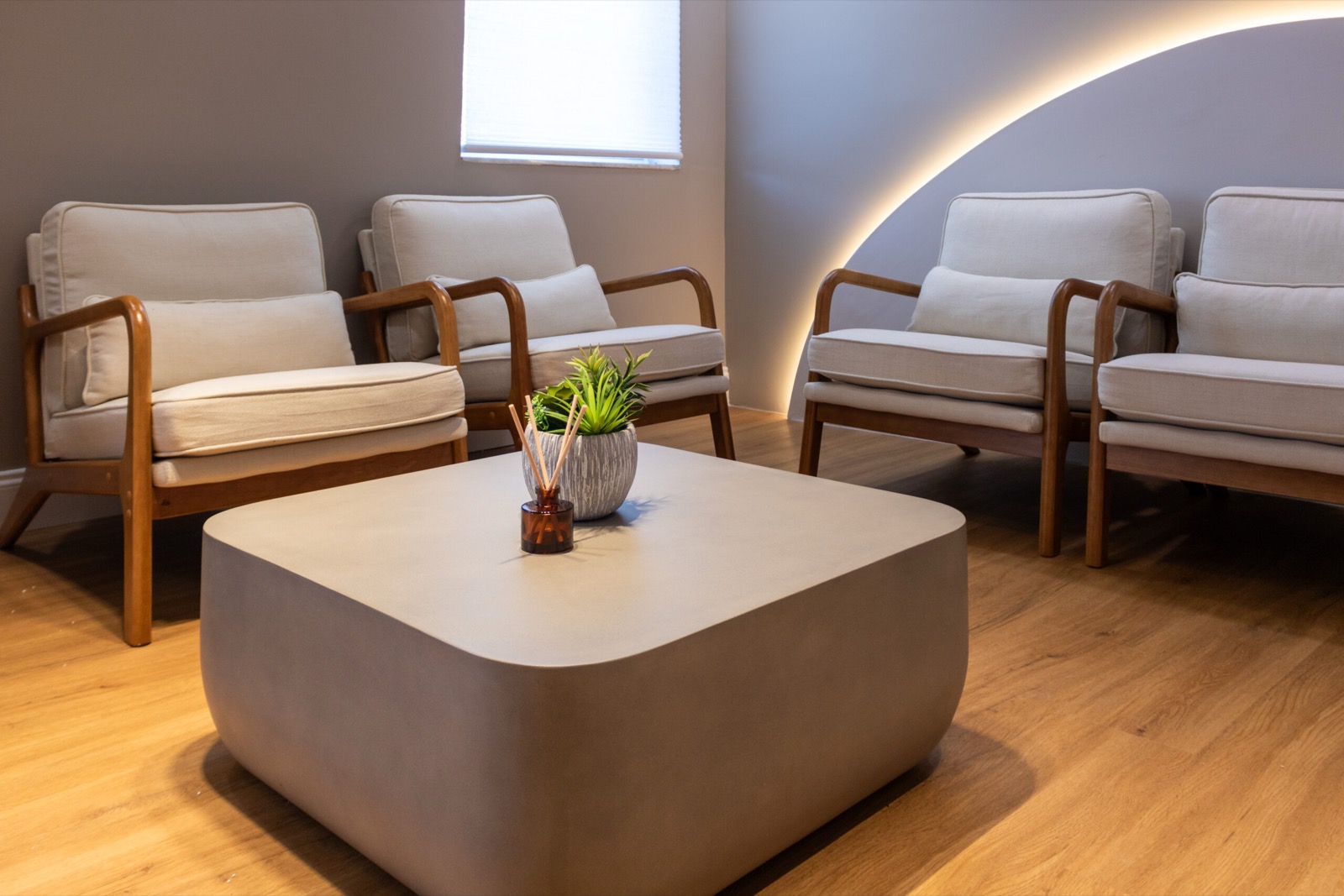
An office designed around the people who use it
The flagship sits at 27724 Cashford Circle, Suite 102, Wesley Chapel, FL 33544, in the Cypress Creek Town Center corridor off SR-54, just east of I-75. Practical details matter more at 78 than at 38, so here they are: surface parking near the door, a ground-floor entrance with no stairs to negotiate, and exam rooms sized to accommodate walkers and wheelchairs.
Getting here is a short hop from most of the area. From Tampa Palms or New Tampa, figure 10 to 15 minutes north on Bruce B. Downs Boulevard. From Land O' Lakes, about 15 to 20 minutes east along SR-54. From Lutz, roughly 15 minutes north via Livingston Avenue.
The location logic is equally simple: this corridor is where Wesley Chapel already goes. The retail and restaurant build-out around Cypress Creek Town Center means a medical appointment here folds into a normal errand loop instead of demanding its own expedition, which sounds trivial until you're the one arranging rides.
Same-week access, then the same doctor for years
New senior patients can usually get a first appointment the same week. Access matters at the start, continuity matters forever after, and most local options force a choice between the two: the fast clinic you'll never see twice, or the beloved practice with a nine-month waitlist. The point of this office is refusing that trade. After the first visit, the value compounds. Dr. Jason Saylor, DO is a board-certified osteopathic family medicine physician with 17 years of clinical experience and serves as Chief Medical Officer at Ascend; his clinical scope explicitly includes senior care, preventive medicine, chronic disease management, and medication reconciliation. Seeing one physician repeatedly isn't a comfort feature. It's the mechanism by which slow changes get caught: the blood pressure that trends rather than spikes, the word-finding pause that wasn't there last winter, the weight that drifted four pounds since spring. Those signals only exist for a doctor who has the earlier data points in memory, not just in the record.
Your first 60 minutes
The first visit runs about an hour, and it's structured like an audit rather than a meet-and-greet. We take a genuine history: current medications and supplements, surgical past, family patterns, recent falls or near-falls, and the social context that shapes everything else, who's at home, who drives, what a normal day involves. There's a focused physical exam. We run a Medicare-appropriate cognitive screen, a depression screen, and a fall risk assessment. We reconcile the medication list against what's actually being taken, which is rarely the same list the chart believed. And you leave with a concrete plan: which labs, which referrals, which screenings are due, and what the next twelve months should look like.
Follow-ups run 30 to 45 minutes. Video follow-ups tend to be a little shorter. What we don't offer, at any visit length, is the five-minute version.
Three things are worth bringing to that first appointment: the bag of medications described below, any paper records or discharge summaries you have at home, and your insurance card. If prior records live at another practice, tell the front desk where; requests go out with your signature, and the history assembles over the following weeks. A spouse or adult child in the room is welcome, and second sets of ears reliably catch things the patient misses.
What the Annual Wellness Visit actually is
Seniors hear the phrase constantly and are often unsure what it actually is. Clinically, it's a structured yearly review, not a traditional physical: a health risk assessment, medication review, cognitive screening, fall risk assessment, depression screen, vital signs, and a rundown of which preventive items are due, mammogram, colonoscopy, immunizations, bone density, and AAA screening for men who qualify. Done properly, it's the annual backbone of geriatric care. We layer a focused exam onto the same appointment, so the year's one big visit accomplishes both jobs.
One thing to know before booking. If you have Medicare, note that we do not bill Medicare directly for primary care, so we confirm your coverage and costs before your visit. That confirmation happens up front, with our care team, so you know exactly where you stand before you're in the exam room.
Bring the bag of bottles
The most productive instruction we give new senior patients is the least glamorous: put every medication you take into a bag and bring it. All of it. Prescriptions from every prescriber, supplements, over-the-counter painkillers, the sleep aid, the eye drops, whatever your spouse brought home from the pharmacy that you started taking without quite deciding to.
We routinely meet patients on a dozen prescriptions written by four different clinicians, none of whom can see the whole board. Sorted on the exam table, the pile usually contains a duplication or two, an interaction worth taking seriously, and at least one drug whose original purpose nobody can reconstruct. Where subtraction makes sense, we deprescribe deliberately and in coordination with your specialists. The American Geriatrics Society's Beers Criteria shapes which drugs get a skeptical second look in older adults; it's a reference point in the conversation, never a substitute for judgment about you specifically. "American Geriatrics Society 2023 Updated AGS Beers Criteria for Potentially Inappropriate Medication Use in Older Adults." J Am Geriatr Soc. 2023;71(7):2052-2081.
The bag exercise repeats annually, not just once. Lists drift, specialists rotate, hospitals discharge people with additions nobody reconciles afterward, and a yearly re-sort keeps that drift from quietly compounding.
When mood or memory joins the conversation
Every senior visit here includes a depression screen and, at appropriate intervals, cognitive screening. Two honest points about those screens. First, a screen is a measuring tool, not a diagnosis; unexpected results lead to a careful workup, beginning with reversible causes, with referral to neurology when a full evaluation is indicated. Second, low mood in later life is common, underreported, and very much treatable, and it can imitate memory decline closely enough to fool families.
What's different about handling this at Ascend is the roof. This is the same practice that provides talk therapy for depression, grief, and life transitions in later adulthood, and psychiatry sits within the same organization as well; geriatric psychiatry appears on the practice's own service list for exactly this kind of handoff. When a screen at a primary care visit raises a concern, the follow-up conversation doesn't require starting over somewhere new; it can continue on the same chart, with clinicians who can read what the screen actually showed. If you or someone you love is in crisis right now, call or text 988, or call 911 in an emergency.
Chronic care tuned for the second act
Most of our senior panel carries some mix of the usual conditions, and the craft is managing them as a set rather than a stack. Hypertension gets managed with orthostatic blood pressure and fall risk in view, because a number that looks great on paper can still put a patient on the floor. Statin and cholesterol decisions get the older-adult risk-benefit weighing they deserve. Type 2 diabetes targets shift with age, with hypoglycemia treated as the more dangerous failure mode. Hypothyroidism, common and often undertreated in seniors, gets watched properly. Chronic pain is approached non-opioid first, with deprescription where appropriate. Preventive care runs on an age-adjusted cadence: cancer screening pacing, bone density, and the immunization set that matters after 65, shingles, pneumococcal, RSV, COVID, and flu. Advance care planning, living wills, healthcare surrogate designation, goals-of-care discussions, is on the standing agenda, not saved for emergencies.
Preventive pacing is where senior medicine turns individual fastest. Two 80-year-olds can reasonably land on different colonoscopy decisions depending on health, history, and preference, and a good visit is where that reasoning happens out loud rather than by default. The immunization calendar is the rare corner where the answer is usually a plain yes, because the diseases those vaccines cover land hardest on exactly this age group.
Telehealth for the in-between months
Established patients handle much of the maintenance layer over secure video: quarterly chronic disease follow-ups, medication adjustments, results reviews. The first visit and the annual wellness appointment are usually best done in person, and the office is close enough that this rarely burdens anyone. But for the February blood pressure check when the waiting room holds more flu than you'd like, or for the season a knee makes travel unpleasant, video keeps care moving. The link arrives by email and text, and our team walks you through it the first time.
The same structure follows established patients anywhere in Florida. A month at a rental on the Gulf side doesn't interrupt a medication adjustment mid-course; the only rule is being physically in the state when the visit happens.
Insurance and self-pay, verified before you arrive
Dr. Saylor is currently in-network with Aetna, ChampVA, and UnitedHealthcare. We do not bill Medicare directly for primary care. Benefits are verified before your first visit, and if you have Medicare or Medicaid, our care team will walk you through your options when you call.
Self-pay pricing depends on the complexity of the visit and any labs involved; no figure printed on a webpage would be honest for every situation, so our billing team confirms exact costs at (813) 670-3331 before you book.
From Wiregrass to Dade City: who we see
In person, our senior patients come mostly from Wesley Chapel (33543, 33544, 33545), New Tampa and Tampa Palms (33647), Land O' Lakes (34637, 34638, 34639), and Lutz (33548, 33549, 33558, 33559). Zephyrhills (33540, 33541, 33542) and Dade City (33523, 33525) patients often mix in telehealth, given the longer drive. The Florida telehealth license is statewide, so distance never disqualifies anyone; it just changes the mix of video and office visits.
Also see our nearby senior care options
- Senior care in Tampa: in-person at the Tampa-Carrollwood office
- Senior care in Land O' Lakes: Florida telehealth for the SR-54 corridor
- Senior care in Lutz: telehealth or short drive to Cashford Circle
- Senior care pillar: full program detail, FAQs, and clinical scope
- Wesley Chapel office: full office detail, all services
- Talk therapy: depression, grief, life transitions in later adulthood
FAQs about senior care in Wesley Chapel
Where in Wesley Chapel is the senior primary care office?
27724 Cashford Circle, Suite 102, in 33544. Off SR-54 just east of I-75 in the Cypress Creek Town Center corridor. Surface parking, ground-floor entrance, exam rooms accommodate walkers and wheelchairs. Most senior visits run 45 to 60 minutes for the Annual Wellness Visit, 30 to 45 for follow-ups.
Do you accept Medicare?
We do not bill Medicare. We are in-network with Aetna, ChampVA, and UnitedHealthcare, and we verify your benefits before your first visit and discuss self-pay options if needed. If you have Medicare or Medicaid, reach out to our care team and we'll walk you through your options.
What is the Medicare Annual Wellness Visit?
It's an annual preventive visit for Medicare beneficiaries that includes a health risk assessment, medication review, cognitive screening, fall risk assessment, depression screen, vital signs, and review of preventive screening status. It's not the same as a physical exam, but it is the foundation of geriatric primary care. We do a focused exam at this visit too.
Do you do home visits?
Currently no. Most senior care happens in office or via telehealth. For homebound patients, we'd refer to a home-based primary care service in your area.
How long is a senior primary care visit?
About 60 minutes for the first visit (or Annual Wellness Visit), 30 to 45 minutes for follow-ups. Telehealth visits typically run a bit shorter. We don't do five-minute appointments.
Can I do senior care via telehealth?
Yes, for follow-ups and chronic disease management. The initial visit and the Annual Wellness Visit are usually best done in person, but established patients often do quarterly chronic care follow-ups over secure video.
This page is informational and does not substitute for a clinical visit. Senior primary care decisions involve individual factors not captured in general content. Coverage of services depends on your specific Medicare or insurance plan.