Two things usually go wrong when someone looks for therapy in Wesley Chapel. The first is the wait: six to eight weeks is a normal answer around here, which is a long time to hold a decision you already found hard to make. The second is continuity. Plenty of platforms will get you talking to somebody by Thursday, then hand you a different somebody in March, and you spend the first twenty minutes of every intake re-telling a story you did not enjoy telling once.
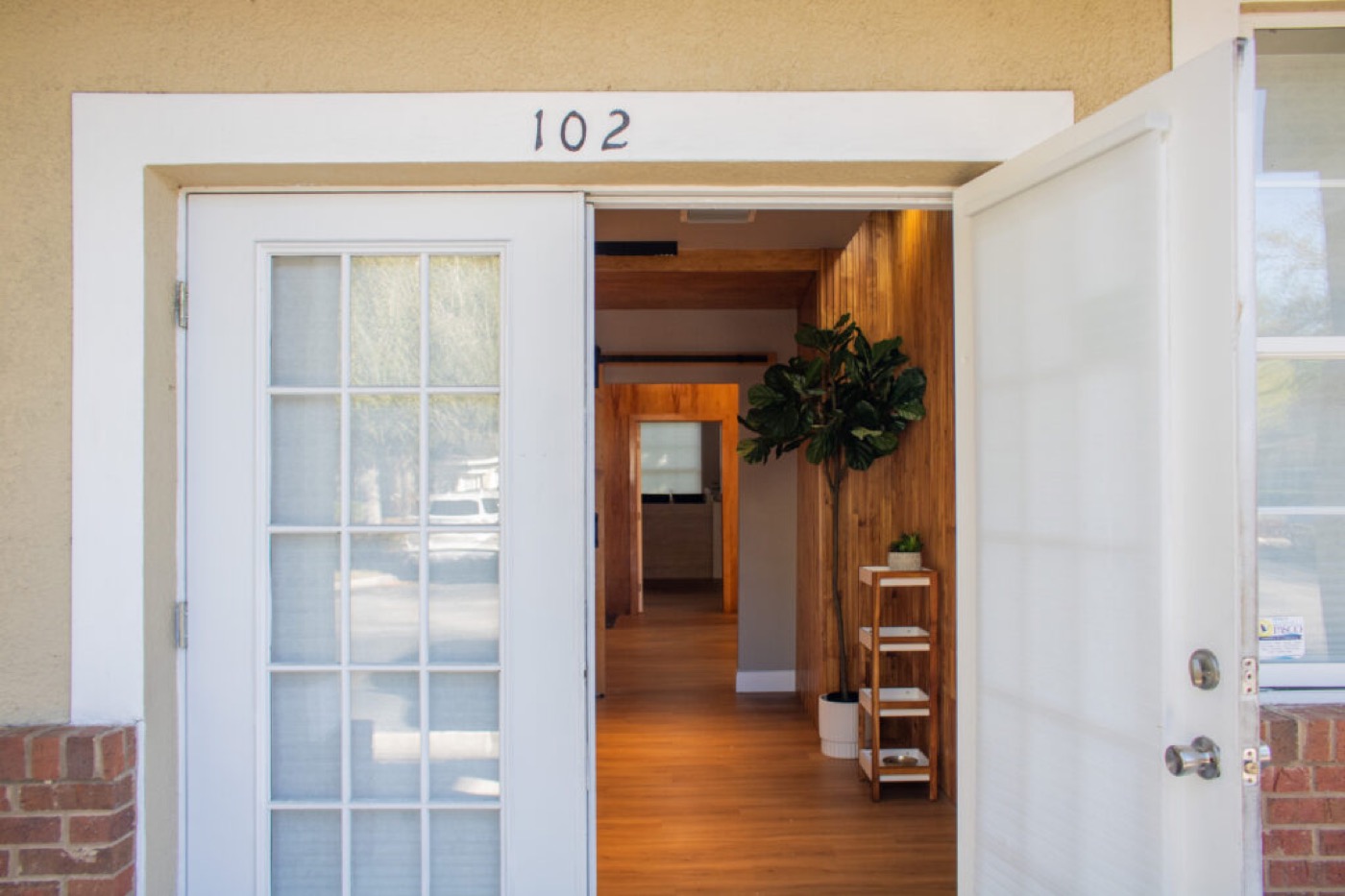
Cashford Circle is built to solve the second problem more than the first. You get one clinician, in one room, in a building where every other part of your care already lives.
The clinicians behind your sessions
Skyler Anderson, RMHCI, a Registered Mental Health Counselor Intern working under supervision, sees Wesley Chapel clients by Florida telehealth. Skyler’s focus is trauma, PTSD, and the psychological weight of chronic illness, including the pattern where distress shows up as physical symptoms that repeated workups keep coming back clean on.
Clinical supervision comes from Kaylee Mills Brenneman, Ed.S, MEd, LMHC, who is based at the Lakeland office and joins Wesley Chapel cases by Florida telehealth. Kaylee is comprehensively DBT trained, which is a specific credential rather than a description of style, and she carries the couples and family work when a case needs it.
We will tell you plainly which of them you would be seeing and why, when we call you back, before a chart is opened. See the full clinical team.
Therapy focus areas at Cashford Circle
- Individual therapy for anxiety, depression, ADHD coaching, trauma and PTSD, grief, life transitions, and OCD.
- Couples therapy for communication patterns, conflict, infidelity recovery, premarital counseling, and rebuilding intimacy.
- Women’s mental health and perinatal support.
- Psychological testing for ADHD, learning concerns, mood clarification, and diagnostic work-ups.
The working methods here are CBT for cognitive and behavioral patterns, DBT for emotion regulation and distress tolerance, EMDR for reprocessing traumatic memory, IFS for parts work, and ERP for obsessive-compulsive presentations. Which method you get is chosen after intake based on the presentation, and it can change once we see how you respond. A therapist who never revises the plan is not being consistent; they are not paying attention.
Your first month, week by week
Week one, intake. Sixty to seventy-five minutes. What brought you in, the history that bears on it, what you have already tried, and what a better version of your week would actually look like. There is no requirement to go through old trauma in detail on day one, and a clinician who pushes you to is doing it for their notes, not for you.
Week two, the working plan. You leave with a stated focus and a method attached to it, not a vague agreement to keep talking. If a medication question surfaced in week one, this is usually when it gets raised with the psychiatric side of the building.
Weeks three and four, cadence. Individual sessions are 50 minutes, couples and family 60. Most people start weekly. Weekly is not a permanent sentence; we step down as things stabilize, and we say so rather than letting the appointment become a subscription.
Mixing in Florida telehealth is available and common, though the first month tends to go better in the room.
What sharing a building with every other service changes
Cashford Circle is the only Ascend office where every service line operates at one address. That sounds like an operations detail until it is your care. In practice it removes the three failure points that lose people between appointments.
The referral that never happens. Where sessions alone have stopped shifting things and a prescribing opinion is worth having, that request goes to Anna Stouffer, PMHNP-BC or Margot Krahn, PMHNP-BC inside one record, in one building. You are not handed a phone number and a wish. Psychiatric care is scheduled from inside the practice.
The story you tell four times. One record covers the therapy notes, the prescribing notes, and the primary care notes with Dr. Jason Saylor, DO. Nobody asks you to summarize your worst year again for a new intake form.
The symptom nobody owns. Sleep that will not fix itself, unexplained fatigue, a thyroid question sitting under a mood presentation. In a therapy-only practice those become a referral you may or may not follow through on. Here they become a message down the hall.
The tradeoff is honest: a building running this many service lines is busier than a single-therapist office, and the parking lot at 4:00 PM reflects that. Most clients decide the coordination is worth it.