
A psychiatrist in Lakeland you can actually get in to see.
One named, Florida-licensed psychiatric provider for evaluation and medication management, by secure video across Polk County, with same-week appointments most weeks.
- One named prescriberThe same provider from your evaluation through every follow-up, not a rotating panel.
- Same-week evaluationsMost weeks, while many Polk County practices quote a three to six month wait.
- In-network coverageBenefits verified before your first visit, so there are no billing surprises.
Free · Confidential
Request a callback
A patient coordinator calls you within one business day. Free, and no obligation.
Got it. We will be in touch.
A patient coordinator will reach out within one business day. If you would rather not wait, call (863) 510-2624.
One prescriber who actually knows your case.
Good psychiatric care depends on continuity: someone tracking your medication response and mood pattern over months, not reading your chart cold at each visit. At Ascend you see the same named provider from your first evaluation through every follow-up.
Request a callbackMost Lakeland psychiatry searches land on a directory or a chain that cannot tell you who has an opening this month, or whether they take your plan.
Ascend Mind and Body provides psychiatric care for Lakeland and Polk County through Florida-licensed telehealth: medication management and diagnostic evaluation for depression, anxiety, ADHD, bipolar disorder, PTSD, and OCD. One named prescriber sees your case from evaluation through every follow-up, major commercial and government plans are in-network, and most new patients are seen within one to two weeks. Call (863) 510-2624 or request an appointment online.
Here is the part most listings will not tell you plainly: our Lakeland office on South Florida Avenue is a therapy and testing hub, and it does not currently host in-person psychiatric visits. We would rather say that directly than let "psychiatrist in Lakeland" imply something it is not. What Lakeland psychiatry at Ascend does mean is a Florida-licensed psychiatric provider who sees Polk County patients over secure video, with the same evaluation depth, prescribing authority, documentation standard, and follow-up cadence as an in-office visit. Florida's telehealth parity statute (Fla. Stat. section 456.47) requires exactly that.1 If you would rather be examined in person, our Wesley Chapel flagship, about 40 minutes north, is the one Ascend office with in-person psychiatry.
Most searches for "psychiatrist Lakeland" land on a directory (Psychology Today, Zocdoc) or the intake line of a large clinic. Directories are useful for browsing, but they cannot tell you who has an actual opening this month or whether a given prescriber takes your specific plan. This page answers those questions directly, with a real named provider, real conditions, and honest scope, because that is the information that actually helps you decide. It also folds in the questions people search separately: lakeland psychiatrists (is there a real provider, and do they take my insurance), psychiatric services lakeland fl (what conditions and visit types are offered), and bipolar or med management in Lakeland.
 Illustrative
Our Lakeland-area psychiatric provider
Lakeland patients are seen by Anna Stouffer, MS, PMHNP-BC, FNP-BC, a dual-board-certified psychiatric and family nurse practitioner, via Florida telehealth. In Florida, an autonomous-practice APRN like Anna can evaluate, diagnose, and prescribe, including controlled substances, under the prescriptive authority framework overseen by the Florida Board of Nursing.2
- PMHNP-BC board certified
- FNP-BC dual certification
- Autonomous Florida practice
- Same-week evaluations
Anna holds both the Psychiatric-Mental Health Nurse Practitioner (PMHNP-BC) and Family Nurse Practitioner (FNP-BC) board certifications, with more than ten years of combined clinical experience across psychiatry and primary care. That dual training is not a resume line; it changes what happens in the exam room. Psychiatric medications interact with thyroid function, cardiac conduction, kidney clearance, sleep architecture, and metabolic markers, and a prescriber trained to assess all of those systems catches interactions a psychiatry-only lens can miss. When Anna adjusts a mood stabilizer or a stimulant dose, she is looking at the whole patient, not one lab value in isolation.
Anna's primary office is Ascend's Wesley Chapel flagship, and she sees Lakeland and Polk County patients via telehealth as an extension of that same practice, not a separate satellite panel. You see the same provider at your initial evaluation and every follow-up. Her adult caseload centers on ADHD, mood disorders (depression and bipolar disorder), anxiety disorders, and treatment-resistant presentations where a first- or second-line medication trial has not worked.
This page describes adult psychiatric care only. Ascend's child and adolescent psychiatry services are a separate program and are not delivered through this Lakeland telehealth pathway. Talk therapy is provided by Ascend's separate Lakeland therapy team, and the psychiatric provider and a therapist can coordinate directly on a shared case with a single records release, which is one of the more meaningful advantages of a multi-specialty practice over two disconnected offices.
How medication management actually works here
-
1
A thorough evaluation
Before any prescription, Anna reviews your full psychiatric and medical history, current medications and supplements, substance use, and family psychiatric history. The initial evaluation runs about 60 minutes.
-
2
A documented plan, decided together
She explains the expected benefits, common side effects, and realistic timeline for a given medication (many antidepressants take 4 to 6 weeks for full effect) before you decide together whether to start it. This is shared decision-making, not a directive.
-
3
Monitored follow-ups, and labs by class
Follow-ups check response and side effects at 2 to 4 weeks after a start or dose change, then space out once stable. Some medication classes require blood work: lithium, valproate, and metabolic monitoring for antipsychotics each have their own schedule.
-
4
A plan if the first medication doesn't work
Non-response is common and expected. The typical next step is optimizing the dose, then switching class or adding an augmentation strategy. For depression resistant to two adequate trials, a ketamine therapy evaluation is a documented next step.
PMHNP vs. psychiatrist (MD): what the credential means
Both a Psychiatric-Mental Health Nurse Practitioner (PMHNP) and a psychiatrist (MD or DO) can diagnose psychiatric conditions and prescribe medication, including controlled substances, in Florida. The training paths differ, and Florida law treats qualified, experienced APRNs as independent prescribers rather than requiring physician co-signature on every chart.
- PMHNP-BC (Psychiatric-Mental Health Nurse Practitioner) completes graduate-level nursing education specialized in psychiatry, followed by national board certification. In Florida, qualified autonomous-practice APRNs have independent prescriptive authority.
- MD or DO psychiatrist completes four years of medical school followed by a four-year psychiatric residency.
- FNP-BC (Family Nurse Practitioner) is Anna's second board certification, uncommon in psychiatry, adding a general-medicine lens for cases with overlapping physical and psychiatric symptoms.
What this means practically for Lakeland patients: Anna Stouffer can evaluate, diagnose, and manage your medication independently, without a supervising psychiatrist approving each decision, with the added whole-body view her family-medicine training brings.
Psychiatric services in Lakeland: what we actually treat
The Lakeland psychiatric service provides diagnostic evaluation and ongoing medication management for depression, anxiety, adult ADHD, bipolar disorder, PTSD, and OCD. This is medication management and psychiatric evaluation, not talk therapy, though the two are coordinated when a case calls for both.
-
DepressionMost common
First-line SSRI or SNRI, augmentation or class change if needed, and a ketamine evaluation pathway for treatment-resistant depression.
Read more -
Anxiety
Generalized anxiety, social anxiety, and panic disorder, managed with medication and, where skills work helps more, a therapy referral.
Read more -
Bipolar disorder
Bipolar I, bipolar II, and cyclothymia, managed with mood stabilizers and the lab monitoring each medication class requires.
Read more -
Adult ADHD
A structured evaluation with validated rating scales before any prescription, then stimulant or non-stimulant options with monitoring.
Read more -
PTSD
Medication supports symptom control, but combination treatment with trauma-focused therapy is the standard, so we coordinate with a therapist.
Read more -
OCD
SSRI-based pharmacotherapy, frequently at higher doses than for depression, paired with exposure and response prevention therapy where indicated.
Read more
If what you are experiencing feels like an immediate danger to yourself or someone else, call 988 or 911 now. This telehealth service is not equipped for real-time psychiatric emergencies.
Depression
Depression affects roughly 1 in 5 U.S. adults at some point in their lives, per the National Institute of Mental Health.3 Treatment starts with a first-line SSRI or SNRI selected against your symptom pattern, side-effect sensitivity, and any other medications you take, then moves to augmentation or a class change if the first trial underperforms at an adequate dose and duration. Many antidepressants take 4 to 6 weeks to show a full effect, which is why the plan includes a realistic timeline rather than a promise of overnight change. Patients who do not respond after two adequate medication trials are screened for a ketamine therapy evaluation for treatment-resistant depression.
Anxiety disorders
Anxiety disorders are the most common class of mental illness in the U.S., affecting an estimated 19 percent of adults in a given year according to the National Institute of Mental Health.4 Generalized anxiety disorder, social anxiety, and panic disorder are managed with medication (typically an SSRI or SNRI, occasionally a short-term adjunct) and paired with a referral to Ascend's Lakeland talk therapy team when CBT-style skills work would help more than medication alone. Medication and therapy are treated as complementary, not competing.
Adult ADHD
A structured evaluation using validated rating scales and a full symptom history precedes any prescription. Stimulant and non-stimulant options are both on the table, chosen against your cardiac history, sleep, and prior substance-use history, with monitoring of response, appetite, blood pressure, and sleep at follow-up. Florida treats stimulants as controlled substances, which means monthly visits are required for ongoing prescriptions; this is not an Ascend policy, it is state and federal law. Federal telemedicine flexibilities are set by state and federal rules.5
Bipolar disorder
Bipolar disorder is one of the harder diagnoses to get right and one of the most consequential to get wrong, which is why it gets extra attention here. It is often mistaken for ordinary major depression, because most people with bipolar disorder seek help during a depressive episode and do not volunteer a past hypomanic or manic period unless specifically asked. A careful lifetime history, asking directly about past periods of elevated or irritable mood, decreased need for sleep, racing thoughts, or impulsive decisions, is what separates the two, and it matters before the first prescription, because prescribing a standalone antidepressant to someone with undiagnosed bipolar disorder can trigger a manic episode. Treatment centers on mood stabilizers (lithium, valproate, lamotrigine) and, for some patients, atypical antipsychotics at lower doses, each with its own monitoring: lithium and valproate require periodic blood-level and organ-function checks, and lamotrigine requires a slow titration to reduce rash risk. Individual responses vary.
PTSD
Medication, often an SSRI or SNRI, supports symptom control, but medication alone rarely resolves PTSD on its own. Combination treatment with trauma-focused therapy is the standard most guidelines describe, so we coordinate directly with a therapist when one is involved. For Lakeland patients, that therapist can be part of Ascend's Lakeland talk therapy team, with the psychiatric provider and therapist coordinating under a single records release rather than working in isolation.
OCD
Obsessive-compulsive disorder responds to SSRI-based pharmacotherapy, frequently at higher doses than are typical for depression, paired with exposure and response prevention (ERP) therapy elsewhere in Ascend's network where indicated. Medication can lower the baseline intensity of obsessions enough to make ERP work more tolerable, but ERP with a trained therapist remains the psychotherapy with the strongest evidence base for OCD, so the two are used together when appropriate rather than as either-or.
Ready to see a psychiatric provider?
One named Florida-licensed prescriber, same-week evaluations most weeks, and pricing verified against your plan before you book. The first conversation is information, not a commitment.
Florida-licensed telehealth for Lakeland and Polk County. In-person psychiatry at our Wesley Chapel flagship.
Medication management, monitored by class
 Illustrative
Medication management is not one prescription revisited once a year. Different medication classes carry different monitoring requirements, and each one has a standard we follow.
Medication management is an ongoing, monitored process: a thorough evaluation, a documented rationale for the first trial, scheduled follow-ups to check response and side effects, lab work where the medication class calls for it, and a plan for what happens if the first approach does not work. Different classes carry different monitoring requirements, described honestly below.
SSRIs and SNRIs
Used for depression, anxiety, OCD, and PTSD, SSRIs and SNRIs are typically the first-line choice. Follow-up happens at 2 to 4 weeks after starting or changing a dose to assess response and side effects, then spacing out once you are stable. Many take 4 to 6 weeks to reach full effect, so the plan sets a realistic timeline rather than expecting overnight change. The goal is to relieve the specific symptoms without blunting your normal emotional range; if a medication causes side effects that bother you, that is a reason to raise it at a follow-up, not a reason to stop it abruptly on your own.
Mood stabilizers for bipolar disorder
Lithium requires periodic blood-level checks plus kidney and thyroid monitoring, because the therapeutic dose sits close enough to the toxic dose that levels have to be tracked. Valproate requires liver-function and blood-level checks. Lamotrigine requires a slow, deliberate titration over several weeks specifically to reduce the risk of a serious rash. The right choice depends on whether you are in a manic, depressive, or maintenance phase, your other medical conditions, and side-effect tolerance. Individual responses vary, and finding the right regimen is often iterative across a few visits.
Atypical antipsychotics
Sometimes used for bipolar disorder or as an augmentation strategy for treatment-resistant depression, atypical antipsychotics (such as quetiapine or aripiprazole) call for baseline and periodic metabolic monitoring: weight, blood glucose, and lipids, because of known metabolic side effects. They are frequently used at lower doses in this context than in primary psychotic disorders, and the monitoring schedule is set at the start so nothing is a surprise later.
Stimulants and non-stimulants for ADHD
Stimulants require baseline blood pressure and heart rate, rechecked at follow-ups, plus monitoring of appetite and sleep. Florida treats stimulants as controlled substances, which means monthly visits are required for ongoing prescriptions; this is state and federal law, not an Ascend policy. Non-stimulant options are on the table when a stimulant is not the right fit for your cardiac history, sleep, or prior substance-use history. Taken as prescribed, under monitoring, for a diagnosed condition, the risk profile is well studied rather than ignored.
Informed consent and shared decisions
Before any prescription, Anna reviews your full psychiatric and medical history, current medications and supplements, substance use, and family psychiatric history, then explains the expected benefits, common side effects, and realistic timeline before you decide together whether to start. This is shared decision-making, not a directive. You leave the visit understanding why a given medication was chosen, what to watch for, and when the next check-in is.
Stopping or changing a medication safely
Do not stop a psychiatric medication abruptly without talking to your prescriber first. Several classes, including most antidepressants and all mood stabilizers, carry discontinuation symptoms or relapse risk if stopped suddenly. A supervised taper, when appropriate, is safer and more comfortable than stopping cold. Side effects and questions between scheduled visits should go through the patient portal or by calling (863) 510-2624.
What to expect at your first Lakeland psychiatric appointment
A general guide to the arc of care. Prescriptions are sent electronically to your Lakeland or Polk County pharmacy of choice after the visit.
| Stage | What happens | Typical timing |
|---|---|---|
| Before the visit | Complete intake forms online. Gather your current medication list with dosages. If transferring, sign a records release. | Same day you book |
| Initial evaluation | About 60 minutes. Symptom history, timeline, prior treatment, sleep, appetite, energy, mood pattern, substance use, and family history. | 1 visit, ~60 min |
| Early follow-ups | Check response and side effects on any new medication or dose change, and adjust as needed. | Every 2 to 4 weeks |
| Maintenance | Once stable, spacing out to routine monitoring. Controlled substances require monthly visits. | Monthly or as indicated |
Telehealth psychiatry, and who it fits
Honest fit matters more than a full waiting room. For some presentations we will recommend in-person care instead, and we will say so directly.
Telehealth psychiatric care in Florida: how it works
Telehealth psychiatric visits happen over a secure, HIPAA-compliant video platform. You will need a quiet, private space; a device with a working camera and microphone; and a stable connection. You must be physically located in Florida at the time of the visit, since Anna's license authorizes care within the state. The clinical evaluation, prescribing standard, documentation, and follow-up cadence are the same as an in-office visit, which is what Florida's telehealth parity statute requires.
5 Because these rules are extended in increments, Ascend's front desk tracks current status actively so it never becomes your problem to solve.
Who this service is a good fit for, and who it isn't
Ascend's Lakeland telehealth psychiatry service is built for adults who need ongoing outpatient evaluation and medication management for depression, anxiety, ADHD, bipolar disorder, PTSD, or OCD, and who are stable enough to be safely managed by video visits with phone backup between appointments.
It is not the right setting for a current psychiatric emergency (call 911 or the 988 Suicide and Crisis Lifeline), for a first psychotic episode or active psychosis requiring in-person assessment, for medically supervised detox from alcohol or benzodiazepines, or for court-mandated evaluations. In those situations we will tell you plainly and point you to the right level of care rather than force a mismatched case into a video visit. If you would prefer to be seen in person, our Wesley Chapel flagship is the one Ascend office with in-person psychiatry, about 40 minutes north.
Common questions about psychiatric medication, answered honestly
"Will I be on this medication forever?" Not necessarily. Some conditions (a single depressive episode, situational anxiety) may only need medication for a defined period, often 6 to 12 months after symptoms resolve, before a supervised taper. Other conditions, particularly bipolar disorder, generally require longer-term or indefinite maintenance because the relapse risk off medication is well documented. Your prescriber will tell you which category your situation falls into rather than leaving it open-ended.
"Are stimulants for ADHD addictive?" Stimulants are Schedule II controlled substances specifically because of misuse potential, which is exactly why Florida and federal law require monthly prescriptions, a documented evaluation, and ongoing monitoring rather than open refills. Taken as prescribed, under medical supervision, for a diagnosed condition, the risk profile is well studied and monitored, not ignored.
"Will antidepressants change my personality?" The goal of an SSRI or SNRI is to relieve the specific symptoms of depression or anxiety without blunting your normal emotional range. If a medication is causing emotional blunting or side effects that bother you, that is a reason to bring it up at a follow-up, not a reason to stop it abruptly on your own.
"Can I just stop taking my medication once I feel better?" Talk to your prescriber first. Several classes, including most antidepressants and all mood stabilizers, carry discontinuation symptoms or relapse risk if stopped abruptly. A supervised taper, when appropriate, is safer and more comfortable than stopping cold.
How psychiatry fits with therapy and primary care at Ascend
Psychiatry, talk therapy, and primary care are separate services with separate scopes. Where Ascend differs from a standalone psychiatry office is that all exist inside the same organization, which means a Lakeland psychiatry patient who would benefit from therapy alongside medication can be referred to our Lakeland talk therapy team under coordinated care with a single release, rather than managing two disconnected treatment plans. Each provider still makes independent clinical decisions; coordination just means faster, cleaner handoffs.
For the subset of patients with treatment-resistant depression who have not responded adequately to two standard medication trials, Ascend also offers ketamine therapy at our Wesley Chapel location. Ketamine is a Schedule III controlled substance. The ketamine used at Ascend is a compounded preparation that is not FDA-approved; no compounded medication is FDA-approved for any use. It is given under the supervision of a licensed prescriber for treatment-resistant depression and select indications; it is not a first-line option, individual responses vary, and it is never presented as a guaranteed fix.
Telehealth privacy and security
Psychiatric visits run through a HIPAA-compliant video platform, not a consumer video-call app, meaning the video connection and any patient-portal messages are encrypted and access-controlled the same way an in-person medical record would be. For your side of the call, find a private space where you will not be interrupted, use headphones if you are in a shared living situation, and treat the visit with the same confidentiality expectations as an in-person exam room. Ascend does not sell patient data; see our Notice of Privacy Practices for the full policy.
Insurance and access, stated plainly
Psychiatry at Ascend bills insurance and is in-network with major plans. Self-pay and superbills are also available. What you actually owe depends on your specific plan's deductible, copay, and coinsurance, so we verify your benefits before your first visit rather than quoting a generic number that may not match your plan.
In-network carriers
"In-network" means Ascend has a contracted rate with that carrier; what you owe still depends on your specific plan. Because plan details vary even within the same insurance company, we verify your benefits before your first visit.
- Aetna
- Cigna
- UnitedHealthcare
- TRICARE
- ChampVA
Self-pay, superbills, and HSA or FSA
Self-pay is a straightforward option if you are out-of-network, have a high deductible, or would rather not run a psychiatric diagnosis through insurance for privacy reasons. Superbills (detailed receipts with diagnosis and procedure codes) are provided on request for out-of-network reimbursement, and HSA or FSA cards are accepted for self-pay visits. We share the number that applies to you before you book, not after.
What a visit does not include
The visit covers the evaluation or follow-up itself. It does not include medication at the pharmacy (billed through your pharmacy benefit), lab work when a medication requires bloodwork (billed through the lab), or records requests from a prior provider. We flag any of these before they become a surprise.
Verifying your benefits before your first visit
- Call the member services number on the back of your insurance card, not the general customer service line.
- Ask specifically: "Do I have outpatient psychiatric and behavioral health benefits, and what is my deductible and copay for a psychiatric visit?"
- Ask whether CPT code 90792 (psychiatric diagnostic evaluation with medical services) and follow-up medication-management codes are covered under that benefit.
- Confirm that Anna Stouffer is in-network for your specific plan before scheduling.
This takes about ten minutes on the phone and removes almost all of the guesswork about what you will actually pay. Our front desk can also run this verification for you before your first visit.
How we track whether medication is actually working
We do not ask you to simply trust that things are improving. Depending on your diagnosis, Anna may use brief, standardized symptom measures (such as depression or anxiety screening scales) at intake and periodically afterward, so both of you have an objective marker of change alongside how you subjectively feel. If those measures and your own sense of progress are not moving after an adequate trial, that is the trigger to optimize the dose, switch class, or add an augmentation strategy.
How Ascend compares to your other options
The tradeoffs are real, and we would rather you know them before you call.
| Option | Named prescriber | Takes insurance | Typical wait |
|---|---|---|---|
| Ascend Mind and Body (telehealth for Lakeland) | Anna Stouffer, every visit | In-network coverage | Same-week most weeks |
| Large local clinic | Often a rotating panel | Usually, but behavioral health may be referred out | Often 3 to 6 months |
| National telehealth-only app | Matched algorithmically | Varies, often subscription | Fast, but limited continuity |
| Psychology Today or Zocdoc directory | Depends who you contact | Depends who you contact | Unknown until you reach out |
A large clinic may have more providers, but that often means a rotating panel and, at some clinics, behavioral health referred out to a separate entity. A directory or app can be faster to browse but gives you no visibility into real wait times or plan fit until you have already reached out.
What Ascend offers is one named Florida-licensed prescriber who sees your case from evaluation through every follow-up, in-network coverage with major plans, and a same-week evaluation most weeks, delivered by secure video so a full waiting room or a long commute is not what it takes to get seen.
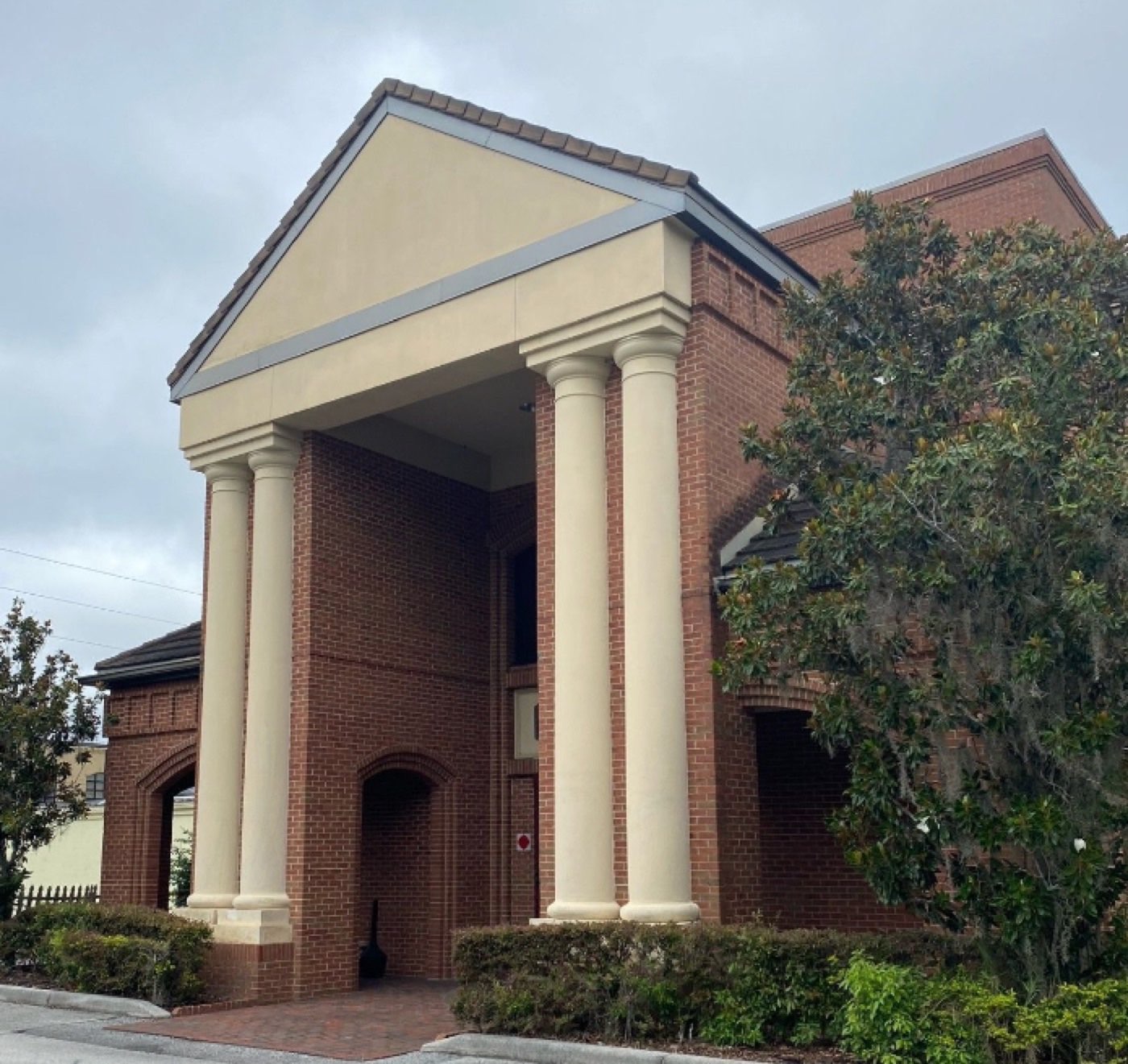
 Actual waiting area
Lakeland therapy and assessment happen in person on South Florida Avenue; psychiatric medication management is available by secure Florida telehealth with in-person options at Wesley Chapel.
Our Lakeland clinic and Polk County service area
Most Lakeland patients complete all psychiatric care, evaluation and follow-ups, by secure video from wherever they are in Polk County. Our South Florida Avenue office houses the therapy and testing team; for in-person psychiatry, our Wesley Chapel flagship is about 40 to 45 minutes north via I-4.
Ascend Mind and Body, Lakeland
832 South Florida Avenue, Suite 1, Floor 2
Lakeland, FL 33801
Phone: (863) 510-2624
Hours: Monday through Friday, 8:00 AM to 5:00 PM. This office hosts the Ascend therapy and testing team; in-person psychiatric visits are not currently offered here, so Lakeland patients see the psychiatric provider via telehealth. For in-person psychiatry, our Wesley Chapel flagship is the one Ascend office with in-person psychiatry.
Drive times to in-person psychiatry at Wesley Chapel
| From | Approximate drive to Wesley Chapel |
|---|---|
| Lakeland | 40 to 45 minutes via I-4 |
| Plant City | 35 to 40 minutes via I-4 |
| Auburndale | 45 to 55 minutes via I-4 |
| Winter Haven | 55 to 65 minutes via I-4 |
| Bartow | 55 to 65 minutes via US-98 and I-4 |
| Haines City | 55 to 65 minutes via I-4 |
We serve patients from Lakeland, Winter Haven, Auburndale, Bartow, Plant City, Haines City, Mulberry, and surrounding Polk County via telehealth, so long as you are physically located in Florida at the time of your visit. Many parts of Polk County sit within federally tracked mental health workforce shortage areas; you can check current designations for any Florida county using HRSA's public shortage-area lookup tool.6 That shortage is a real part of why psychiatric wait times run long across the region. Telehealth lets Ascend put a licensed prescriber in front of Polk County patients without the overhead of a physical office.
Lakeland is one of three in-person Ascend locations in the Tampa Bay and Central Florida area, alongside Tampa/Carrollwood and Wesley Chapel, plus statewide Florida telehealth for psychiatry and talk therapy. The practice covers four service lines: primary care, psychiatry, ketamine therapy, and talk therapy, so a Lakeland psychiatry patient who also needs therapy, a physical, or a ketamine evaluation can be referred within the same organization rather than starting over elsewhere.
Related Lakeland care under the same roof: Lakeland talk therapy for individual counseling, coordinated with your psychiatric provider under a single records release.
The honest version: what psychiatric medication can and cannot do
Psychiatric medication helps most people who find the right regimen, but it is not instant, it is not guaranteed, and it works best when you give an honest history and stay in the monitoring process, not when you expect the first prescription to be the last word.
We are not going to tell you the first medication will definitely work, that any single drug works the same way for every person, or that medication alone resolves everything. Non-response to a first medication is common and expected, and many antidepressants take 4 to 6 weeks to show a full effect. "Helps most people" is not the same as "guarantees a specific outcome for you." Individual responses vary by diagnosis, medical history, and how consistently you attend follow-ups and report side effects.
What we can tell you: an accurate diagnosis, taken from a careful history, is the single most important input, which is why the initial evaluation is thorough rather than a five-minute prescription. Medication is monitored, adjusted, and, when a first trial underperforms, changed on a documented plan rather than left to drift. And for most conditions, particularly bipolar disorder, combining medication with therapy produces better long-term stability than medication alone, which is why coordinated therapy is available through the same organization.
When to raise a change with your prescriber
- After an adequate trial at an adequate dose, you notice no shift at all in the specific symptoms you came in for.
- A medication is causing side effects that bother you or interfere with daily life.
- Your symptom pattern changes, for example a new period of elevated or irritable mood, decreased need for sleep, or racing thoughts.
- You are tempted to stop a medication on your own; call first, because several classes carry discontinuation or relapse risk if stopped abruptly.
None of these mean psychiatry has failed; they usually mean the current regimen needs adjusting, and optimizing the dose, switching class, or adding an augmentation strategy is a normal part of the process, not a last resort.
For a deeper look at any single condition treated here, see: depression, anxiety, bipolar disorder, adult ADHD, PTSD, and OCD.
FAQs about psychiatry in Lakeland
Still deciding? These are the questions Lakeland patients ask most before they call.
Is psychiatric care in Lakeland in-person or telehealth?
Telehealth. Our Lakeland office on South Florida Avenue houses the therapy and testing team and does not currently host in-person psychiatric visits. Lakeland patients see Anna Stouffer, PMHNP-BC by secure video. For in-person psychiatry, our Wesley Chapel flagship is the Ascend location about 40 to 45 minutes north.
Who is the psychiatric provider serving Lakeland at Ascend Mind and Body?
One named prescriber: Anna Stouffer, MS, PMHNP-BC, FNP-BC, a dual-board-certified psychiatric and family nurse practitioner based at Ascend's Wesley Chapel flagship who sees Lakeland and Polk County patients via Florida telehealth. You see the same provider at your initial evaluation and every follow-up, not a rotating panel.
What psychiatric services are offered in Lakeland, FL?
Diagnostic psychiatric evaluation and ongoing medication management for depression, anxiety, bipolar disorder, PTSD, OCD, and adult ADHD. Talk therapy is delivered by Ascend's separate Lakeland therapy team, and the two providers can coordinate care.
What insurance does Ascend accept for psychiatry in Lakeland?
Psychiatry at Ascend is in-network with major commercial and government plans for psychiatry; see /insurance/ for the current matrix. Self-pay and superbills are also available. What you owe still depends on your specific plan, so we verify your benefits before your first visit.
How soon can I get a first psychiatric appointment in Lakeland?
Most weeks we can offer an evaluation within 7 to 14 days, often faster than Lakeland-area in-person practices that commonly run 3- to 6-month waitlists or closed panels. Availability varies; call (863) 510-2624 for current openings.
Can a telehealth psychiatric provider prescribe ADHD medication?
Yes, when clinically appropriate. Anna Stouffer conducts a structured ADHD assessment before prescribing any stimulant and schedules the monthly follow-ups controlled-substance prescribing requires.
What is the difference between a PMHNP and a psychiatrist (MD)?
Both can diagnose mental health conditions and prescribe medication, including controlled substances. A PMHNP completes graduate-level nursing training specialized in psychiatry, while an MD or DO psychiatrist completes medical school plus a psychiatric residency. Florida grants qualified APRNs autonomous prescriptive authority overseen by the Florida Board of Nursing once statutory requirements are met. Anna Stouffer is dual-board certified in psychiatric and family medicine.
Do you treat bipolar disorder for Lakeland patients?
Yes. Bipolar I, bipolar II, and cyclothymia are treated through ongoing medication management, including mood stabilizers such as lithium or lamotrigine, with the lab monitoring each medication requires, and coordination with a therapist when that combination is right for you.
How is bipolar disorder diagnosed correctly instead of being mistaken for depression?
By taking a careful lifetime history that specifically asks about past periods of elevated mood, decreased need for sleep, racing thoughts, or impulsive behavior, not just the current depressive episode. Prescribing an antidepressant alone to someone with undiagnosed bipolar disorder can trigger a manic episode.
What medications are used for bipolar disorder?
Mood stabilizers, including lithium, valproate, and lamotrigine, and sometimes atypical antipsychotics at lower doses. Lithium and valproate require periodic blood-level and organ-function monitoring; lamotrigine requires a slow titration to reduce rash risk. Individual responses vary.
Is medication alone enough for bipolar disorder, or do I need therapy too?
For most patients, combining medication with therapy produces better long-term stability than medication alone. Ascend's psychiatric provider manages medication, and the Lakeland talk therapy team can provide coordinated therapy alongside it under a single release of information.
What if my psychiatric medication isn't working?
Non-response to a first medication is common and expected. The typical next step is optimizing the dose, then switching medication class or adding an augmentation strategy. For depression that hasn't responded to two adequate trials, a ketamine therapy evaluation is a documented next step.
Can I switch to Ascend from my current Lakeland psychiatrist?
You can transfer your care. At intake you sign a release authorizing Ascend to request your prior psychiatric records, which helps avoid repeating tests or restarting medication trials that already didn't work. Bring your current medication list and dosages to your first visit.
Do you coordinate with a Lakeland therapist?
Yes. If you are also seeing a therapist at our Lakeland talk therapy team, your psychiatric provider and therapist can coordinate directly on treatment with a single records release, rather than working as two providers who never speak to each other.
Do you accept Medicaid in Lakeland?
We do not bill Medicaid. If you have Medicaid, reach out to our care team and we'll walk you through your options. Call (863) 510-2624.
Is telehealth psychiatry as effective as in-person care?
For most outpatient psychiatric evaluation and medication management, yes. Florida's telehealth statute requires telehealth care to meet the same standard as an in-office visit. Some presentations call for in-person assessment, and Ascend will say so directly rather than force every case into a video visit.
Do you see patients from outside Lakeland, like Winter Haven or Plant City?
Yes. We serve patients throughout Lakeland, Winter Haven, Auburndale, Bartow, Plant City, Haines City, Mulberry, and surrounding Polk County via telehealth, so long as you are physically located in Florida at the time of your visit.
What do I do if I'm in a mental health crisis right now?
Call 911 or go to the nearest emergency room if you or someone else is in immediate danger. For the 988 Suicide and Crisis Lifeline, call or text 988, available 24/7. This telehealth service is not equipped for real-time psychiatric emergencies.
Still have a question? Talk it through with our team.
(863) 510-2624Sources
- The Florida Senate. Florida Statutes Section 456.47, Telehealth. flsenate.gov/Laws/Statutes/2023/456.47
- Florida Board of Nursing. Advanced Practice Registered Nurse Autonomous Practice. flboardofnursing.gov
- National Institute of Mental Health. Depression. nimh.nih.gov/health/topics/depression
- National Institute of Mental Health. Anxiety Disorders. nimh.nih.gov/health/topics/anxiety-disorders
- U.S. Drug Enforcement Administration, Diversion Control Division. Telemedicine. deadiversion.usdoj.gov
- Health Resources & Services Administration. Health Workforce Shortage Areas. data.hrsa.gov/tools/shortage-area
- 988 Suicide & Crisis Lifeline. 988lifeline.org
Last medically reviewed by Anna Stouffer, PMHNP-BC on 2026-07-05.
This page is educational and does not replace an individualized clinical evaluation. Ketamine is a Schedule III controlled substance. The ketamine used at Ascend is a compounded preparation that is not FDA-approved; no compounded medication is FDA-approved for any use. It is given under the supervision of a licensed prescriber for treatment-resistant depression and select indications; individual responses vary and outcomes are not guaranteed.
Start with a conversation, not a commitment
Tell us what is going on and we will schedule a telehealth psychiatric evaluation with Anna Stouffer for Lakeland and Polk County. Most new patients are seen within one to two weeks, and intake is online.
In crisis right now? Call or text 988 anytime. This service is not an emergency service.