

Quick answer
Tampa's heat and humidity make three things matter more on a GLP-1 medication: fluids, pen storage, and how you exercise. These medications can quiet thirst along with appetite, and nausea, vomiting, or diarrhea add to the fluid you already lose through sweat, so falling behind on fluids is easier in a Florida summer. Drink on a schedule instead of waiting to feel thirsty, keep pens out of hot cars and direct sun, move outdoor workouts to the cooler ends of the day, and call your prescriber if you cannot keep fluids down. These are prescription medications requiring physician supervision, and individual results vary.
Why Does Heat Matter More on a GLP-1?
GLP-1 medications such as semaglutide and tirzepatide work largely by turning down appetite and slowing how quickly the stomach empties. Many people notice that their thirst quiets down along with their hunger, so they drink less than they used to without realizing it. At the same time, the most common side effects, nausea, vomiting, diarrhea, and constipation, either increase the fluid you lose or make drinking feel unappealing.
A Tampa summer tightens that margin. Heat means more sweat, and humid air makes sweat less effective at cooling you, so your body works harder on a walk that felt easy in January. The prescribing information for semaglutide and tirzepatide warns about kidney injury, most often reported in people who had nausea, vomiting, diarrhea, or dehydration. That is why fluids get so much attention in a supervised program, and why the first weeks of treatment and the days after each dose increase, when stomach side effects tend to be most noticeable, deserve extra care in hot months. If you are starting in the area, our physician-supervised GLP-1 weight loss program in Tampa covers fluids, nutrition, and side effects at every follow-up.
How Do You Stay Hydrated on a GLP-1 in Tampa?
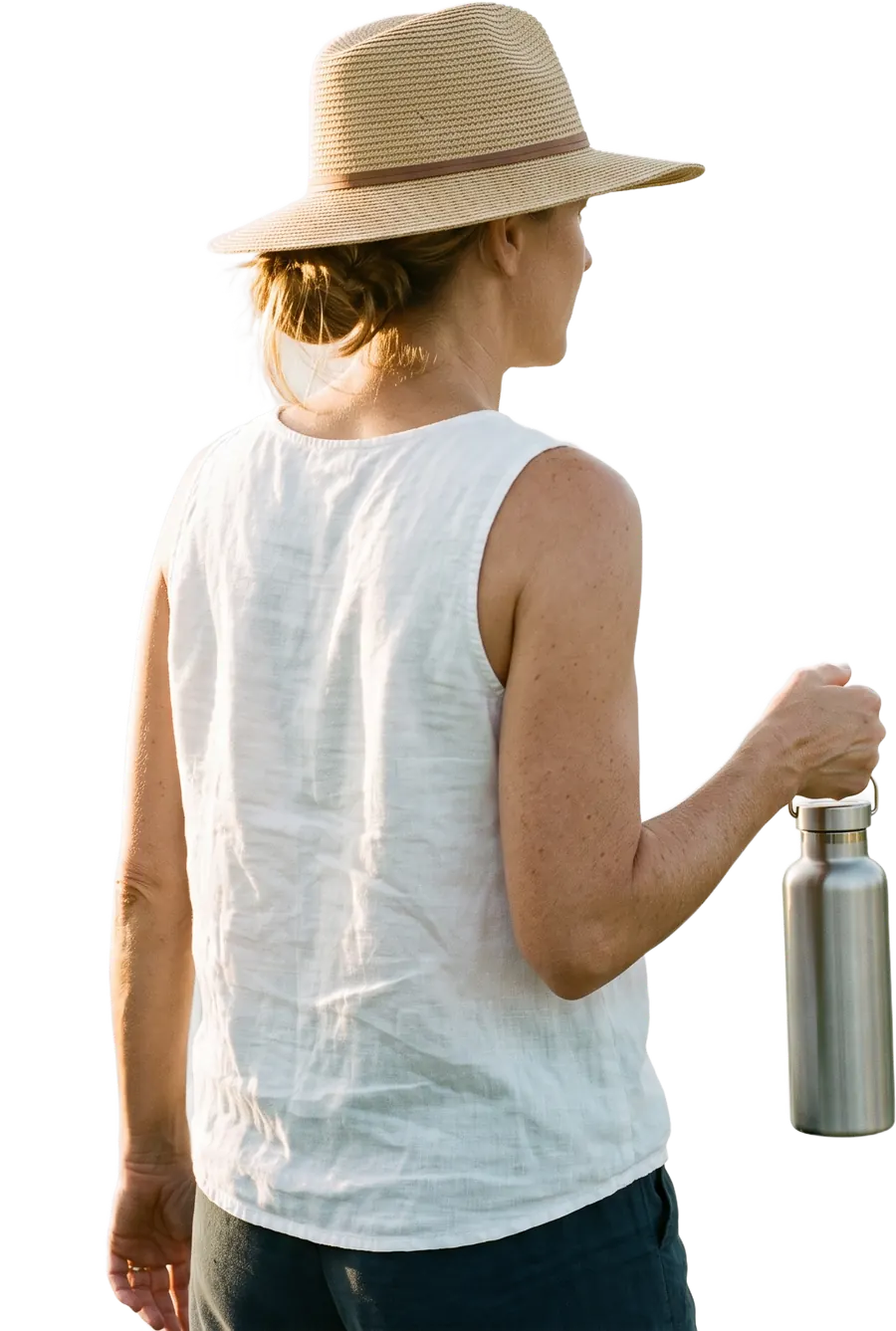
Drink on a schedule, not on thirst. Keep a refillable bottle with you, sip steadily through the day, and have a glass of water with each small meal, since smaller meals also mean less of the fluid that used to come with food. A simple check is the color of your urine: pale yellow usually means you are keeping up, while dark urine, a dry mouth, a headache, or feeling lightheaded when you stand up are signs you are falling behind.
On days with heavy sweating, or after vomiting or diarrhea, plain water may not replace the salts you have lost, and an oral rehydration or electrolyte drink can help. If you have kidney disease, heart failure, or a fluid restriction, ask your prescriber what is right for you before changing how much you drink. Not being able to keep fluids down is a reason to call, not to push through. Our guide on what to eat on a GLP-1 covers the foods that are easiest on your stomach when nausea flares.
Eating out, boat days, and summer plans
Tampa summers are built around the water and the patio, and a few habits keep them from going sideways. Rich, fried, or very large meals are the most common nausea triggers on a GLP-1, so a fried grouper sandwich or a pressed Cuban at lunch may sit very differently than it used to. Ordering a smaller portion, splitting a plate, or boxing half is normal now. Alcohol adds to fluid loss and can worsen nausea, and a long afternoon on a boat or at the beach stacks sun, heat, and drinks together. If you plan to drink, read our guide on alcohol on a GLP-1 first, and alternate every drink with water.
How Should You Store a GLP-1 Pen in Florida Heat?
Storage rules differ by product, so the instructions that came with your medication are the authority. The general pattern is the same across these medications: refrigerate before first use, keep the pen away from heat and direct light, and never freeze it. Many can also be kept at room temperature for a limited number of days, but in Tampa, room temperature means indoors with the air conditioning running, not a car, a porch, or a beach bag. For technique and storage basics, see our GLP-1 injection guide.
A few habits matter more here than in cooler places:
- Never leave a pen in a parked car. A closed car in the Florida sun gets far hotter than the air outside within minutes, and the glove box is no exception.
- Plan around deliveries. If your medication is shipped, arrange for someone to be home or have it held, so the box does not sit on a hot porch or in a mailbox.
- Carry it cool, not frozen. If you need to take a pen with you, use an insulated bag. If you add an ice pack, wrap it so the pen never touches it directly, because a frozen pen should not be used.
- Fly with it in your carry-on. Checked bags can sit on a hot ramp or go missing, and you cannot control their temperature.
- Have a hurricane-season plan. Florida's hurricane season runs from June through November. Before a storm, ask your pharmacy how long your specific product can stay out of the refrigerator, keep a cooler ready in case the power goes out, and pack your medication and supplies if you evacuate.
If a pen has been left somewhere hot, may have frozen, or the medicine does not look the way your instructions describe, do not use it until you have checked with the pharmacy that filled it or your prescriber's office. If your medication came from a compounding pharmacy, its storage instructions come from that pharmacy's label, not a manufacturer's. Compounded semaglutide and tirzepatide, prepared by a licensed pharmacy when there is a documented individual medical need, are not FDA-approved.
How Should You Exercise Outdoors in Tampa on a GLP-1?
Keep moving, and plan around the heat. Because you are eating less on a GLP-1, part of the weight you lose can come from muscle, and resistance training plus enough protein are the most practical ways to protect it. In a Tampa summer, that work shifts to the cooler ends of the day or indoors: early morning or after sunset for walks, runs, and yard work, and an air-conditioned gym or home space for strength sessions. Our guide on protein and muscle on GLP-1s explains why that training matters.
Ease in during the first weeks of treatment and after each dose increase, when you may be eating very little and feel more tired or lightheaded than usual. Drink before you head out, bring water with you, and take breaks in the shade. If you also take insulin or a sulfonylurea for diabetes, ask your prescriber how to handle long or hard sessions in the heat, because low blood sugar is more likely when those medications are combined with a GLP-1.
Is It the Heat or Your Medication? When to Call
Early GLP-1 side effects and heat exhaustion can look alike: both can bring nausea, fatigue, a headache, and lightheadedness. On a hot day, treat it as heat first. Get out of the heat, loosen your clothing, cool your skin with wet cloths, and sip water. If you are vomiting, if your symptoms get worse, or if they last longer than an hour, get medical help.
Call 911 for signs of heat stroke, such as confusion, a very high body temperature, hot red skin, or passing out. Those are emergencies whatever medication you take.
Some symptoms point to the medication and need a same-day call to your prescriber, heat or no heat: severe abdominal pain, especially pain that spreads to the back, vomiting that will not stop, or signs of gallbladder trouble such as pain in the upper abdomen, fever, or yellowing of the skin or eyes. Our GLP-1 side effects guide explains which symptoms are expected and which are red flags.
If you are a patient at our Carrollwood office in Tampa, call (813) 670-3331, Monday through Friday, 9:00 AM to 5:00 PM. Ascend Mind and Body is at 3971 Moran Rd, Suite 101, Tampa, FL 33618, where Dr. Jason Saylor, DO prescribes and follows GLP-1 patients, in person to start and by Florida telehealth for established follow-ups. For anything that cannot wait until office hours, use urgent care or 911.
Care at Ascend: Learn more about GLP-1 weight loss across Florida, see how our weight loss clinic in Tampa works, or book an appointment.
Frequently asked questions
Can I leave my GLP-1 pen in the car in Tampa?
No. A parked car in the Florida sun heats up far beyond the outdoor temperature, and heat can damage the medication. Keep pens indoors in air conditioning or in the refrigerator as your product's instructions direct, and carry them in an insulated bag when you have to take them along. If a pen was left in a hot car, check with your pharmacy before you use it.
Should I wait for cooler weather to start a GLP-1 in Tampa?
Not necessarily, but timing is worth discussing with your prescriber. The first weeks of treatment and the days after each dose increase are when nausea and reduced appetite tend to be most noticeable, so if you start in summer, plan for extra fluids and lighter outdoor activity during those stretches. The pace of dose increases can also be slowed if side effects pile up.
Does a GLP-1 make dehydration more likely in hot weather?
It can, indirectly. These medications can reduce thirst and appetite, and their common stomach side effects can increase the fluid you lose. Combined with heavy sweating in Tampa's heat, that makes it easier to fall behind. Drinking on a schedule, and calling your prescriber if you cannot keep fluids down, are the main safeguards.
What should I do if my GLP-1 pen got too hot or froze?
Do not use it until you have checked. Contact the pharmacy that filled it or your prescriber's office, describe what happened and for how long, and follow their direction on whether the pen can still be used. Do not double up on a later dose to make up for a skipped one.
This article is for general educational purposes only and is not medical advice. It does not create a provider-patient relationship. Talk with a qualified Florida-licensed clinician about your individual situation.
Sources
- U.S. Food and Drug Administration. Semaglutide injection prescribing information and Instructions for Use. accessdata.fda.gov.
- U.S. Food and Drug Administration. Tirzepatide injection prescribing information and Instructions for Use. accessdata.fda.gov.
- Centers for Disease Control and Prevention. Heat-Related Illnesses: Warning Signs and Symptoms. cdc.gov.
- National Institute of Diabetes and Digestive and Kidney Diseases (NIDDK). Prescription Medications to Treat Overweight and Obesity. niddk.nih.gov.
- National Oceanic and Atmospheric Administration, National Hurricane Center. Atlantic hurricane season. nhc.noaa.gov.