
Ketamine therapy in Lakeland, run by one provider
Most Lakeland patients reach this page after two or more antidepressants, or a full course of trauma or anxiety treatment, have not gotten them far enough. Ascend evaluates you by Florida telehealth and treats you in person at our Wesley Chapel clinic, about 45 minutes west, with one psychiatric provider running your care from first consult to last session.
- One prescriber, every sessionAnna Stouffer, PMHNP-BC evaluates, sets your dosing plan, and follows up. The same prescriber across every visit; a trained clinical team member monitors each session.
- Monitored, in-person dosingVitals checked before, during, and after every session in a private room, not an at-home kit.
- Evaluated by FL telehealth firstThe psychiatric consultation can be done from Lakeland before you ever drive to Wesley Chapel.
Free · Confidential
Request a callback
A care coordinator calls you within one business day. No cost, no obligation.
Got it. We will be in touch.
A care coordinator will reach out within one business day. If you would rather not wait, call (863) 510-2624.
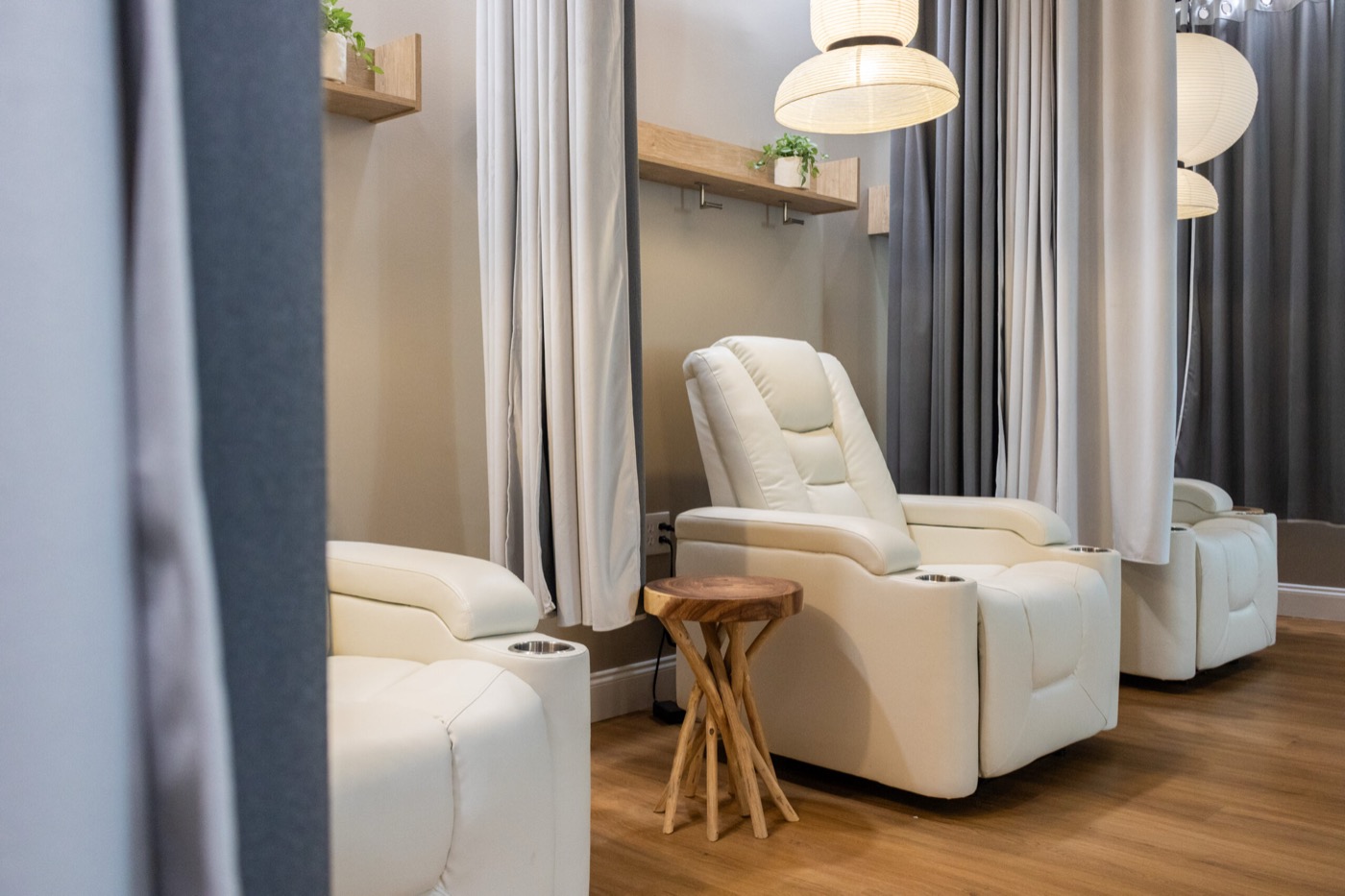
The drive is real. Here is why Lakeland patients still make it.
There is no ketamine dosing suite in Lakeland at Ascend, and we are not going to pretend otherwise. What Lakeland patients drive to Wesley Chapel for is a program directed by a single psychiatric prescriber, with honest expectation-setting instead of a promise.
Request a callbackSearching "ketamine clinic Lakeland FL" mostly returns infusion centers. Here is the honest map of what Ascend actually is, and where.

Ketamine therapy for Lakeland adults is administered at Ascend Mind and Body's Wesley Chapel clinic by Anna Stouffer, PMHNP-BC, about 45 to 60 minutes west of Lakeland on I-4 and I-75. If you are searching for a ketamine clinic in Lakeland, here is the direct answer for Ascend specifically: our program is not physically located in Lakeland, it is anchored at Wesley Chapel. The required psychiatric consultation can be done by Florida telehealth before you ever drive up. Treatment sessions themselves are in person only, using subcutaneous racemic ketamine, compounded and not FDA-approved, not an infusion. Ketamine is a Schedule III controlled substance, and individual responses vary. Call (863) 510-2624 or book a consultation.
This page is written for the decision a Polk County patient actually has to make, which is a travel and scheduling decision on top of a clinical one. The clinical case for ketamine is the same whether you live in Lakeland or across the street from the clinic. What is different here is the distance, and pretending otherwise would waste your time.
From downtown Lakeland (33801), South Lakeland (33803, 33813) and North Lakeland (33809, 33810), the trade is a longer commute in exchange for one psychiatric prescriber who runs your evaluation, your dosing and your follow-up start to finish, rather than a rotating clinical staff working a fixed protocol. Whether that trade is worth making is a fair question, and the sections below are meant to let you answer it before you call rather than after.
Is this a "ketamine clinic," and are these infusions?
 Illustrative
The psychiatric evaluation that decides whether ketamine is appropriate can be done by Florida telehealth from your home in Lakeland.
Ascend is a full psychiatric practice that provides ketamine therapy, not a stand-alone infusion center, and it uses subcutaneous racemic ketamine, a single small injection, rather than a drip line. There is no Ascend dosing room in Polk County.
Those words get used interchangeably by searchers and they do not mean the same thing. A dedicated ketamine site built around dosing is one model. A national service that mails lozenges to your door with nobody in the room is another. Ascend is a third: a psychiatric practice where ketamine is one option among several, given in person and monitored, with the same prescriber across every visit.
The route of administration matters less than the supervision around it, but it is not nothing. Ascend uses the subcutaneous route because a placebo-controlled pilot trial comparing routes (Loo CK, et al., Acta Psychiatrica Scandinavica, 2016) found response rates for that route broadly comparable to what the infusion literature described, with a simpler delivery process and a shorter monitoring window.
The full comparison of delivery routes, the dosing-day walkthrough, and the detail on how each session is monitored all live on the page for the location where treatment actually happens. If you want the clinical depth rather than the travel logistics, read ketamine therapy at Wesley Chapel and then come back here for the Polk County planning.
Conditions ketamine is evaluated for in Lakeland patients
Treatment-resistant depression is the primary and most studied indication. PTSD and severe, treatment-resistant anxiety are evaluated alongside a smaller set of case-by-case indications like OCD, bipolar depression and select chronic pain. None are treated as certain to respond, and each is assessed during a real psychiatric evaluation rather than a walk-in intake.
-
DepressionPrimary indication
Treatment-resistant depression: inadequate response to two or more antidepressants at adequate doses and duration.
Read more -
PTSDNot FDA-approved
Evaluated when trauma-focused therapy and first-line medication leave intrusive symptoms, hypervigilance, or numbing.
Read more -
Severe anxietyNot FDA-approved
Severe, treatment-resistant anxiety that has not responded to standard medication and therapy. Smaller evidence base.
Read more -
OCD & moreCase by case
OCD, bipolar depression, and select chronic pain conditions are evaluated individually, on weaker evidence.
Read more
If what you are experiencing feels like an immediate danger to yourself or someone else, call 988 or 911 now. Ketamine therapy is scheduled care evaluated over days to weeks, not an emergency intervention.
Ketamine for treatment-resistant depression in Lakeland
This is the indication with the strongest evidence behind it and the one most Polk County patients arrive asking about. Treatment-resistant depression usually means two or more antidepressants tried at therapeutic doses for a full trial length without adequate relief. If that describes your last few years, you are the patient this treatment is assessed for. The mechanism is different from the standard route: ketamine acts as an NMDA receptor antagonist affecting glutamate signaling rather than working primarily on serotonin, which is part of why some people who have not responded to the usual medications respond to this. It does not follow that it works for everyone, and it is not FDA-approved for depression. More on our treatment-resistant depression and major depressive disorder pages.
Ketamine for PTSD in Lakeland
Polk County has a substantial veteran and first-responder population, and PTSD comes up in evaluations here more often than the raw population numbers would suggest. It is considered when trauma-focused therapy and first-line medications have not resolved intrusive symptoms, hypervigilance or emotional numbing, and it is used alongside continued therapy rather than in place of it. The research is genuinely mixed: a randomized controlled trial of repeated administration (Feder A, et al., American Journal of Psychiatry, 2021) reported greater symptom reduction across six doses over two weeks than an active control, while other recent trials have not replicated that. If you have already been through VA or TRICARE-affiliated care and completed something like EMDR or prolonged exposure, bring that history to the consultation; it changes the conversation. See our PTSD page for more.
Ketamine for severe, treatment-resistant anxiety in Lakeland
If you searched specifically for ketamine for anxiety in the Lakeland area, this paragraph is the honest version. It is evaluated for anxiety that has not responded adequately to standard first-line medication and therapy, and the evidence base is real but noticeably smaller and earlier-stage than the depression research. A controlled trial (Glue P, et al., Journal of Psychopharmacology, 2017) found dose-related reductions in symptom scores among patients with treatment-refractory anxiety disorders. Standard care, meaning an SSRI or SNRI alongside cognitive behavioral therapy, remains the right first step for most people, and this is not a substitute for it. It becomes a reasonable conversation when anxiety has been genuinely treatment-resistant and severe enough to limit daily functioning. See our anxiety and generalized anxiety disorder pages.
Other conditions evaluated case by case
Beyond those three, a smaller set of indications is assessed individually during the same consultation. None carries a stronger evidence base than depression.
- OCD: generally after exposure and response prevention therapy and SSRI trials have been tried without adequate relief.
- Bipolar depression: evaluated with particular care given mood-stabilization considerations; a placebo-controlled add-on trial (Diazgranados N, et al., Archives of General Psychiatry, 2010) reported a rapid antidepressant response when ketamine was added to an existing mood stabilizer, though this population needs closer coordination with whoever manages that medication.
- Chronic pain: including complex regional pain syndrome and neuropathic pain, considered adjunctively alongside existing pain care rather than as a replacement for it.
Not sure if the drive is worth it?
Find out before you make it. The evaluation happens by Florida telehealth from your house in Lakeland, and Anna Stouffer will tell you honestly whether ketamine is worth trying for your situation or whether something else should come first.
Consultation available by Florida telehealth; treatment in person at Wesley Chapel.
The course of treatment, in brief
Enough to plan around. The full walkthrough of a dosing day lives on the Wesley Chapel page, because that is where it happens.
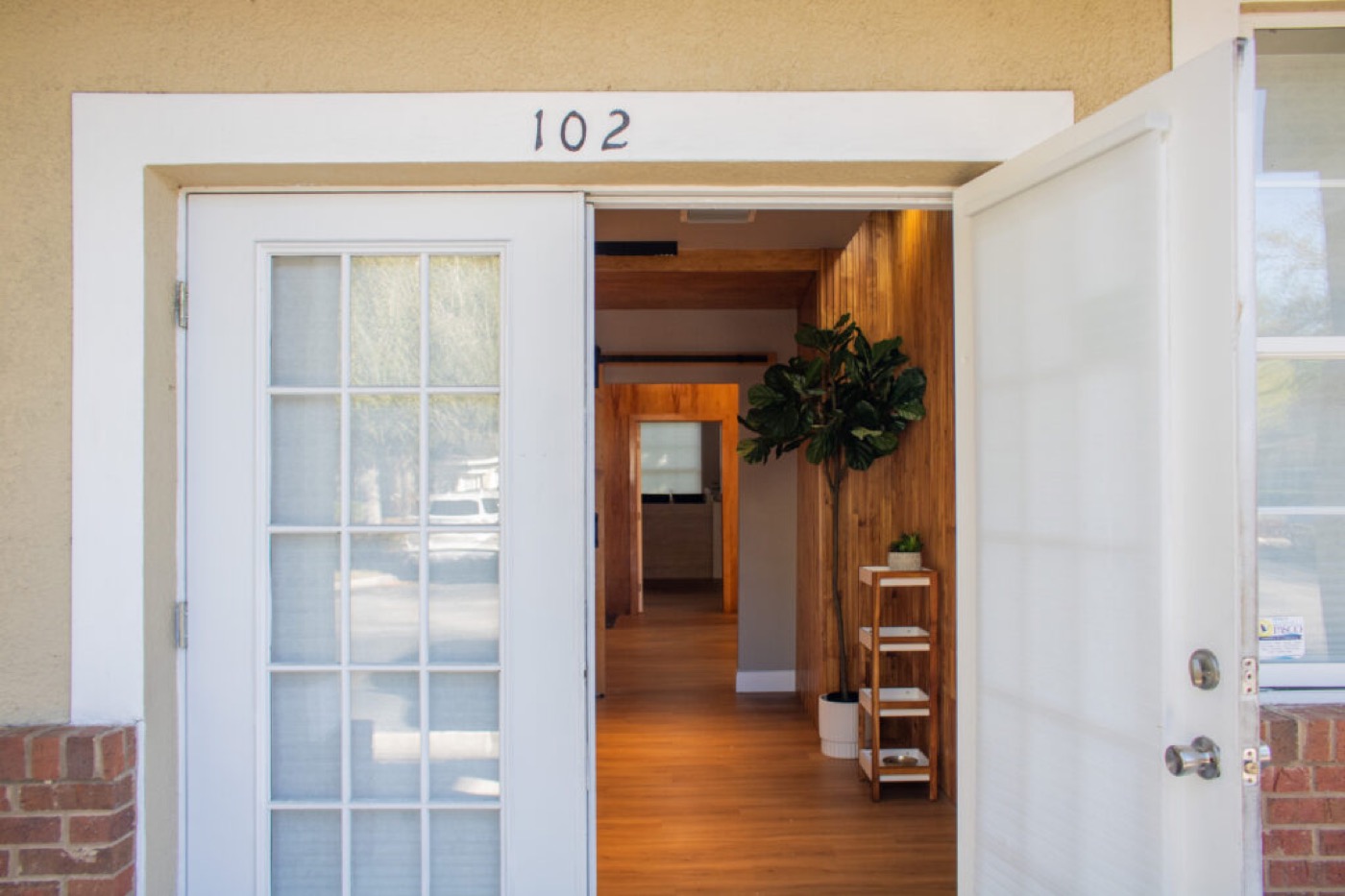 Actual Wesley Chapel office
An evaluation, then six sessions across two to three weeks, then a maintenance interval set by your response rather than a calendar. Each visit runs about two hours and you cannot drive yourself home. For a Polk County patient, those two facts are the entire planning problem.
- Evaluation, about 60 minutes. Available by Florida telehealth from Lakeland. Reviews what has been tried, at what doses, for how long, with what result, plus the medical history and contraindications that decide candidacy. It can conclude that ketamine is not the right next step, and sometimes does.
- Induction, six sessions over two to three weeks. Spacing is deliberate; the antidepressant effect in trials builds across repeated doses rather than arriving after one. This is the stretch that requires real travel planning from Polk.
- Each visit, about two hours. Check-in and baseline vitals, a subcutaneous injection, forty to sixty minutes of monitored dose time in a private room, then recovery observation before you are released to your driver.
- Maintenance, if any, set by response. Some patients need none. Others do well with a single session every four to eight weeks. For Lakeland this is the number that matters most, because it determines the long-run travel load.
What a session actually feels like, how monitoring is done, what improvement tends to look like and what it does not, and the full detail on screening and side effects are all covered at length on the Wesley Chapel ketamine page. Rather than reprint it here, this page stays on the part that is specific to getting there from Polk County.
One clinical note that belongs on both pages, because it drives every travel decision below: you will not be cleared to drive after a session. That is confirmed at check-in before anything is administered and it is not waived because you feel fine.
Building an induction series around a Polk County life
Six sessions, two to three weeks, 45 to 60 minutes each way, and a driver required every time. That is roughly 20 to 30 hours of somebody's life including travel. Patients who finish the series are almost always the ones who solved this on paper before starting rather than improvising in week two.
Three patterns account for nearly everyone who has done it from Lakeland.
- The commute pattern. A partner, parent or friend drives each direction on session days. Simplest to arrange, heaviest on one person. It works best when the driving is split across two or three people rather than resting on one.
- The stay pattern. A telehealth consult first, then two or three nights near the Wiregrass corridor so several induction sessions happen back to back without daily round trips on I-4. The clinical protocol is identical; this is purely a travel decision, and it is the one most often chosen by patients who work full time.
- The cluster pattern. Requesting consecutive appointment days so the total number of travel days drops even if the number of sessions does not. Ask for this at booking rather than after the schedule is set.
Whichever you choose, plan each session day as a whole day. Most patients feel tired or foggy for several hours afterward, and a 45 to 60 minute return trip on top of that is not the moment to have committed to a school pickup or an evening shift. If you have caregiving responsibilities, arrange the cover before the first session rather than session by session.
The practical checklist for a session day
- Confirmed driver, named, for both directions. The clinic checks this at check-in.
- A light meal timing plan discussed at your evaluation, plus anything Anna Stouffer has asked you to hold or take that morning.
- Current medication list, including supplements, brought to every visit rather than only the first.
- The rest of the day cleared. Not reduced. Cleared.
- If you are using the stay pattern, accommodation booked before the induction series starts, not mid-way through it.
 Illustrative
The induction window is the demanding stretch. Maintenance, where it is appropriate at all, is far less frequent and much easier to sustain from Polk County.
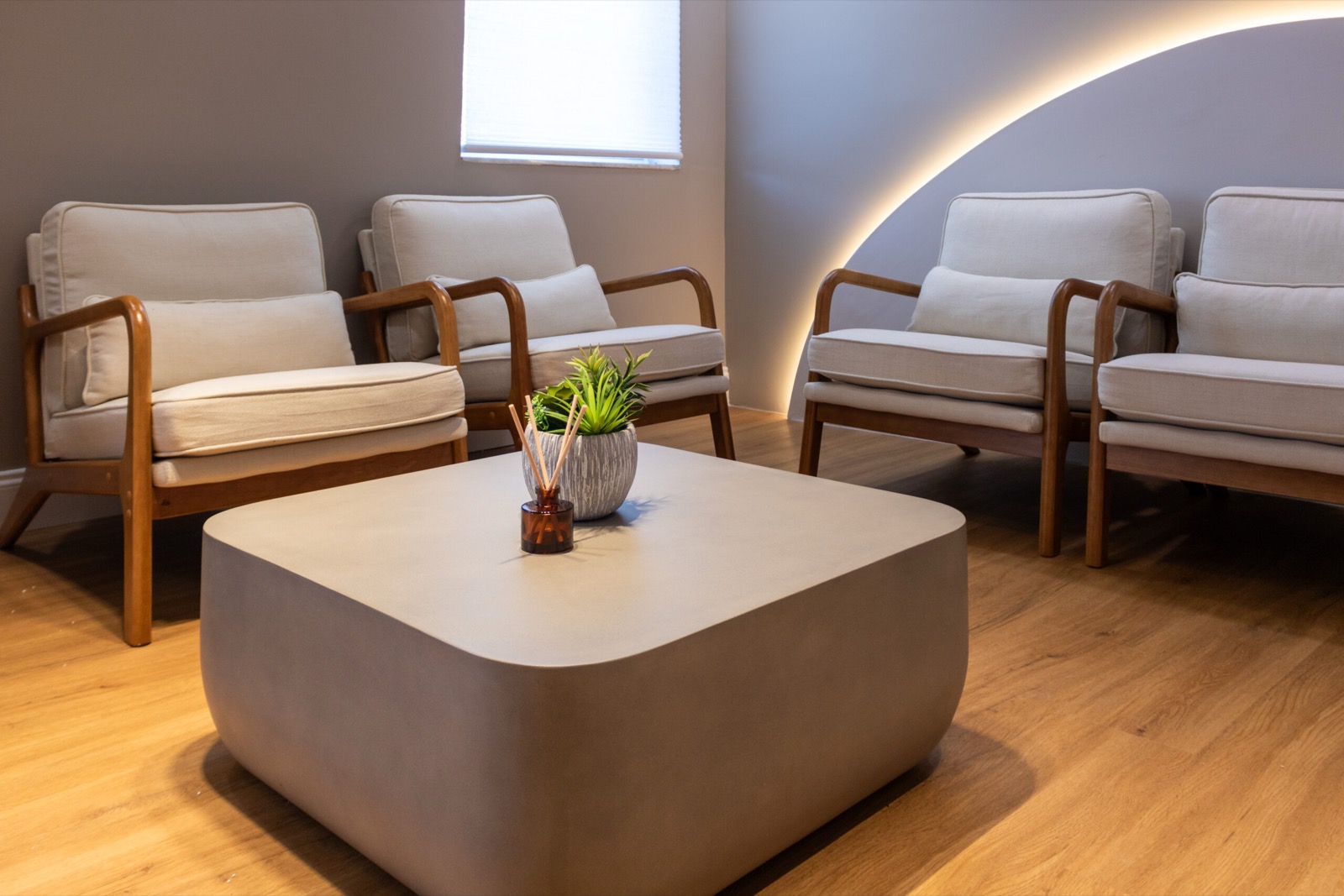 Actual waiting area
Lakeland patients often stay near Wesley Chapel during the induction series to avoid daily I-4 round trips. Maintenance is typically less frequent.
The drive from Lakeland, planned honestly
Expect 45 minutes outside rush hour and up to 60-plus minutes at peak, each way, for every in-person visit. The usual route is I-4 west to I-75 north, then SR 56 east to Cashford Circle. The consultation can be done by telehealth so you do not drive up twice.
Ascend Mind and Body, Wesley Chapel
27724 Cashford Circle, Suite 102
Wesley Chapel, FL 33544
Phone: (863) 510-2624
Hours: Monday through Friday, 8:00 AM to 5:00 PM. Free parking, ground-floor suite, no garage and no elevator. Get directions.
Two route notes worth having before your first trip. I-4 westbound between Lakeland and the I-75 interchange is the least predictable segment of the journey and the reason the range above is as wide as it is; construction and afternoon volume both land there. And from South Lakeland the Polk Parkway is usually the faster way onto I-4 despite adding distance, because it avoids the surface-street run through the middle of town.
Approximate drive times from around Polk County
| From | Approximate drive time |
|---|---|
| North Lakeland (33809, 33810) | 40 to 45 minutes via I-4 and I-75 |
| Downtown Lakeland (33801) | 45 to 55 minutes via I-4 and I-75 |
| South Lakeland (33803, 33813) | 50 to 60 minutes via Polk Pkwy and I-4 |
| Plant City | 30 to 40 minutes via I-4 and I-75 |
| Auburndale | 50 to 60 minutes via I-4 |
| Winter Haven | 55 to 65 minutes via I-4 |
| Bartow | 60 to 70 minutes via Polk Pkwy and I-4 |
| Haines City | 55 to 70 minutes via I-4 |
Those are outside-peak estimates. Add meaningful time for a weekday afternoon return, which is exactly why mid-morning appointments are the ones Polk patients tend to keep.
What stays in Lakeland, and what does not
Not everything requires the drive, and it is worth being precise about which parts do. Ascend keeps an office in Lakeland at 832 South Florida Avenue, Suite 1, Floor 2. Psychiatric medication management, follow-up care and ongoing prescribing can happen there or by Florida telehealth. Talk therapy is available locally and by telehealth as well.
Ketamine dosing is the exception, and deliberately so. A dosing session needs a dedicated treatment room, monitoring equipment and a supervising provider present for the full duration, not intermittently. Reproducing that across three offices would spread the clinical coverage thinner rather than improving it, and the honest consequence of that decision is that Polk County patients travel. We would rather own that than open a second site that is only nominally supervised.
In practice this means the shape of care for a Lakeland patient is usually: evaluation by telehealth, induction sessions in person at Wesley Chapel, then follow-up and any ongoing medication management back at the Lakeland office or by telehealth, with maintenance dosing at Wesley Chapel only if it is appropriate. If ketamine turns out not to suit your case, the alternative plan is made inside the same practice rather than sending you to start again with a stranger. See Florida telehealth and our insurance and payment page for the practical details.
Coordinating with a prescriber you already see in Polk
Many patients arrive with an existing relationship with a Polk County prescriber, sometimes going back years. That is an asset rather than a complication. Bring their record, name them at the consultation, and coordination happens deliberately rather than by assumption. Ketamine is evaluated as one component of a broader treatment plan, and a plan that quietly ignores whoever manages the rest of your medication is a worse plan.
FDA status, and what it means for you
Ketamine is not FDA-approved to treat depression, PTSD, anxiety, OCD, or chronic pain. The ketamine used at Ascend is a compounded preparation, which is not FDA-approved for any use. The agency has not reviewed the medication we give you for safety, for effectiveness, or for manufacturing quality, and you deserve to know that before you drive anywhere. You will hear it again during your evaluation, in plain language, with time to ask questions before deciding anything.
Compounded medications are preparations assembled by a pharmacy rather than manufactured and reviewed as a finished product, and they are not FDA-approved and not evaluated by the FDA for safety, effectiveness or manufacturing quality. That is precisely why we never mail ketamine to a Lakeland address and never hand anyone a supply to self-administer at home. Every dose is prepared for in-clinic use and given at the Wesley Chapel suite with a trained team member monitoring you from check-in to discharge.
The FDA has publicly warned about ketamine used for psychiatric conditions without proper monitoring, and specifically about compounded ketamine sent to people to take at home. Ascend does not do that. Every dose is given in the clinic, your vital signs are checked before, during and after, and you stay until the medication has worn off. Ascend administers it as a subcutaneous injection and offers no nasal-spray and no at-home program of any kind.
Most published research on ketamine for depression studied infusion administration rather than the subcutaneous route used here, which has a smaller body of evidence behind it. We would rather say that plainly than imply the studies were run on exactly what we give you. Ketamine is a Schedule III controlled substance with potential for misuse and dependence, so how often you dose is set by the clinic and reassessed at every follow-up rather than left open-ended, and before a first dose you complete a full psychiatric evaluation with a licensed prescriber and sign an informed consent covering the compounded, not FDA-approved status of the medication, its risks and the alternatives.
What the research shows, and what it does not promise
Decades of clinical use, a growing but still developing evidence base for psychiatric indications, and rapid but individually variable antidepressant effects in trials. None of that amounts to a promise for any single patient, and none of it makes the compounded preparation FDA-approved.
A foundational randomized controlled trial (Zarate CA Jr, et al., Archives of General Psychiatry, 2006) first demonstrated a rapid antidepressant effect in treatment-resistant depression. A two-site randomized controlled trial (Murrough JW, et al., American Journal of Psychiatry, 2013) reported 64% of participants meeting response criteria 24 hours after a single dose against 28% in an active midazolam control arm.
Group averages from clinical trials describe what happened to research participants under research conditions. They are not promises about what will happen to you. Individual responses vary, not every patient responds, and some patients get nothing meaningful from a full induction series, which is exactly why a real psychiatric evaluation comes before any treatment decision rather than a walk-in intake form.
Questions worth asking anyone, including us
If you are comparing this against a closer option in Polk or Hillsborough, these four questions separate programs faster than any brochure.
- Who performs my evaluation, and are they a licensed prescriber?
- Is the same clinician present for every treatment session, or does staffing rotate?
- What exactly is monitored during and after dosing, and for how long?
- What happens if I do not respond after the induction series?
A credible program answers all four without hedging. So should we. If any answer you get elsewhere is vague, that is information, and it is worth more than a shorter drive.
On cost: pricing is discussed when we call you back rather than published, because what you need is not known until the evaluation is done. Coverage for racemic ketamine is inconsistent and most often out of network, and we do not bill insurance for the ketamine sessions themselves.
The honest version, for someone weighing a 45-minute drive
We are not going to tell you this fixes everything, or that it will definitely resolve your depression or PTSD, or that a single dose changes a life. None of the uses described on this page are FDA-approved. Individual responses vary by condition, by history, and by how consistently you engage with the care around the dosing. Some patients notice nothing meaningful across a full induction series, and that is a real, expected outcome for a minority rather than a failure of the process.
What we can say is narrower and more useful. Treatment-resistant depression has the strongest evidence base of anything ketamine is used for. The subcutaneous route has research supporting response rates comparable to what the infusion literature described, with simpler delivery. And continuity of a single prescriber is what allows a dosing plan to be adjusted to your actual response rather than run to a script.
Weighed against a drive, that means the honest question is not whether ketamine works, because that answer is genuinely mixed. It is whether the version of it available 45 minutes away is meaningfully better than the version available closer, and whether you can realistically sustain six trips to find out. Those are answerable questions, and the evaluation exists to answer them before you commit to anything.
If it does not produce meaningful change, Anna Stouffer will say so at your follow-up rather than defaulting to more sessions. Because Ascend is a full psychiatric practice, care can shift to a different approach without you starting your history over somewhere new, and the Lakeland office handles that part without the drive.
FAQs about ketamine therapy in Lakeland
Still deciding? These are the questions Lakeland patients ask most before they call.
Is there a ketamine clinic in Lakeland, FL?
Not one operated by Ascend. Our ketamine program is not physically located in Lakeland. We evaluate Lakeland patients and administer ketamine therapy at the Wesley Chapel clinic, about 45 to 60 minutes west via I-4 and I-75. The psychiatric consultation that determines whether ketamine is appropriate can be done by Florida telehealth from Lakeland; the treatment sessions themselves happen in person at Wesley Chapel.
Is the drive from Lakeland worth it?
That is a personal calculation and we are not going to make it for you. The honest inputs: the drive is 45 to 60 minutes each way, six times during induction, always with a driver. The two reasons Lakeland patients have told us it remained worth it are that a single prescriber directs every session and the protocol is subcutaneous rather than an infusion. After induction, maintenance is typically much less frequent, which lowers the total travel load considerably.
Can I get the psychiatric evaluation by telehealth so I do not drive up twice?
Yes, and most Lakeland patients do exactly that. The initial psychiatric consultation can be done by Florida telehealth from your home. You then drive up for the first in-person treatment session only if the evaluation concludes ketamine is appropriate. The treatment sessions themselves are always in person at Wesley Chapel.
Should I stay overnight near Wesley Chapel for the induction series?
Many Lakeland patients do. Two or three nights along the Wiregrass corridor allows several induction sessions to be done back to back without daily I-4 round trips. The clinical protocol is identical either way, so this is purely a logistics and stamina decision. If you work full time it is usually the easier of the two options.
What is the fastest route from South Lakeland?
The Polk Parkway onto I-4 westbound, then I-75 north and SR 56 east. It adds distance compared with cutting through town but is usually faster, because it avoids the surface-street segment. From North Lakeland, joining I-4 directly is the better option.
Who drives me back to Lakeland afterward?
Somebody other than you, every time. You will not be cleared to drive after a session and the team confirms the arrangement at check-in before anything is administered. Over an induction series that is six return trips of 45 to 60 minutes, which is why most Polk patients split the driving between two or three people rather than asking one person for all of it.
What can I do at the Lakeland office instead of driving to Wesley Chapel?
Psychiatric medication management, follow-up appointments and ongoing prescribing can all happen at the Ascend Lakeland office on South Florida Avenue or by Florida telehealth, as can talk therapy. Ketamine dosing specifically cannot, because it needs a dedicated treatment room, monitoring equipment and a supervising provider present for the full session.
I already see a prescriber in Polk County. Does that get in the way?
Usually the opposite. Bring their record to the evaluation and name them during the consultation so coordination is arranged rather than assumed. Ketamine is assessed as one part of a broader treatment plan, and an accurate picture of what is already being prescribed makes the recommendation better.
Is ketamine approved for depression?
No. Ketamine is not FDA-approved to treat depression, PTSD, anxiety, OCD or chronic pain, and the compounded preparation used at Ascend is not FDA-approved for any use. That status is why every dose is given and monitored in the clinic rather than sent home, and it is stated in the informed consent you sign before a first dose.
How many sessions before I know whether it is working?
There is no dependable timetable. The induction series is six sessions over two to three weeks. Some patients notice change within the first one or two, others only later in the series, and some not at all. Response is tracked before and after every visit, so the decision about continuing is made from what is actually happening rather than from optimism.
Does insurance cover ketamine therapy?
Coverage for racemic ketamine is inconsistent and most often out of network. We do not bill insurance for the ketamine sessions themselves, though we can provide a superbill for potential out-of-network reimbursement. The psychiatric consultation may be partially covered by in-network psychiatric benefits depending on your plan.
If it does not work, am I still driving to Wesley Chapel for follow-up?
No. If the induction series does not produce meaningful change, Anna Stouffer will say so directly rather than recommending more sessions, and the alternative plan is handled at the Lakeland office on South Florida Avenue or by Florida telehealth. The drive is attached to ketamine dosing specifically, not to being a patient of the practice.
Still have a question? Talk it through with our team.
(863) 510-2624Sources
- Zarate CA Jr, Singh JB, Carlson PJ, et al. A randomized trial of an N-methyl-D-aspartate antagonist in treatment-resistant major depression. Archives of General Psychiatry. 2006;63(8):856-864.
- Murrough JW, Iosifescu DV, Chang LC, et al. Antidepressant efficacy of ketamine in treatment-resistant major depression: a two-site randomized controlled trial. American Journal of Psychiatry. 2013;170(10):1134-1142.
- Glue P, Medlicott NJ, Harland S, et al. Ketamine's dose-related effects on anxiety symptoms in patients with treatment refractory anxiety disorders. Journal of Psychopharmacology. 2017;31(10):1302-1305.
- Diazgranados N, Ibrahim L, Brutsche NE, et al. A randomized add-on trial of an N-methyl-D-aspartate antagonist in treatment-resistant bipolar depression. Archives of General Psychiatry. 2010;67(8):793-802.
- Feder A, Costi S, Rutter SB, et al. A randomized controlled trial of repeated ketamine administration for chronic post-traumatic stress disorder. American Journal of Psychiatry. 2021;178(2):193-202.
- Loo CK, Galvez V, O'Keefe E, et al. Placebo-controlled pilot trial testing dose titration and intravenous, intramuscular and subcutaneous routes for ketamine in depression. Acta Psychiatrica Scandinavica. 2016;134(1):48-56.
Last medically reviewed by Anna Stouffer, PMHNP-BC on 2026-07-06.
This page is educational and does not replace an individualized clinical evaluation. Ketamine is a Schedule III controlled substance. The ketamine used at Ascend is a compounded preparation that is not FDA-approved; no compounded medication is FDA-approved for any use. It is given under the supervision of a licensed prescriber for treatment-resistant depression and select indications; individual responses vary and outcomes are not promised. Adults 18 and older, Florida residents.
Start with an evaluation, not an assumption
Tell us what has already been tried and we will schedule a psychiatric consultation with Anna Stouffer, by Florida telehealth from Lakeland or in person at Wesley Chapel. She will tell you honestly whether ketamine is worth trying for your situation.
In crisis right now? Call or text 988 anytime. Ketamine therapy is not an emergency service.