Geriatric Psychiatry Wesley Chapel
Geriatric psychiatric care in Wesley Chapel for adults 60 and older, from a board-certified psychiatric nurse practitioner. In-person at our Cashford Circle office, or HIPAA-secure telehealth from home. Real medication review, late-life depression and anxiety expertise, and a clinician who takes the full medication list seriously.
Real psychiatric care, for the years that matter.
Tell us what is going on. A care coordinator will get you scheduled (in-person at Wesley Chapel or by video), walk through your coverage and self-pay options, and confirm a real next-available appointment.
Got it. We will be in touch.
A care coordinator will reach out within one business day. If you would rather not wait, call (813) 670-3005.
Wesley Chapel's older population grew faster than its psychiatric capacity
The growth that brought younger families to Watergrass, Seven Oaks, Meadow Pointe, and Two Rivers also brought adult children moving ageing parents into nearby villas, into Estancia at Wiregrass, and into the active-adult communities off Bruce B Downs. Pasco County's 65 and older population is among the fastest-growing demographics in Tampa Bay.
General psychiatric practices can see those patients. Fewer have the specific geriatric training that changes how you prescribe when somebody is eighty-one and already taking nine other things. Our Cashford Circle office is the in-person home of this practice for exactly that population.
What an in-person geriatric visit adds
Video handles most geriatric psychiatric care well, and we say so on every other page of this site. There are things it does not do as well, and this office is where those get handled.
Gait is one. Watching somebody walk from the waiting area into the office says something about fall risk, about movement side effects from a medication, and about pain the patient stopped mentioning years ago. Video does not show that. Tremor is easier to characterize in the room. So is the difference between a patient who is hard of hearing and a patient who is not processing the question.
Bringing the actual bag of medications matters too. Patients who report six medications frequently arrive with nine bottles, two of them expired and one belonging to a spouse. That is a routine finding rather than an unusual one, and it is much harder to catch over a camera.
None of this makes video second-rate care. It means that for a first evaluation where the picture is murky, an hour in the room is often worth the drive.
What the first three months usually look like
Older adults are generally started at lower doses and titrated more slowly than younger adults, because the side-effect profile is less forgiving and the risks, including falls, low sodium, and cardiac conduction effects, are higher. That makes the timeline longer than most families expect.
A realistic sequence looks like this. An initial hour-long evaluation. A follow-up at two to four weeks that is mostly about tolerance rather than benefit. A further review at six to eight weeks where we start asking seriously whether it is working. Some patients respond inside that window. Some need a dose change or a different agent, which resets the clock.
Individual results vary, and anyone offering certainty about geriatric psychopharmacology is overselling it. We schedule the follow-ups at the first visit rather than leaving it to the patient to call, because the interval between appointments is where this kind of care most often falls apart.
When the answer is not a prescription
A fair number of first visits end without a new medication, and that is a legitimate outcome rather than a failed appointment.
Sometimes the finding is that an existing medication is producing the symptom, and the work ahead is a taper coordinated with whoever prescribed it. Sometimes the presentation is grief that is moving through a normal course and needs time and a scheduled follow-up rather than treatment. Sometimes it is untreated pain, untreated hearing loss, or a thyroid problem, and the right next step is a referral to somebody else.
Saying that out loud is part of the job. Older adults are already carrying long medication lists, and adding to one without a clear reason is not a neutral act.
The Cashford Circle office, practically speaking
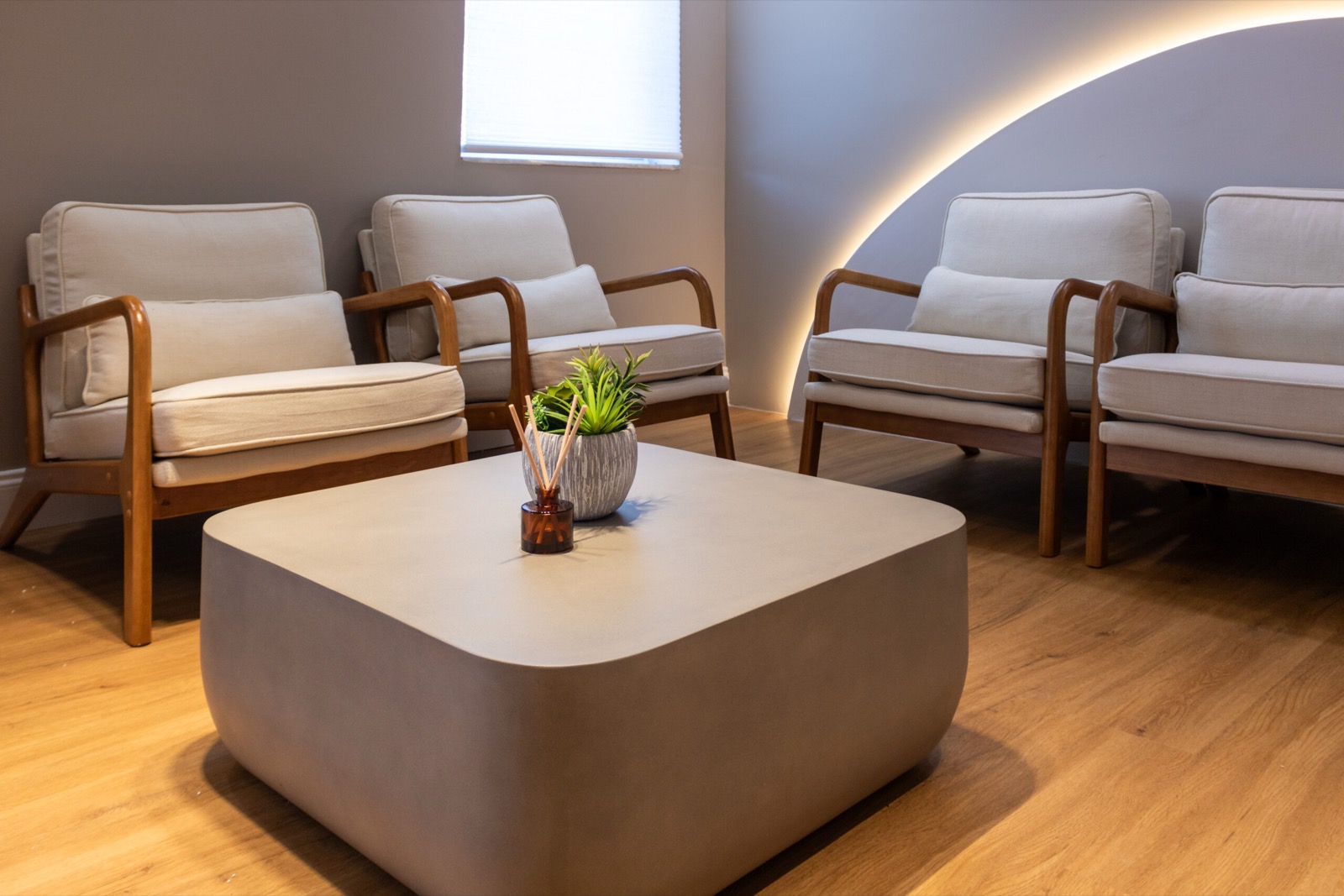
The office is at 27724 Cashford Circle, Suite 102, Wesley Chapel, FL 33544, off SR-54 near the Wiregrass corridor. Parking is on site with level entry, and the suite is on the ground floor a short walk from the car. Patients using walkers and wheelchairs come in regularly.
First evaluations run a full hour in the room. Follow-ups can be in person or by secure video, whichever suits the week. A spouse or adult child is welcome at any visit with the patient's consent, and we will usually ask for a few minutes alone with the patient at some point during a first appointment.
For residents of nearby assisted-living communities, staff bring people in for appointments regularly, and follow-ups can also be done by video from a facility's common-area room when that is more practical than the trip.
Fees are self-pay, settled at the appointment. You receive an itemized superbill afterward listing diagnosis and procedure codes, and many patients submit it to Medicare themselves for partial reimbursement. Ascend does not bill Medicare directly for psychiatric services.
Margot Krahn, PMHNP-BC
Board-certified psychiatric mental health nurse practitioner, licensed in Florida, twelve years in practice. Margot Krahn's training is lifespan, spanning child, adolescent, adult, and geriatric psychiatric care, and the geriatric element is what governs how conservatively she starts and titrates medication in this age group.
Wesley Chapel is where she sees patients in person, and where most first evaluations for local families happen. She also sees patients throughout Florida by secure video, which is how the majority of follow-ups end up running once the initial picture is established.
Margot's full bioFrequently Asked Questions
Is the first appointment in person or by video?
Either, and it is your choice. For local families we often suggest the first evaluation in the office, because gait, tremor, hearing, and the actual medication bottles are all easier to assess in the room. Follow-ups after that are frequently done by video.
Can my adult child come with me?
Yes, and we encourage it. Someone who knows the day to day makes the evaluation more accurate and makes follow-through on medication changes far more reliable. We will usually also ask for a short period alone with you during a first visit, which is routine.
How accessible is the office for someone with mobility problems?
Parking is on site at level entry and the suite is on the ground floor, a short walk from the car to the door. Patients using walkers and wheelchairs come in regularly.
How long before we know whether a medication is working?
Longer than most families expect. We start low and increase slowly in this age group because the side-effect risks are higher. Typically there is a check at two to four weeks focused on tolerance, and a more meaningful review at six to eight weeks. If a change is needed, the clock restarts. Individual results vary and we will be straight with you about what we are seeing.
My father lives in an assisted living community here. Can someone bring him in?
Yes. Several Wesley Chapel-area communities bring residents in for appointments. Where the trip is impractical, follow-up visits can be done by video from the community's common-area room instead.
Do you handle dementia diagnoses?
We screen for cognitive change and we treat the psychiatric symptoms that accompany dementia, including agitation, low mood, and disrupted sleep. For a comprehensive diagnostic workup we refer to neurology or a memory-disorder clinic and stay coordinated with that specialist.
Is it possible to leave a first visit without a new prescription?
Yes, and it happens regularly. Sometimes an existing medication is causing the problem and the work is a taper. Sometimes the picture is grief moving normally and what is needed is follow-up rather than treatment. Sometimes the right step is a referral for pain, hearing, or thyroid evaluation.
How does payment work?
Visits are self-pay and settled at the appointment. You are given an itemized superbill afterward with the diagnosis and procedure codes, which many patients submit to Medicare themselves for partial reimbursement. We do not bill Medicare directly for psychiatric services. Call (813) 670-3005 and a coordinator will explain how it applies to you.
An hour in the room, on Cashford Circle.
In-person geriatric psychiatry in Wesley Chapel, with video follow-ups whenever that suits the week. Call us or complete the form above and a coordinator will respond within one business day.