Geriatric Psychiatry Clearwater
Geriatric psychiatry for Clearwater and north Pinellas adults 60 and older, by HIPAA-secure telehealth. Real medication review, late-life depression and anxiety expertise, and a lifespan-trained PMHNP who takes the full medication list seriously.
Geriatric psychiatry that fits north Pinellas life.
Tell us what is going on. A care coordinator will set up a telehealth visit, walk through your coverage and self-pay options, and confirm a real next-available appointment.
Got it. We will be in touch.
A care coordinator will reach out within one business day. If you would rather not wait, call (813) 670-3005.
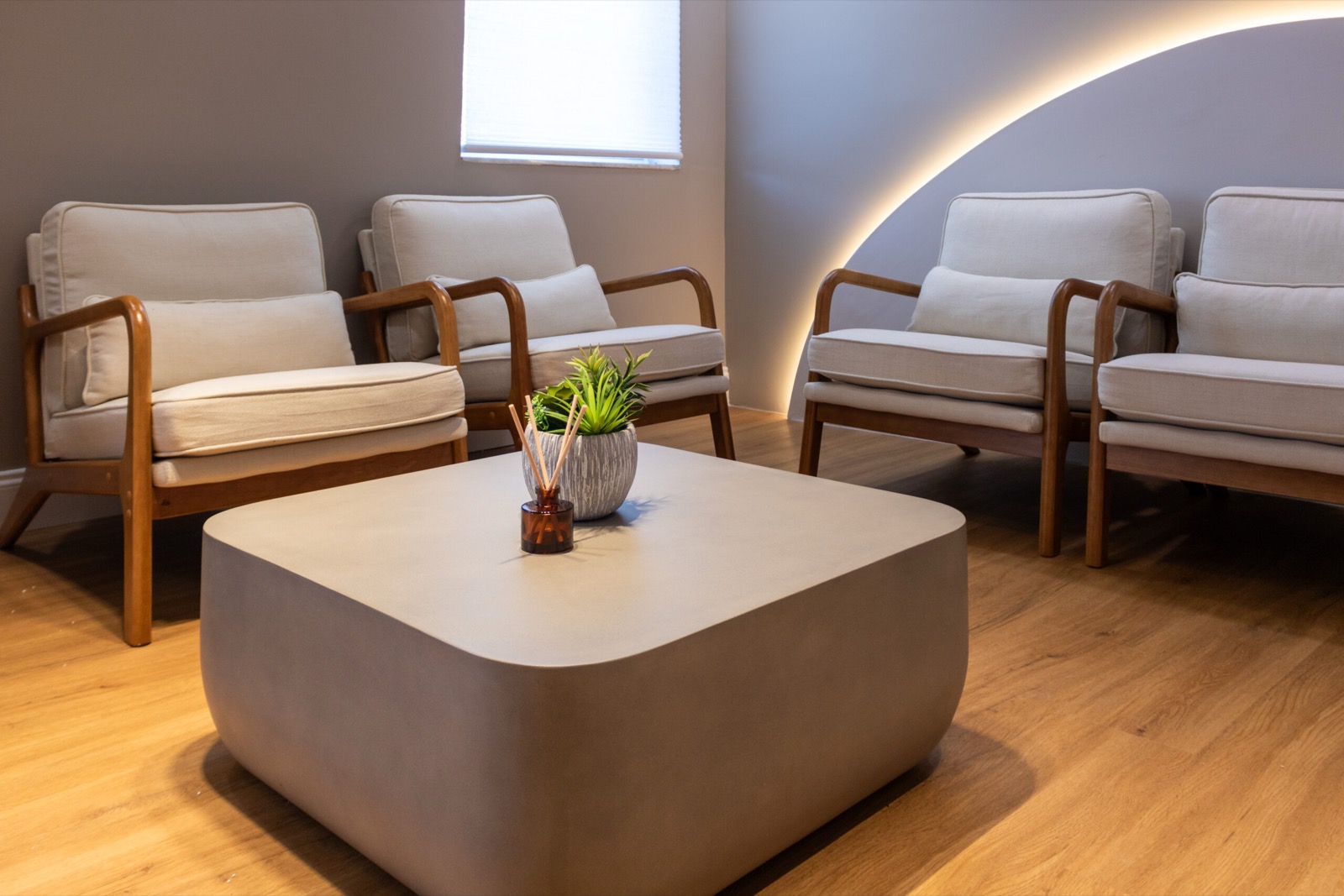
Clearwater and north Pinellas: a retiree market with thin geriatric psychiatry options
Clearwater, Dunedin, Palm Harbor, Tarpon Springs, and Safety Harbor hold one of the largest retiree concentrations in Pinellas County, and the local geriatric psychiatric workforce has never been sized for it. The established neighborhoods around Belleair and Greenbriar, the Bayside communities, and the active-adult developments off McMullen-Booth keep producing older adults who need psychiatric care and cannot get onto a local calendar inside three months.
Telehealth is the practical answer for this part of the county. A video visit from the living room covers the same clinical ground as a room-based one for the work that makes up most of geriatric psychiatry: reviewing a medication list, tracking mood and sleep, checking how a dose change has landed, and hearing from the family member who is usually present anyway. What it cannot do is take a blood pressure or watch a gait, so anything that turns on those is arranged separately.
Late-life depression rarely arrives announcing itself as sadness
Depression after sixty often does not look like the textbook picture. Patients describe fatigue, poor appetite, aching joints, or not being interested in anything anymore. The word sad may never come up. Adult children tend to describe it differently again: their parent has gone quiet, cancels plans, lets the mail stack up on the counter.
That presentation is the problem. It gets attributed to age, to arthritis, or to a heart medication, and then nobody treats it. We ask directly about loss of interest, sleep pattern, appetite change, guilt, and thoughts about death, because in older adults those specific questions surface what a general question about mood does not.
We also work the medical differential before adding anything to the list. Thyroid disease, B12 deficiency, anemia, poorly controlled pain, untreated sleep apnea, and several common cardiac and neurologic medications can all produce a picture that reads as depression. Some patients improve substantially once the underlying driver is corrected. Others turn out to have a depressive episode that needs treating on its own terms. Individual results vary, and we say which one we think we are looking at during the first visit rather than at the third.
Most of our Clearwater patients arrive by referral
A large share of north Pinellas referrals come from primary care. A physician has a patient whose mood changed after a hospitalization, or whose sleep has not been right since a spouse died, and there is no geriatric psychiatric provider available inside a reasonable window. Cardiology refers as well, usually after a cardiac event, when the low mood that follows is affecting whether the patient actually does the rehab.
We write back. With your written consent the referring office receives a note after the intake and after every medication change, so the list stays coherent across everyone prescribing into it. That feedback loop is the part that tends to break when psychiatric care gets delivered by a rotating panel of providers.
Working with independent-living and assisted-living communities
A meaningful number of Clearwater-area patients live in independent-living apartments or assisted-living communities, and logistics rather than clinical complexity is usually what stalls their care.
We set up telehealth visits with facility staff, either in a common-area video room or in the resident's own apartment. Staff can join with the resident's consent, which matters when the person who actually observes the day to day is a care aide rather than a family member. For residents in independent living who still manage their own medications, we go through the pill organizer on camera during the first visit.
Where a community has a nurse on site, we route medication changes through that nurse so the change is implemented rather than merely documented.
How a Clearwater telehealth appointment is structured
A coordinator calls a few days ahead and spends about five minutes confirming the video link works, so nothing is being figured out on visit day. Most patients join from a tablet or a laptop, some from a phone, and the room itself is HIPAA-secure.
The first appointment runs sixty minutes and opens with the medication list. All of it: prescriptions, supplements, over-the-counter sleep aids, eye drops, patches. Bring the bottles to the camera. We are looking for interactions, for medications the American Geriatrics Society Beers criteria flag as higher risk in older adults and that may warrant a careful taper with the original prescriber, and for drugs that can worsen mood in this age group.
From there the visit covers sleep, appetite, energy, recent losses, falls, and what has changed over the past six to twelve months. We screen for cognitive change when the history points that way. Adult children, spouses, and home health aides are welcome on the call with the patient's permission. Established patients can switch to a voice-only follow-up on weeks when video genuinely will not work.
Billing is self-pay. After each visit we issue a superbill, an itemized receipt carrying the diagnosis and procedure codes, which many patients send to Medicare themselves for partial reimbursement. Ascend does not bill Medicare directly for psychiatric services, and a coordinator will walk through what that means in your situation before you book anything.
Margot Krahn, PMHNP-BC
Margot Krahn is a board-certified, Florida-licensed psychiatric mental health nurse practitioner with twelve years of clinical experience. Her training is lifespan, covering child, adolescent, adult, and geriatric psychiatric care, which is the reason the geriatric medication questions get worked through rather than deferred to somebody else. She practices in person at the Wesley Chapel office and across the state by HIPAA-secure telehealth.
For north Pinellas patients, most of what she does happens alongside somebody else: a primary care physician, a cardiologist, a nurse at an assisted-living community. She writes back to referring clinicians after the intake and after any change, so one person is holding the whole medication list instead of four people each holding a piece of it.
More about Margot's backgroundFrequently Asked Questions
Is there an Ascend office in Clearwater?
Not at this time. Clearwater and north Pinellas are served by statewide Florida telehealth. Patients who specifically want to be seen face to face can be booked at our Wesley Chapel office, 27724 Cashford Circle, Suite 102. There is no Ascend office in Clearwater or anywhere else in Pinellas County.
My father's cardiologist suggested he talk to someone. Will you coordinate with that office?
Yes, and it is routine. With your written consent we send the referring cardiologist a note after the intake and again after any medication change. Coordination matters here specifically, because some cardiac medications interact with psychiatric ones and because a few affect mood on their own.
How does the superbill work if my mother has Original Medicare?
You pay us at the time of the visit. We then issue an itemized superbill listing the diagnosis and procedure codes for that appointment. Many patients submit that document to Medicare themselves and receive partial reimbursement. Ascend does not bill Medicare directly for psychiatric services. Call (813) 670-3005 before booking and a coordinator will walk through your specific situation.
Can you see a resident of a Clearwater independent-living or assisted-living community?
Yes. We work with Pinellas-area communities whose staff set up the visit in a common-area video room or in the resident's apartment. A family member or aide may be present with the resident's consent, and where the community has a nurse on site we coordinate medication changes through that nurse.
My mother insists she is not depressed, just tired. Is an appointment still worth it?
Often, yes. Fatigue, appetite loss, and a shrinking daily routine are among the most common ways depression presents after sixty, and many patients genuinely do not experience it as sadness. An evaluation can also identify a medical or medication-related cause, which is a useful answer regardless of what it turns out to be.
What happens if you think a medication another doctor prescribed is causing the problem?
We contact that prescriber. We do not stop or change somebody else's prescription unilaterally, and abruptly discontinuing certain medications in an older adult carries real risk. The usual approach is to confirm what the medication was started for, confirm whether that reason still applies, and then plan a taper on a schedule agreed with the prescribing clinician.
How soon can a new Clearwater patient be seen?
Usually one to two weeks for a first telehealth appointment, which is a good deal faster than the three to six months commonly quoted across north Pinellas.
Care that fits north Pinellas.
A real sixty-minute evaluation, usually inside two weeks, with the same provider at every follow-up. Call us, or send the form at the top of this page, and a coordinator will reach out within one business day.