
Couples therapy in Lakeland for the two of you, together.
For when the same argument keeps looping, or the distance between you has quietly been growing. A named Lakeland clinician using the Gottman Method and Emotionally Focused Therapy, the two most researched couples approaches. You do not have to be in crisis to start.
- Named clinician, real credentialsKaylee Mills Brenneman, LMHC and Clinical Supervisor, leads couples work here. No anonymous "our team".
- Gottman Method and EFTNamed, well-studied couples methods, not a generic promise to "reconnect".
- In-person or Florida telehealthDowntown Lakeland office, or by secure video together or from two locations anywhere in Florida.
Free · Confidential
Request a callback
A coordinator calls you within one business day to schedule. No obligation, and only one of you needs to make the first call.
Got it. We will be in touch.
A coordinator will reach out within one business day to schedule. If you would rather not wait, call (863) 510-2624.

In couples therapy, the relationship is the client.
This is not a referee session where one of you gets declared right and the other gets homework. Both the Gottman Method and Emotionally Focused Therapy treat the pattern between you, not either person, as the thing being worked on. That reframe alone is often the first real shift a couple feels.
Request a callbackMost Lakeland couples wait years longer than they should, until the pattern has had time to harden.

Couples therapy in Lakeland at Ascend Mind and Body is led by Kaylee Mills Brenneman, Ed.S, MEd, LMHC, a Licensed Mental Health Counselor and Clinical Supervisor, using the Gottman Method and Emotionally Focused Therapy (EFT). Sessions run about 60 minutes, in person at our South Florida Avenue office near Munn Park or by secure Florida telehealth. We work with married, engaged, dating, and long-term unmarried couples, including LGBTQ+ couples. Call (863) 510-2624 or request a callback online.
Most couples counseling pages in Polk County read the same way: a stock photo of two people holding hands, a promise to "save your marriage," and almost no information about who is actually doing the work, what a session looks like, or which methods they use. We built this page the other way around. We would rather tell you plainly what to expect, what the research does and does not say about the methods we use, and when couples therapy is not the right tool, so you can decide whether this is a fit before you ever pick up the phone.
This page is the Lakeland-local home for couples therapy specifically. If you are looking for your own individual counseling instead, see therapy in Lakeland. Couples work and individual work are different services with different goals, and starting in the right one saves everybody time.
Research cited by the Gottman Institute, which has spent decades studying what predicts whether relationships succeed or fail, has found that the average couple lives with unresolved problems for roughly six years before seeking professional help. By the time many couples call, the pattern has had years to set. You do not have to wait for a crisis. "We keep having the same fight and neither of us knows how to stop it" is a complete and sufficient reason to book a first session.
 Illustrative
The reasons couples come in
You do not need a diagnosis or a specific crisis. Recurring conflict, a breach of trust, growing distance, a hard life transition, or simply wanting to prepare before the wedding are all complete reasons to start.
These are the situations we see most often with Lakeland couples:
- The same conflict on repeat. Different topic, identical script. Money, in-laws, chores, sex, or parenting, and the argument always lands in the same place.
- Communication that keeps breaking down. The conversation turns into a standoff before either of you meant it to, and one or both of you shuts down, escalates, or leaves the room.
- Rebuilding trust after a breach. An affair, a financial secret, a broken promise, or a pattern of dishonesty the two of you have not been able to move past on your own.
- A big life change. A new baby, a blended family, a cross-state move, a job loss, a health scare, an empty nest. Transitions put pressure on even strong relationships.
- Drifting apart. Two people who used to feel like a team and want to find their way back to feeling like one.
- Mismatched intimacy or connection. One partner wants more closeness than the other, and the gap itself has become a source of resentment.
- Considering separation. One or both of you is unsure whether to keep working on it. Discernment counseling, described below, is built for exactly that.
- Premarital preparation. Doing the work on communication and expectations before the wedding, not after the first hard year.
A few illustrative examples, composites and not descriptions of actual patients, of what this looks like in practice: a couple in their thirties who argue about the same three topics every week and cannot seem to land on a resolution. A couple recovering from an affair who want to know if trust can honestly be rebuilt. A couple expecting their first child who noticed the relationship changing shape faster than they expected and want tools before resentment sets in. A long-married couple who realized they have not had a real conversation, not a logistics exchange, in months. None is more or less worthy of couples therapy than another; the common thread is two people who want something to be different and are not sure how to get there on their own.
What couples therapy in Lakeland actually helps with
Communication, conflict and repair, rebuilding trust after a betrayal, intimacy and closeness, premarital preparation, and discernment when one partner is unsure. Same clinician, whichever of these brought you in.
Communication that keeps breaking down
When couples say "we just cannot communicate," they usually mean the conversation reliably derails into the same painful place. Early sessions focus on how each of you starts a hard conversation, what happens in your body when it escalates, and the specific point where one of you stops listening and starts defending. From there the work is concrete: softer start-ups instead of criticism, structured self-soothing breaks instead of shutting down, and a way to actually finish a conversation rather than abandon it. This is teachable, and it tends to show up first because it is the skill everything else rests on.
Conflict and repair
Couples who stay together are not couples who never fight; they are couples whose repair attempts land. A repair attempt is any move, sometimes as small as a joke, an apology, or a hand on the arm, meant to de-escalate during or after a disagreement. Much of the practical work in session is helping both partners notice and accept repair attempts instead of waving them off mid-argument, and learning to interrupt the destructive escalation patterns that Gottman's research links most strongly to breakdown. Recognizing your own pattern is usually more useful than recognizing your partner's; most people spot their partner's instantly and their own only with real effort.
Rebuilding trust after infidelity or betrayal
Rebuilding trust after a betrayal, an affair, a financial secret, a repeated broken promise, is one of the most common reasons couples come in, and one of the most delicate to pace. Done carelessly, sessions just reopen the wound; done well, they move the couple through it deliberately, with a plan for closing what gets opened. It takes time and a genuine willingness from both people. We are direct about this: we do not promise a specific outcome, and any couples therapist who guarantees they can rebuild your marriage should be met with some skepticism. What we can do is give the process structure and honesty, so both partners can tell whether trust is actually being rebuilt or just being avoided.
Intimacy, closeness, and feeling like roommates
Relationships tend to erode not from one big betrayal but from years of missed bids for connection, the small moments where one partner reached out and the other, often without meaning to, did not notice or respond. When a couple describes feeling "more like roommates than partners," the work is on the emotional cycle underneath the distance and on concrete ways to rebuild connection, including mismatched physical and emotional intimacy, at a pace both partners agree to. This is where an attachment-based approach like EFT often does its heaviest lifting.
Premarital counseling
Premarital counseling is structured preparation before the wedding, not therapy for a relationship already in distress. Sessions cover the topics that create friction after the wedding far more often than before it: how each of you was raised to handle disagreement; money, spending versus saving instincts, debt, and how finances will be combined; family-of-origin patterns and in-law boundaries; the division of household and career roles, and whether and when to have children; and how you will maintain physical and emotional closeness once daily life gets busy. The goal is to have these conversations deliberately, with a neutral third person in the room, before patterns harden into habits neither of you chose. It is some of the highest-leverage work a couple can do, and it typically takes fewer sessions than treatment for an established conflict pattern.
Discernment counseling: when one of you is not sure
Discernment counseling is a distinct, short-format alternative to open-ended couples therapy, built for the specific moment when one partner wants to work on the relationship and the other is leaning toward ending it. Standard couples therapy generally assumes both partners are committed to the process; discernment counseling does not, and that is precisely the point.
It typically runs one to five sessions, mixing time together with brief individual time for each partner within the same appointment, so the partner who is leaning out can speak honestly without being pressured to perform commitment they do not feel, and the partner who is leaning in can be heard without the conversation collapsing into a plea. By the end, most couples land on one of three paths: continue as things are for now; move into full couples therapy because both partners are willing to commit; or move toward separation, with more clarity about why, and often on better footing for the conversations that follow. We are honest about what it is not: it is not a way to talk a reluctant partner into staying, and it is not marriage counseling in disguise. It exists because trying to do standard couples therapy with one foot out the door rarely works well for either person.
Ready to work on it together?
Tell us what is going on and we will get the two of you scheduled with a named couples clinician. The first conversation is information, not a commitment, and only one of you needs to make the first call.
In-person in downtown Lakeland or by Florida telehealth statewide.
Gottman Method and EFT, explained honestly
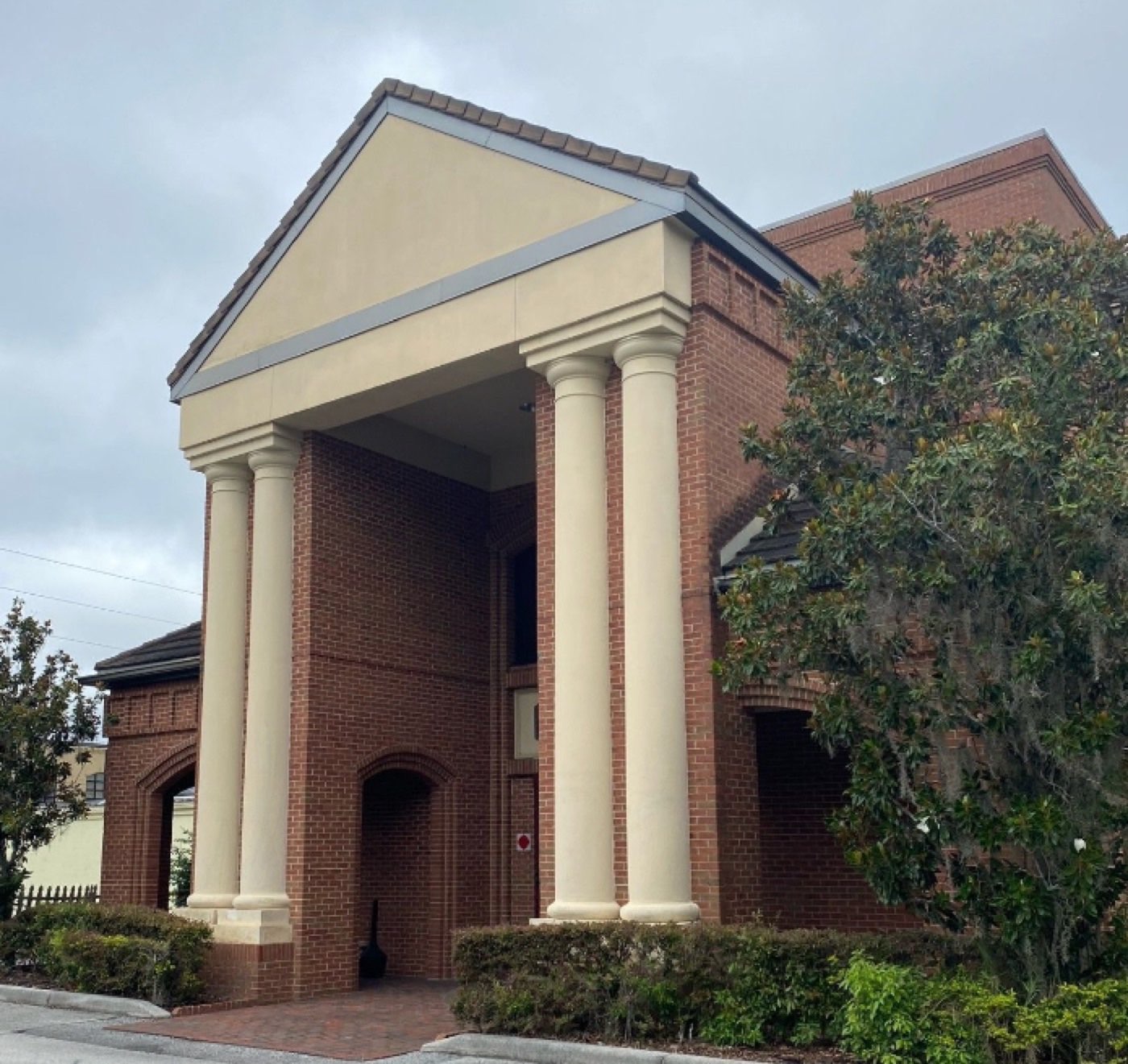 Actual Lakeland office
Kaylee Mills Brenneman uses Gottman Method and Emotionally Focused Therapy principles, choosing the tool that matches what your relationship actually needs.
We draw on the two couples-therapy approaches with the deepest independent research base: the Gottman Method, a skills-based model built from decades of observing real couples, and Emotionally Focused Therapy (EFT), an attachment-based model focused on the emotional cycle underneath the conflict. They come from different traditions, and knowing the difference helps you understand what a session is trying to do.
The Gottman Method
The Gottman Method is structured and skills-based, built from decades of observational research on what actually predicts whether couples stay together. In session it looks like concrete tools you practice: softer start-ups, repair attempts, structured breaks when someone is overwhelmed, and deliberate work on everyday friendship and connection. It tends to fit couples who want practical communication and conflict tools they can use right away, and it often lands better for a partner who is skeptical of a more open-ended "talk about your feelings" format.
Emotionally Focused Therapy (EFT)
EFT works from attachment theory: it treats the recurring fight as the surface of a deeper emotional cycle, often about feeling unwanted, unsafe, or alone, and helps each partner recognize and shift that cycle. It moves through de-escalation, restructuring the interaction, and consolidation. EFT tends to fit couples stuck in an emotional loop, or working through an attachment injury like a betrayal, and it is one of the most thoroughly studied couples models, with a larger body of independent randomized trials than most alternatives.
Communication and repair skills
Alongside the two named models, a lot of practical work is teaching concrete techniques you can use in real conversations, not just in session: how to raise a hard topic without an attack, how to take responsibility for your part instead of getting defensive, how to make and accept repair attempts, and how to take a self-soothing break instead of stonewalling. Gottman's research named four patterns, criticism, contempt, defensiveness, and stonewalling, that most strongly predict breakdown when they become habitual, and each has a documented antidote that this skills work targets directly.
Discernment counseling (a format, not a modality)
Discernment counseling is a short, structured format rather than an open-ended treatment, for couples where one partner is unsure whether to keep working on the relationship. It runs one to five sessions, combines joint and individual time, and is organized around a clear decision rather than open exploration. It is not a way to pressure a reluctant partner into staying; it exists because standard couples therapy with one partner ambivalent rarely serves either person well.
Both approaches are supported by real outcome research, and both have limits worth stating plainly. A systematic review of nineteen years of EFT research found it to be one of the most thoroughly studied couples-therapy models. A separate meta-analysis comparing EFT and behavioral couples therapy found medium effect sizes overall, with gains strongest immediately after treatment that can fade somewhat over the following year without continued practice of the skills learned in session. A 2026 study of EFT in a multidisciplinary healthcare setting, published in Family Process, found meaningful improvement in relationship satisfaction for a real-world clinical population. In plain terms: couples therapy has real evidence behind it, it is not a coin flip, and it is also not a guaranteed fix. Results depend heavily on both partners' engagement, the severity and duration of the problem, and consistent practice outside of session.
Which approach fits which concern
A general starting guide, not a self-diagnosis tool. Many couples benefit from both over the course of treatment, and your clinician adjusts as the picture becomes clearer.
| If your main concern is | Approach most often leaned on first |
|---|---|
| Recurring arguments and communication breakdown | Gottman skills, with EFT for the cycle underneath |
| Feeling distant, more like roommates than partners | EFT, attachment-focused reconnection |
| Rebuilding trust after an affair or betrayal | EFT for the attachment injury, paced carefully |
| Wanting concrete conflict and repair tools right away | Gottman Method skills |
| Preparing before a wedding | Premarital counseling, Gottman-informed |
| One partner unsure whether to continue | Discernment counseling (short format) |
What actually happens in a session
Nobody is expected to arrive with a tidy explanation. "We keep having the same fight" is a perfectly good place to start.
The first session runs about 60 minutes, with both partners present, whether in the office or on the same video call. Your clinician asks each of you what brought you in, what you have already tried, and what you would want to be different. Many couples therapists spend the first one to two sessions primarily gathering history: how you met, what has been tried before including prior therapy, and each partner's individual perspective on the core conflict, sometimes with a portion of that time one-on-one so each of you can speak freely before returning to the joint work.
No taking sides. The goal is not to determine who is right. Both the Gottman Method and EFT treat the relationship pattern, the loop the two of you get caught in, as the target of treatment, not either individual's behavior in isolation. That reframe alone is often the first meaningful shift couples notice: less "you did this to me," more "here is the loop we both keep falling into, and here is how we get out of it."
Paced to both of you. Harder topics, like a betrayal or a long-standing resentment, are approached deliberately so the work moves you forward instead of reopening the wound without a plan for closing it. You and your clinician set that pace together, and a session can slow down or change direction if either partner needs it to.
Between sessions. Most couples leave with something small and concrete to try before the next visit, a communication structure, a repair attempt, a scheduled check-in. Real change tends to happen in the week between sessions as much as in the room itself.
When it stalls. Not every couple moves in a straight line. If progress plateaus, that is worth naming directly in session rather than quietly dropping out. Sometimes it means adjusting the approach; sometimes it means one or both partners need individual work alongside the couples work; occasionally it means the honest next step is discernment counseling rather than continuing as-is.
How couples therapy fits with the rest of Ascend
Couples work sometimes surfaces things worth addressing individually. Because Ascend also offers individual therapy in Lakeland and telehealth psychiatry for Florida patients, a partner whose depression or anxiety is a factor can be referred internally without starting over with a new practice. Each provider still makes independent clinical decisions; coordination just means faster handoffs.
Insurance and superbills, stated plainly
Kaylee Mills Brenneman, LMHC is in-network with UnitedHealthcare; supervised graduate-intern sessions are self-pay. Other sessions are out-of-network; coverage varies by plan - see /insurance/. Many plans do not cover couples or marriage counseling as a category at all, so we keep the process transparent and provide itemized superbills you can submit to a PPO plan for possible out-of-network reimbursement. We are not going to tell you insurance covers something it does not.
We want to be direct about a limitation that applies industry-wide, not just at Ascend: most insurance plans do not cover "couples counseling" or "marriage counseling" as a category, because those billing codes typically require an individual mental health diagnosis attached to one partner as the identified patient. This is a structural feature of how U.S. health insurance bills mental health care, and any provider who tells you otherwise without checking your specific plan is not being straight with you.
Because of that, we keep the process transparent and provide superbills, itemized receipts with the procedure and diagnosis codes your insurer needs, for out-of-network reimbursement through PPO plans. Only PPO and POS plans typically have out-of-network mental health benefits; HMO plans generally do not, and your specific plan determines the reimbursement percentage and whether you have an out-of-network deductible to meet first. Therapy is also often an eligible expense under HSA and FSA plans.
How to check your out-of-network benefits before the first visit
- Call the member services number on the back of your insurance card, not the general customer service line.
- Ask specifically: "Do I have out-of-network outpatient mental health benefits, and what is my out-of-network deductible and reimbursement percentage?"
- Ask whether the couples or family therapy codes are covered under that benefit, since many plans exclude them.
- Request your superbill from our office after the visit; we provide it promptly with the codes included.
- Submit the superbill to your insurer through their out-of-network claims process, often a simple online upload.
This takes about ten minutes on the phone and removes most of the guesswork about what you will actually pay after any reimbursement.
 Actual waiting area
Sessions are available in person at the downtown Lakeland office or by secure Florida telehealth, whichever works for both partners.
Our Lakeland office, and the couples we see
We are on South Florida Avenue near Munn Park in downtown Lakeland, open Monday through Friday, and we regularly see couples driving in from across Polk County, or joining together by Florida telehealth.
Ascend Mind and Body, Lakeland
832 South Florida Avenue, Suite 1, Floor 2
Lakeland, FL 33801
Phone: (863) 510-2624
Hours: Monday through Friday, 8:00 AM to 5:00 PM. Second floor, between Memorial Boulevard and Lime Street. Street parking is available plus a lot behind the building. From I-4, take the Memorial Boulevard exit and head south. Get directions.
Drive times from around Polk County
| From | Approximate drive time |
|---|---|
| Winter Haven | 20 to 25 minutes via US-92 |
| Auburndale | 15 to 20 minutes via US-92 |
| Bartow | 20 to 25 minutes via US-98 |
| Plant City | 25 to 30 minutes via I-4 |
| Haines City | 25 to 30 minutes via US-17/92 |
| Mulberry | 15 to 20 minutes via FL-37 |
We see couples from Lakeland, Winter Haven, Auburndale, Bartow, Plant City, Haines City, Mulberry, and the surrounding Polk County area, in person or by Florida telehealth. Coordinating two schedules is often the hardest part of couples work, which is exactly why many couples from Winter Haven or Bartow book telehealth for at least part of the course of treatment rather than driving in every week. Some couples from Plant City also consider our Tampa or Wesley Chapel offices depending on which commute makes more sense for a recurring weekly appointment.
The honest version: what couples therapy can and cannot do
Couples therapy helps many couples who stick with it, but it is not fast, it is not guaranteed, and it works best when both partners are honest and willing to do something differently between sessions. It also assumes a baseline of physical safety, and it is not the right first step when that does not hold.
We will not promise to save your relationship, and we would not trust a couples therapist who does. The research above shows real, measurable benefit for many couples, and it also shows that outcomes vary and that some gains fade without continued practice. Some couples come to couples therapy and, with clearer eyes, decide the healthiest path is to separate. That is not a failure of the process; helping two people reach clarity, even when the answer is not staying together, is a legitimate and sometimes necessary outcome of this work.
Couples therapy assumes a baseline of physical safety between partners, and it is not the right format when that assumption does not hold. If your relationship involves ongoing physical violence, threats, or coercive control, joint sessions are not appropriate and can in some cases increase risk, because the format depends on both partners speaking freely without fear of retaliation afterward. If this describes your relationship, the safer first step is individual support and a safety plan, not a joint session. The National Domestic Violence Hotline is available 24/7 at 1-800-799-7233, and if you are in immediate danger, call 911.
Common objections, addressed honestly
"We already tried therapy and it did not work." Common, and it usually means one of a few things: the approach did not match the problem, one partner was not genuinely engaged, or the fit with that specific clinician was off. All three are worth naming directly in a first session rather than assuming couples therapy itself cannot work for you.
"My partner refuses to go." You cannot force this decision, but you are not stuck. Starting individually, or proposing discernment counseling specifically because it does not require both partners to be equally committed, are both legitimate next steps.
"Is our relationship even bad enough for this?" There is no minimum threshold. Couples come in for low-grade recurring tension as often as for a crisis, and addressing a pattern early is generally easier than waiting for it to compound. If you are asking the question, that is usually reason enough to book a first session and find out.
For related individual care, see life transitions, grief and loss, anxiety, and depression, any of which can show up alongside relationship strain.
FAQs about couples therapy in Lakeland
Still deciding? These are the questions Lakeland couples ask most before they call.
Do both partners need to attend couples therapy in Lakeland?
Couples work happens with both partners present, in the office or on the same secure video call. If your partner is hesitant, you can start with a session on your own to talk through how to invite them in. Discernment counseling is also built for couples who are not yet on the same page.
Can couples therapy help after infidelity or a betrayal?
It can. Rebuilding trust after a betrayal is one of the most common reasons couples come in. It takes time and a genuine willingness from both people, and we pace the work carefully so it does not simply reopen the wound without a plan for closing it. We do not promise a specific outcome, but many couples find a path forward.
Do you offer premarital counseling in Lakeland?
Yes. Premarital sessions focus on communication, expectations, money, family-of-origin patterns, and how you each handle conflict, before those patterns harden into habits. It is some of the most practical work a couple can do before the wedding.
Is couples therapy covered by insurance?
Kaylee Mills Brenneman, LMHC is in-network with UnitedHealthcare; supervised graduate-intern sessions are self-pay. Other sessions are out-of-network; coverage varies by plan - see /insurance/. Many insurance plans do not cover couples or marriage counseling as a category, because those codes usually require an individual diagnosis attached to one partner as the identified patient. We provide itemized superbills you can submit to a PPO plan for possible out-of-network reimbursement. Call the member services number on your insurance card and ask about your out-of-network outpatient mental health benefits before your first session.
Can we do couples therapy by telehealth in Florida?
Yes. We see couples by secure video anywhere in Florida. Some couples join from the same room, others from two different locations when work or distance requires it. Both formats work well for relationship work.
What if only one of us wants to come?
That is common. You can start individually, and if your partner decides to join later, we can shift into couples work. Discernment counseling is a short, focused format designed for exactly this moment, when one of you is unsure whether to keep working on the relationship.
Can couples therapy help if we have grown distant or lost intimacy?
Yes. Feeling more like roommates than partners, emotional distance, and mismatched closeness are some of the most common reasons couples come in. Your couples therapist works on the cycle underneath the distance and on concrete ways to rebuild connection, at a pace that works for both of you.
What is the difference between the Gottman Method and Emotionally Focused Therapy?
The Gottman Method is a skills-based approach built from decades of observational research on conflict, repair, and everyday connection. Emotionally Focused Therapy (EFT) works from attachment theory, focusing on the emotional cycle underneath the conflict. Both are well studied. We draw on both, matching the tool to what a couple actually needs.
How many sessions does couples therapy usually take?
Published research on EFT reports an average of about 12 to 20 sessions, and couples therapy broadly runs about 12 to 25 sessions over roughly 4 to 10 months. Longstanding resentment, infidelity, or entrenched patterns often take longer. Premarital work and discernment counseling are shorter, focused formats.
What is discernment counseling?
Discernment counseling is a short, structured format, usually one to five sessions, for couples where one partner is unsure about continuing the relationship and the other wants to work on it. It combines joint and individual conversation time and ends with a clearer direction: keep things as they are for now, move into full couples therapy, or move toward separation. It is not a guarantee that either partner will choose to stay.
Is online couples therapy as effective as in-person sessions?
For most couples, yes. Secure video preserves the same structure, pacing, and skills work as an in-person session. Some couples prefer being in the same room for early sessions, especially when trust repair is the focus, and switch to telehealth once things stabilize. Both formats are available at Ascend.
How do I get my partner to agree to couples therapy?
You cannot make the decision for them, but you can lower the barrier: share what specifically you want to work on, frame it as something you are doing together rather than a consequence, and offer to make the first call. If your partner is still hesitant, starting with an individual session or discernment counseling is a reasonable next step.
Can couples therapy make things worse?
Bringing up hard topics can feel harder before it feels easier, but a trained clinician paces the work so sessions do not simply become another round of the same fight. Couples therapy is not a substitute for safety planning when there is ongoing physical violence, threats, or coercive control; that situation calls for individual support first.
Is what we say in couples therapy confidential?
Yes, with the standard exceptions that apply to all therapy under Florida law and HIPAA: risk of serious harm to yourself or others, and suspected abuse of a child, elder, or vulnerable adult. Your clinician will review confidentiality and its limits in the first session.
Do you see unmarried and LGBTQ+ couples?
Yes. Relationship status does not matter: we see dating, engaged, married, and long-term unmarried partners. Ascend Mind and Body is an LGBTQIA+ affirming practice, and couples therapy is open to any committed couple regardless of gender identity or sexual orientation.
Who leads couples therapy at the Lakeland office, and what are their credentials?
Couples therapy at the Lakeland office is led by Kaylee Mills Brenneman, Ed.S, MEd, LMHC, a Licensed Mental Health Counselor and Clinical Supervisor in Florida, with a practice focus on relationships, communication, and life transitions.
Still have a question? Talk it through with our team.
(863) 510-2624Sources
- Wiebe and Johnson, A Review of the Research in Emotionally Focused Therapy for Couples (PubMed)
- Rathgeber and colleagues, The Efficacy of EFT and Behavioral Couples Therapy: A Meta-Analysis (PubMed)
- Emotionally Focused Therapy in a multidisciplinary healthcare setting, Family Process (2026)
- The Gottman Institute, research on the Sound Relationship House and the Four Horsemen
Last medically reviewed by Kaylee Mills Brenneman, LMHC on 2026-07-06.
This page is educational and does not replace an individualized clinical evaluation. Couples therapy outcomes vary and are not guaranteed. Couples therapy is for adults and is not appropriate as a substitute for safety planning when there is ongoing violence or coercive control.
Start with a conversation, not a commitment
Tell us what is going on and we will get the two of you scheduled with a named couples clinician, in person on South Florida Avenue or by Florida telehealth statewide. Only one of you needs to make the first call.
In crisis right now? Call or text 988 anytime. Couples therapy is not an emergency service.