Child Psychiatry Riverview
Psychiatric care for children and teenagers in Riverview and south Hillsborough, ages 5 through 17, by secure Florida telehealth. Careful attention and behavior evaluations, straight answers, and the same clinician at every visit.
Pediatric psychiatry for working Riverview parents, this week.
Tell us what is going on with your kid. A care coordinator will get you scheduled (telehealth or in-person at Wesley Chapel), usually within one business day.
Got it. We will be in touch.
A care coordinator will reach out within one business day. If you would rather not wait, call (813) 670-3005.
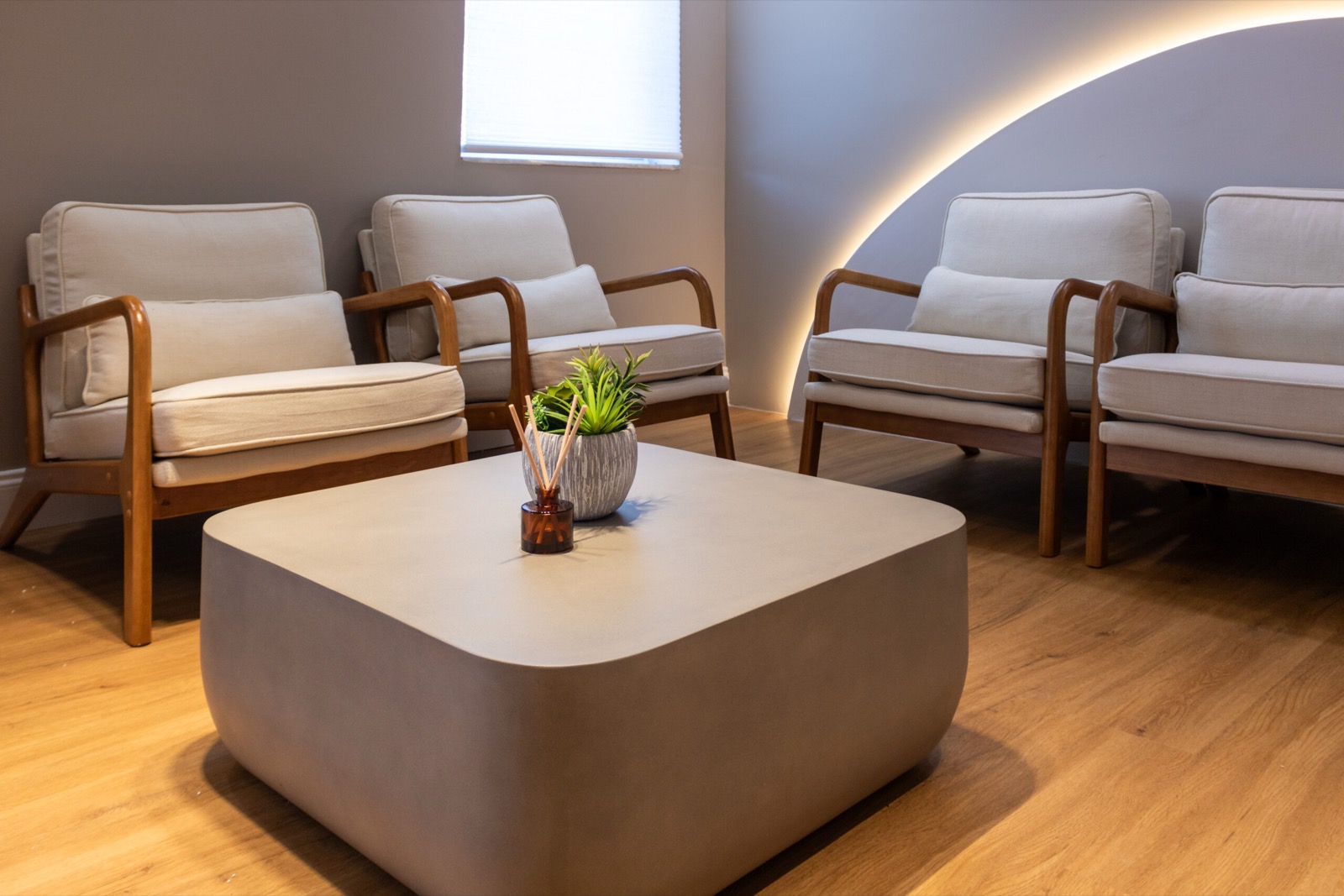
Riverview: young families asking about attention for the first time
Riverview has been one of the fastest-growing family areas in south Hillsborough for a decade. Boyette, Bell Shoals, Panther Trace, Rivercrest and the newer subdivisions around them brought in tens of thousands of households with young children, and pediatric psychiatric capacity has not tracked that growth. Local practices commonly quote four to six months, and some are not taking new pediatric patients at all.
The most frequent first call from this area concerns a child in kindergarten through third grade whose teacher has raised attention or behavior. The parent is usually unsure whether they are looking at a real problem or at a five-year-old being five. That uncertainty is reasonable, and resolving it is exactly what an evaluation is for.
Evaluating attention in a six-year-old is not the same as in a sixteen-year-old
With an older student, much of the history comes from the student. With a six or seven year old, almost none of it does. The evaluation leans on parents and on the classroom, and it has to account for a developmental range that is genuinely wide at this age. Attention span, impulse control, and the ability to sit still differ enormously between two typically developing first graders.
Several things look like an attention disorder in early elementary and are not. A child who cannot hear well. A child who is not sleeping, whether from a sleep disorder, a screen habit, or a household schedule. A child with an undiagnosed reading difficulty who checks out during literacy blocks and is fine in math. An anxious child whose mind is elsewhere. A child responding to something hard at home. Each of these has a different answer, and none of them is served by skipping to a diagnosis.
What we gather before anyone says ADHD
A diagnosis of ADHD requires symptoms in more than one setting, present before age twelve, causing real impairment, and not better explained by something else. That standard is why we ask for information from school as well as from home. Standardized parent and teacher rating scales help and we send them out. They measure how a child compares to peers on specific behaviors, which is more useful than a general impression.
We also want the developmental history, the birth and medical history, hearing and vision screening results, the sleep pattern, and any school testing already done. We ask what the day actually looks like: what time homework starts, what happens at bedtime, how mornings run. Specifics are more diagnostic than adjectives.
If the picture does not meet the criteria, we say so. Telling a parent that their child does not have ADHD is a legitimate and common outcome of a thorough evaluation, and it usually comes with a different explanation and a different plan attached.
What follows an evaluation
When ADHD is the right explanation for a young child, published guidance for this age group puts behavioral intervention and parent training in the foreground. That means concrete work with parents on structure, instructions, consistency, and reinforcement, alongside school accommodations. For younger children in particular, this is where treatment usually starts.
Medication is a separate conversation with its own risks and benefits, appropriate for some children and not others, and taken up on its own merits rather than as a foregone conclusion. If it becomes part of a plan we monitor it deliberately: growth, appetite, sleep, and how the child is actually doing in the classroom. Responses differ between children, and some children do well without medication at all.
Telehealth from Riverview, and the one visit that is not
Riverview does not have an Ascend office, and we are not going to imply otherwise. Families here are seen by HIPAA-secure Florida telehealth, which handles evaluation, follow-up, behavioral guidance, coordination with therapy, and non-stimulant medication management.
Florida controlled-substance rules require an in-person evaluation before a first stimulant prescription. That visit is at the Wesley Chapel office, 27724 Cashford Circle, Suite 102; there is no Ascend office in Riverview. It is generally a single in-person appointment, with follow-up care continuing by video. The requirement applies to the first stimulant prescription rather than to every renewal, and what it exists to establish is a documented height, weight, pulse and blood pressure baseline against which later readings can be compared.
Margot Krahn, PMHNP-BC
Margot Krahn, PMHNP-BC holds board certification and a Florida license, with twelve years of clinical experience. Lifespan training means her formal preparation includes child and adolescent psychiatry rather than treating it as an extension of adult practice. Riverview families see her by HIPAA-secure telehealth, with the Wesley Chapel office available for in-person visits.
With young children she spends much of the first hour on the parent history and on what the classroom is reporting, because a six-year-old is not a reliable narrator of their own attention. She is comfortable concluding that a child does not have the condition a family came in asking about.
Read Margot's full bioWhat Riverview parents want to know first
My kindergartner's teacher mentioned ADHD. Is five too young to evaluate?
Not too young to evaluate, though a diagnosis at that age is made carefully. The evaluation looks at whether the behavior falls outside the range for the child's developmental stage, whether it shows up in more than one setting, and whether something else explains it better. Plenty of five-year-olds referred this way turn out not to have ADHD.
Can ADHD really be diagnosed over video?
The evaluation is an interview plus collateral information from parents and school, and that transfers well to video. What video does not replace is the in-person visit Florida requires before a first stimulant prescription. If we think a case genuinely needs to be seen in person, we say so rather than working around it.
Do we have to use medication?
No. For younger children, guidance places behavioral intervention and parent training first, and many families never go further. Medication is discussed on its own merits when it fits, with the risks laid out, and the decision is yours.
Is there an Ascend office in Riverview or Apollo Beach?
No. The offices are Wesley Chapel, Carrollwood, and Lakeland. South Hillsborough families are served by telehealth, with Wesley Chapel used for any visit that must be in person.
What should I bring to the first appointment?
Any school testing or reports, the current 504 plan or IEP if one exists, recent teacher comments, the results of hearing and vision screening, and a list of medications and supplements. If the school has not completed rating scales, we will send them out.
Do you take Medicaid?
Ascend does not bill Medicaid. Call our care team if your child is on a Medicaid plan and we will go over the options with you.
Find out what is actually going on.
A full evaluation, a straight answer, and the same clinician at every visit. Fill in the form at the top of this page or call; a care coordinator will follow up within one business day.