Child Psychiatry Lutz, FL
Psychiatric evaluation and treatment for Lutz children and teenagers, ages 5 through 17, in person at our Wesley Chapel office, or by HIPAA-secure video from home. Behavior, attention, anxiety, and mood concerns.
Pediatric psychiatry for Lutz kids, this week.
Tell us what is going on. A care coordinator will match your family with the right slot (telehealth or in-person), usually within one business day.
Got it. We will be in touch.
A care coordinator will reach out within one business day. If you would rather not wait, call (813) 670-3005.
Lutz: close enough to come in, which changes how care runs
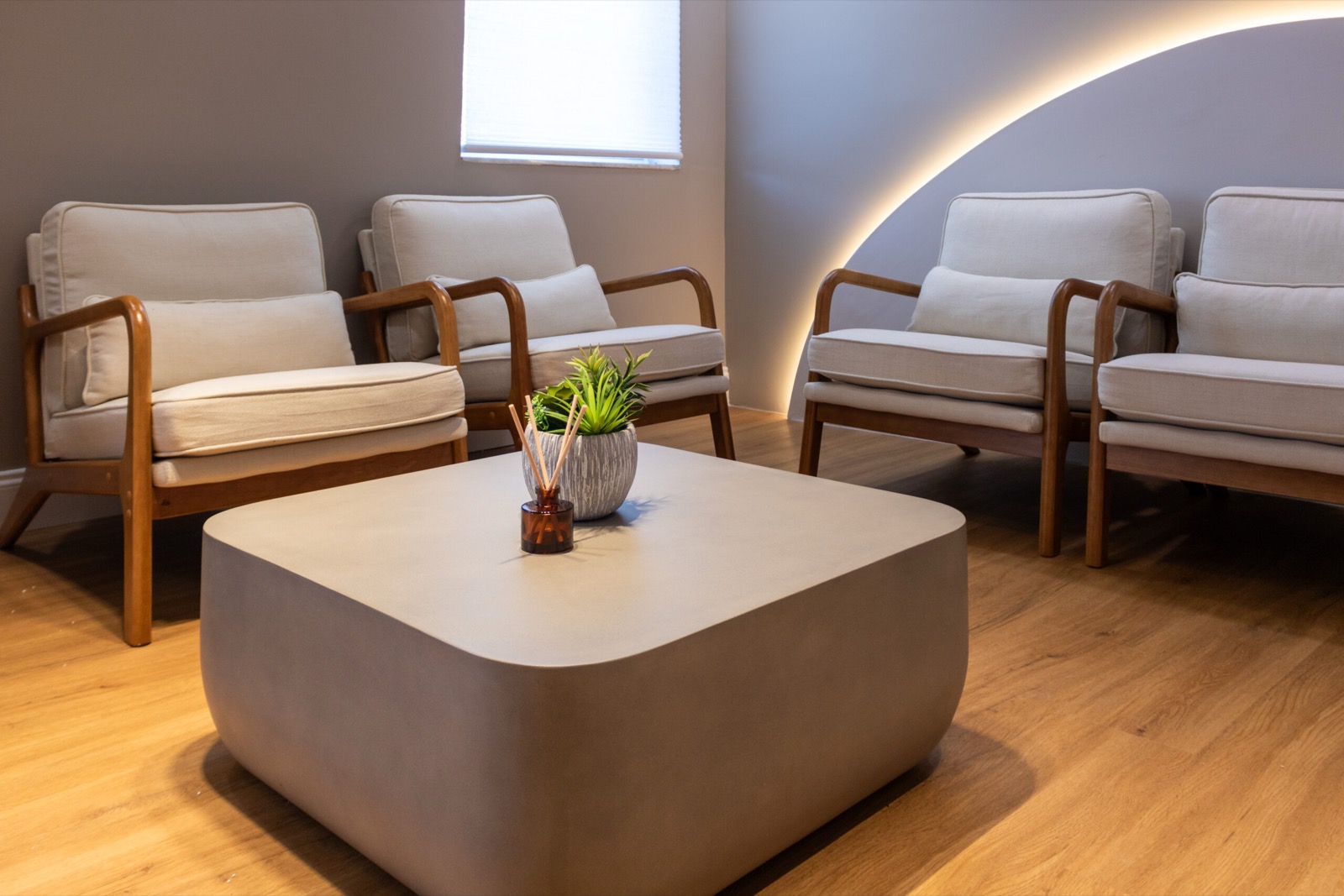
Lutz sits on the Hillsborough-Pasco line, and from most of it in-person appointments are held at the Wesley Chapel office, 27724 Cashford Circle, Suite 102. There is no Ascend office in Lutz, and nothing on this page should be read as suggesting otherwise.
That choice of format is not a trivial detail, and it is worth making on clinical grounds rather than by default. A first visit in the room, follow-ups by video after school, and an in-person appointment when something needs to be seen is a workable pattern here in a way it is not for families further out.
When the presenting problem is behavior
A sizable share of Lutz referrals arrive as behavior rather than as mood: a seven-year-old who explodes at transitions, a nine-year-old who is defiant with one parent and not the other, a child who has been sent out of class repeatedly, siblings who cannot be left in a room together. Parents often arrive worn down and half-expecting to be blamed.
Behavior is a presentation, not a diagnosis, and it is one of the least specific presentations in child psychiatry. The same outward picture is produced by ADHD, by anxiety, by a language or learning problem that makes school demands intolerable, by disrupted sleep, by trauma, by a mismatch between what is being asked of a child and their current developmental capacity, and sometimes by an oppositional pattern that has become self-sustaining. The evaluation exists to tell these apart.
Parent guidance is treatment, not an add-on
For behavioral difficulty in younger children, the evidence base points to structured work with parents as a first-line intervention. That is not a euphemism for parenting advice. It is specific: how instructions are given, how consistently consequences follow, how attention is distributed between the behavior you want more of and the behavior you want less of, and how the adults in a household stay aligned when they are tired.
This is uncomfortable to hear at first, because it sounds like the problem is being handed back to the parent. It is not. It is where the leverage sits at this age, and in some families it produces change faster than anything else available. We are honest that it takes real effort and that results vary between families.
Where a diagnosis such as ADHD is also present, treatment addresses both. Medication is one possible component, weighed on its own merits with its risks discussed, and never presented as a substitute for the behavioral work.
What a first visit covers for a seven- or nine-year-old
Sixty minutes. We take the developmental and medical history, the school history, and a detailed account of what the difficult moments actually look like: what precedes them, how long they last, what ends them, and what the adults do. Vague descriptions produce vague plans, so we push for specifics.
We spend part of the visit with the child. Children of this age often describe their own experience more accurately than adults anticipate, particularly about what happens at school. We ask about sleep, screens, and the shape of the afternoon, because those are frequently where the practical adjustments are.
In person, by video, or a mix
Lutz families choose. Some come to Wesley Chapel for the first appointment and then move to video. Some stay in person throughout. Some do the reverse. The clinical content does not change with the format, and the same clinician handles both.
One requirement is fixed by law rather than preference. Florida controlled-substance rules require an in-person evaluation before a first stimulant prescription, and periodic in-person visits thereafter for continued stimulant care. Those visits exist to record a height, weight, pulse and blood pressure baseline that later readings can be measured against, which is the specific reason the rule is written that way.
What we do not do, and when we say so
A psychiatric practice has edges, and families are better served by hearing them early. We do not perform diagnostic autism evaluations, which require structured instruments and are properly done by a developmental pediatrician, a psychologist trained in those tools, or a multidisciplinary team. We do not conduct custody or forensic evaluations, and we will not write letters for a legal proceeding on the strength of a treatment relationship, because those are different jobs with different standards.
We also do not provide crisis stabilization. Outpatient appointments are not the right level of care for a child in acute danger, and we say so rather than scheduling around it. If your child is in immediate danger, call 911. The Suicide and Crisis Lifeline can be reached by call or text at 988, any time.
Where a child needs something we do not provide, we name it and help the family get pointed toward it. Saying so at visit two is more useful than discovering it at visit ten.
School documentation, and what a letter can actually do
Parents frequently arrive hoping a clinician's letter will settle a disagreement with a school. It will not, and it is worth understanding why before you spend energy on it. A letter documents a diagnosis, the length of the treatment relationship, and the accommodations a clinician recommends. It is one input into a process the school controls.
A 504 plan provides accommodations for a child whose condition substantially limits a major life activity. An IEP is special education, which requires the school to establish eligibility under specific categories and to write measurable goals. Those are different requests with different thresholds, and asking for the wrong one costs a family weeks. We tell you which conversation to open, and we write documentation that is specific enough to be useful rather than a paragraph of generalities.
Margot Krahn, PMHNP-BC
Margot Krahn, PMHNP-BC is board-certified and Florida-licensed, with twelve years of clinical experience. Her lifespan training covers child, adolescent, adult, and geriatric psychiatric care as part of her formal preparation. Lutz families see her in person at Wesley Chapel or by HIPAA-secure video, whichever suits the week.
She spends real time with parents on the mechanics of a hard afternoon, because with younger children that is often where the useful change happens. First visits run a full hour so that the history is finished before a plan is written.
Read Margot's full bioQuestions from Lutz families
My child's problem is behavior, not mood. Is a psychiatric evaluation still the right call?
Usually yes, because behavior is a presentation with many possible causes and sorting them is a clinical task. ADHD, anxiety, a learning or language difficulty, poor sleep, and trauma all produce similar-looking behavior at home and at school, and each points to a different plan.
Are you telling me this is a parenting problem?
No. For younger children, structured parent guidance happens to be one of the more effective tools available, which is a statement about what works rather than about whose fault anything is. Most families we see have already tried a great deal on their own.
What actually happens in a first appointment?
A full hour, which is longer than most first appointments elsewhere and is the point. It covers developmental and birth history, sleep, appetite, school reports and any prior testing, a family psychiatric and cardiac history, and time with the child both with and without the parent present. You leave with an explanation of what is and is not being considered, rather than with a prescription decided in fifteen minutes.
Can we do everything in person?
Yes, if that is what you prefer. Lutz families are close enough that all-in-person care is practical, and some choose it. Video is available for any visit where it is easier, and the same clinician sees your child either way.
Do you bill Medicaid?
Ascend does not bill Medicaid. If your child is covered by a Medicaid plan, call our care team and we will walk through the options with you.
Taking new families, with a real first hour.
In-person appointments at Wesley Chapel, video when the week will not allow an office visit, and a full hour for the first appointment. Use the form at the top of this page or call; you will hear back within one business day.