Child Psychiatry Land O Lakes
Psychiatric care for Land O Lakes children and adolescents ages 5 through 17, in person at the Wesley Chapel office, or by HIPAA-secure telehealth from home. Sleep, attention, mood, and anxiety concerns.
Local pediatric psychiatry, not a six-month wait.
Tell us what's going on with your kid. We will get you scheduled (telehealth or in-person at Wesley Chapel), usually within one business day.
Got it. We will be in touch.
A care coordinator will reach out within one business day. If you would rather not wait, call (813) 670-3005.
Land O Lakes: a young-family boom, and a great many tired children
Land O Lakes is one of the fastest-growing young-family areas in Pasco. Bexley, Connerton, Wilderness Lake Preserve, Plantation Palms, Stonegate and the newer subdivisions around them have brought thousands of school-age children into an area that had thin pediatric psychiatric access a few years ago. Waiting lists absorbed the difference, which is why a family whose child changed noticeably in October is often quoted a first appointment in February.
A pattern shows up repeatedly in intakes from these neighborhoods, and it has less to do with geography than with schedule: early high school start times, long afternoons of activities, homework starting late, and a device in the room at eleven at night. By the time a family calls about attention or mood, the child has often been under-slept for months.
Sleep is where a lot of pediatric psychiatry actually starts
Insufficient or poor-quality sleep produces inattention, irritability, emotional volatility, low motivation, and academic decline. Those are also the symptoms that bring families to a child psychiatric clinician. Any competent evaluation therefore has to establish what the sleep is actually doing before attributing the picture to something else, because treating a sleep problem as a mood disorder is a common and avoidable error.
This does not mean sleep explains everything, and we are not interested in dismissing a real depressive episode or a real attention disorder as tiredness. It means sleep is a variable that has to be measured rather than assumed, and in a meaningful number of children it turns out to be a substantial part of the answer.
What we ask about before anything else
We ask for actual times rather than impressions: when the child gets into bed, when they fall asleep, how often they wake, when they get up on a school day and on a weekend. The gap between weekday and weekend wake times is informative on its own. We ask what is in the room at night, what the last hour before bed looks like, and how caffeine fits into the day, which for many middle schoolers is a larger factor than parents realize.
We ask about snoring, mouth breathing, and restless legs, and we refer for evaluation when the history suggests sleep-disordered breathing or a primary sleep disorder, because those are medical conditions with their own workup. We ask about anxiety at bedtime, which is a different problem from a delayed sleep schedule and responds to different things.
How sleep, attention, and mood get tangled
These three feed each other, which is what makes them hard to unpick in a single conversation. An anxious tween lies awake, sleeps badly, and looks inattentive by Wednesday. A child with ADHD has trouble settling at night, loses sleep, and becomes more impulsive. A depressed adolescent sleeps too much or too little and cannot concentrate either way.
The practical consequence is that a plan often addresses more than one strand at once, and that we re-evaluate after the sleep piece changes rather than fixing a diagnosis in place at visit one. Some children look substantially different once their sleep improves. Others do not, and the remaining picture is then much easier to read.
Choosing between the room and the screen
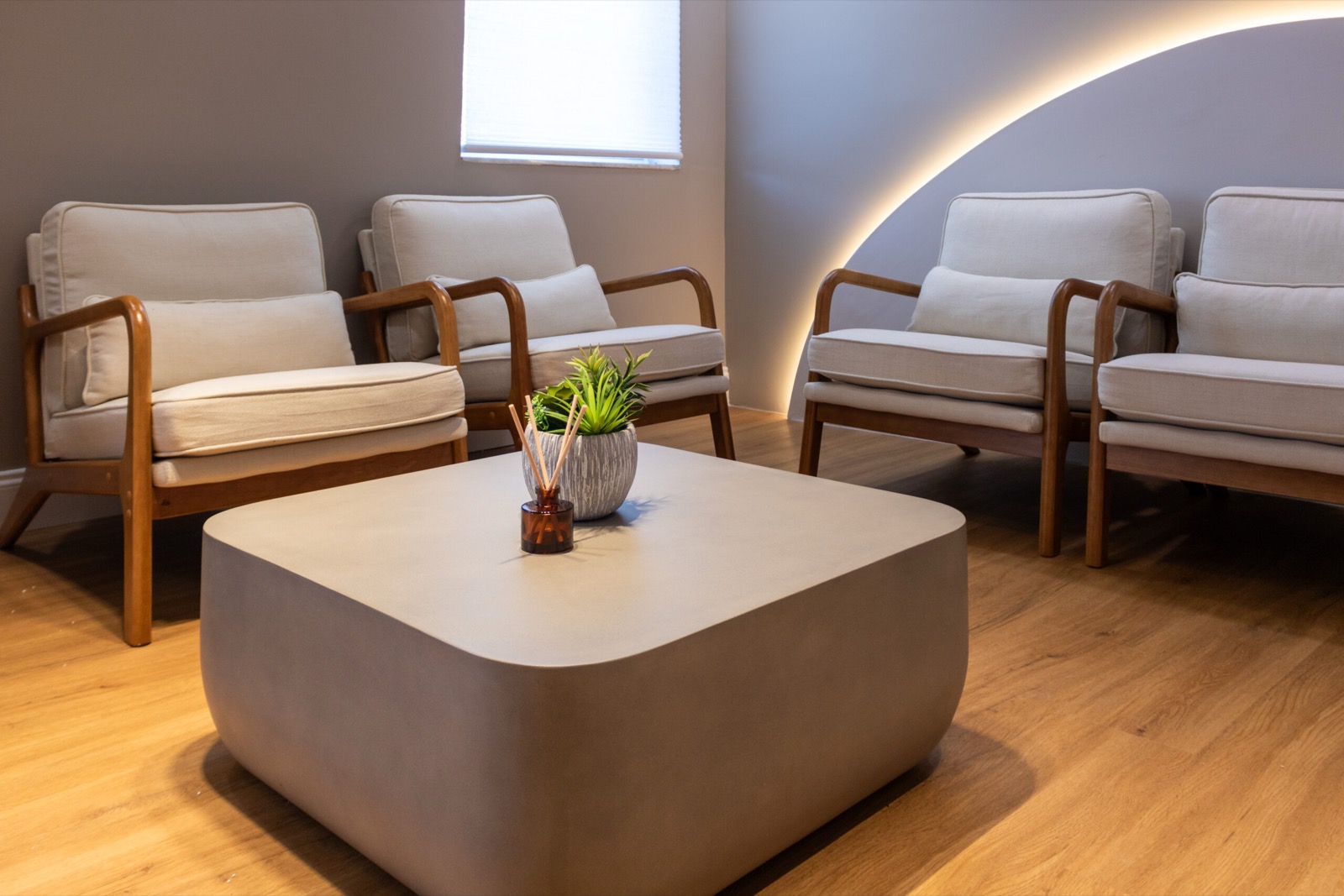
Families here use both formats, and the choice is worth making deliberately rather than by default. A first appointment in the room at 27724 Cashford Circle, Suite 102 gives the clinician things a screen does not: how a child holds themselves, whether they look at the parent before answering, what happens in the minutes before the appointment formally starts. Follow-ups by video are frequently better for the child, because a fifty-minute visit does not cost a class period and a teenager who talks more freely from their own bedroom usually says more.
Florida controlled-substance rules require an in-person evaluation before a first stimulant prescription, and periodic in-person visits for ongoing stimulant care. For Land O Lakes families that requirement is a short trip rather than an obstacle.
What changes when a child moves up to high school
The transition into high school shifts several things at once, and the sleep consequences are usually the least anticipated. Start times often move earlier while homework load and activity commitments move later. Adolescent circadian timing naturally drifts later during these years, which means a teenager who genuinely cannot fall asleep at nine thirty is not necessarily being difficult.
The practical result is a compressed sleep window at exactly the age when demand is rising. We work through the actual schedule with families rather than issuing generic advice: what can move, what cannot, where the wake time is really set, and whether the weekend catch-up pattern is making Monday worse. Some households can change more than they expect. Some cannot change much, and the plan has to be built around that honestly.
Accommodations, and the limits of a clinician's letter
When attention or sleep difficulties are affecting school performance, families often ask about formal accommodations. We can document a diagnosis, how long a child has been in care, and what we recommend clinically. What happens next belongs to the school, which decides under its own process whether to put a 504 plan in place or to open an evaluation for special education services.
Those two routes are not interchangeable. A 504 plan provides accommodations where a condition substantially limits a major life activity. An IEP is special education with eligibility criteria and measurable goals attached. Knowing which one you are asking for before the meeting saves a great deal of time, and we will tell you which fits the situation as we understand it.
Margot Krahn, PMHNP-BC
Margot Krahn, PMHNP-BC is a board-certified, Florida-licensed psychiatric mental health nurse practitioner with twelve years of clinical experience. Lifespan training means child and adolescent psychiatry is part of her formal preparation. Land O Lakes families see her in person at the Wesley Chapel office or across Florida by HIPAA-secure telehealth.
She asks for concrete numbers rather than impressions, particularly about sleep and daily routine, because that is where the useful detail hides. The first appointment runs a full hour, which is what it takes to get a complete history from a family and a child.
Read Margot's full bioLand O Lakes: frequent questions
Could my child's attention problem just be tiredness?
Sometimes, and it is worth establishing before settling on another explanation. Chronic short or disrupted sleep produces inattention, irritability, and falling grades, which is the same picture that brings families in with an attention question. We measure the sleep rather than assuming either way.
How much sleep should a tween actually be getting?
Published guidance lands in the nine-to-twelve-hour range for six to twelve year olds and eight-to-ten hours for teenagers. Many children in these neighborhoods are running well below that on school nights and catching up on weekends, which itself creates problems.
Do you treat insomnia in children?
We evaluate it and treat the psychiatric components, and behavioral approaches come first for most children. Where the history points to a primary sleep disorder such as sleep-disordered breathing, that needs a medical workup and we refer for it rather than managing it as a psychiatric problem.
My child says nothing in appointments. Is this worth doing?
Usually yes, and a silent first appointment is a common one rather than a wasted one. A great deal is readable without a child volunteering much: sleep and appetite history from the parent, school reports, how the child responds to indirect questions rather than direct ones, and what changes when the parent steps out of the room. Nothing useful comes from pressuring a child to perform in a first visit, and a clinician who needs them to talk in order to get anywhere is doing it wrong.
Can we mix in-person and video visits?
Yes, and most families here do. A common pattern is an in-person first appointment followed by video follow-ups scheduled so that a child does not miss class. Your child sees the same clinician in either format.
Is there a waitlist?
Typically one to two weeks for a new intake rather than the multi-month waits quoted at many practices. Call (813) 670-3005 for a genuine next-available appointment.
Do you accept Medicaid?
Ascend does not bill Medicaid. If your child has Medicaid coverage, call our care team and we will explain what options exist.
Real appointment times, without a six-month wait.
In-person visits at Wesley Chapel or secure video from home, a full hour for the first appointment, and the same clinician throughout. Send the form at the top of this page or call and we will respond within one business day.