
Senior primary care in Riverview, from your own home.
Primary care for Riverview adults 65 and older by secure video from your living room, with the same board-certified physician at every visit: unhurried appointments, real medication review, labs at a Quest or LabCorp near you, and an optional in-person visit at our Tampa office when a hands-on exam is needed.
- Telehealth first, no waiting roomMost senior care is done by secure video from home, so nothing about your day has to be rearranged around getting somewhere.
- The same physician every visitYou see Dr. Jason Saylor, DO each time, not the rotating panel of a high-volume senior center.
- Local labs, optional Tampa visitBloodwork at a Riverview Quest or LabCorp, with the Carrollwood office available when a hands-on exam is needed.
Free · Confidential
Request a callback
A patient coordinator calls you within one business day. No cost, no obligation.
Got it. We will be in touch.
A patient coordinator will reach out within one business day. If you would rather not wait, call (813) 670-3331.

For Riverview seniors, telehealth is the point, not the backup.
The medications, falls, and memory changes that matter most after 65 show up when one physician has time to look, not when you can find a ride into town. We built senior care around a secure video visit from your home, and kept the Tampa office in reserve for the exam that genuinely needs hands.
Request a callbackMost senior care in Riverview means going to a volume clinic. This is the same physician, an unhurried hour, and a video visit from your own living room.

Senior primary care in Riverview at Ascend Mind and Body means Florida telehealth visits from home with the same physician each time, labs drawn at a Riverview-area Quest or LabCorp, and an optional in-person visit at our Tampa-Carrollwood office (3971 Moran Road, Suite 101) for the parts of care that need a hands-on exam. That covers Medicare Annual Wellness Visit support, full medication reconciliation, fall and cognitive screening, chronic disease management tuned to older-adult risk, and advance care planning. Dr. Jason Saylor, DO is the physician. Call (813) 670-3331 or request a callback.
Riverview's senior care market is crowded, but it runs to one model: the high-volume, Medicare Advantage senior center. You will find several of them nearby, and they can work well if their capitated plan is the one you carry. The catch is the shape of the visit. These centers are built for throughput, so you are often assigned to a shared or rotating provider, the slot is short, and if you carry Original Medicare or a different Medicare Advantage plan, some of them cannot see you at all because the whole business model is a single network contract.
Ascend is a different lane. You see the same board-certified family medicine physician at every visit, first appointments run about an hour, and, most importantly for Riverview, you do most of it without leaving home. Geriatric-focused primary care is a different scope of practice, not a relabeled adult physical. Medications that were fine at 54 interact differently at 74. Falls become a trackable clinical outcome, not a one-off accident. Cognition is something you screen for on a schedule. And the conversation about what care you actually want has to happen before a crisis forces it. None of that requires a waiting room, which is exactly why telehealth fits senior care so well.
How telehealth senior care works for Riverview, step by step
A secure video visit from your living room, labs at a Quest or LabCorp near you, and the Tampa office reserved for the one visit a year that benefits from a hands-on exam.
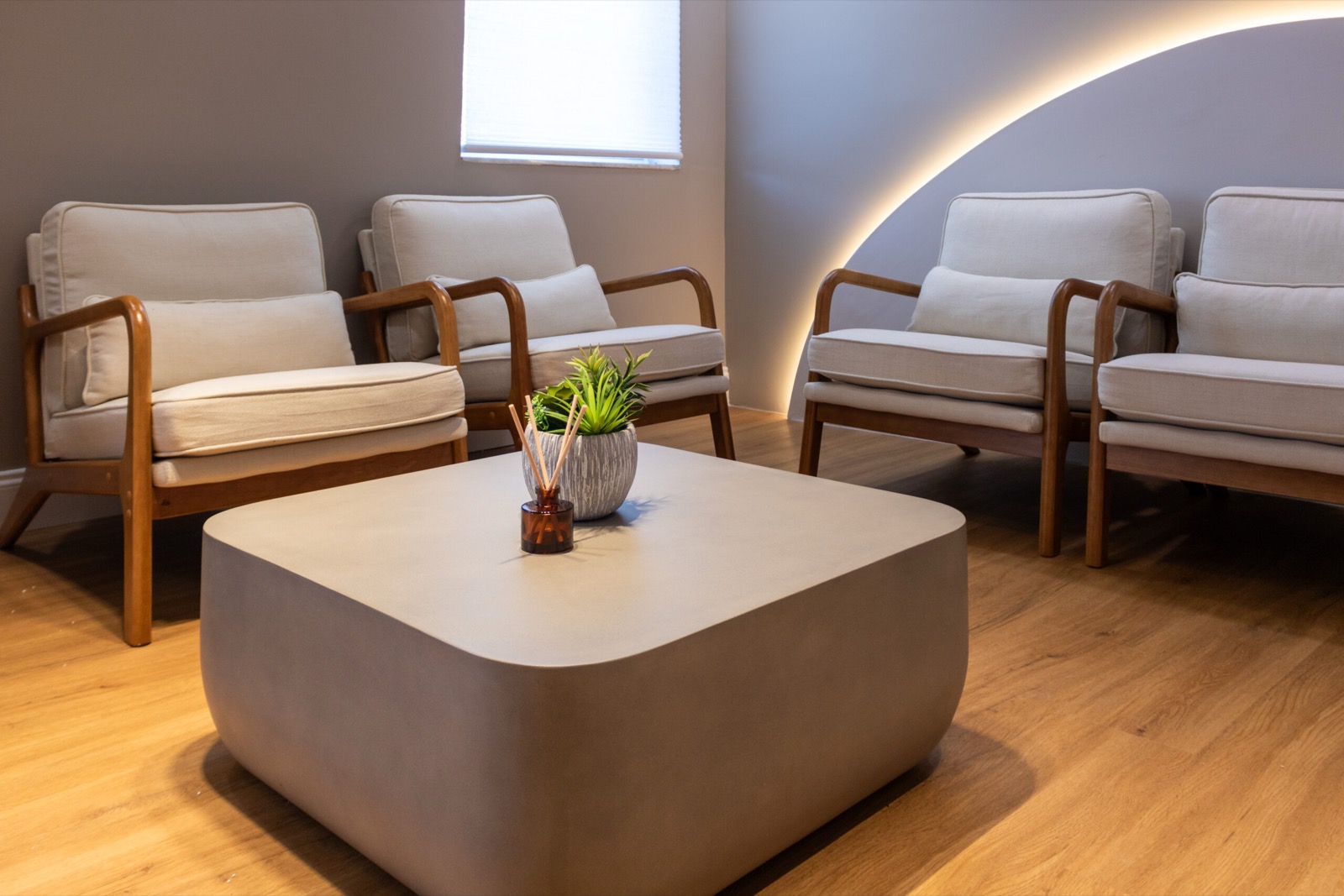 Tampa-Carrollwood office
You receive a secure video link by email and text, and we walk you through it the first time. From home, we handle medication review, blood pressure and chronic disease check-ins, depression and cognitive screening, and care coordination. Lab orders route to a Riverview-area Quest or LabCorp, and results return before your visit so we review them together. When a hands-on exam is needed, the Tampa-Carrollwood office is available.
-
1
You request a callback
Call (813) 670-3331 or use the form. A coordinator confirms your goals, insurance, and scheduling, and verifies your benefits before the first visit.
-
2
You do labs at a Riverview Quest or LabCorp
We send your orders electronically to a lab near you. You go in for the draw at your convenience, and the results come back to us before your video visit so nothing is guessed at.
-
3
Your first video visit is about an hour
A thorough history, a full medication reconciliation, a cognitive and depression screen, a fall risk review, and a plan for the year, all from your living room. A family member is welcome to join.
-
4
You come in only when it helps
The hands-on parts of the Annual Wellness Visit and any focused physical exam are done in person. Many Riverview seniors come in once a year and do everything else by video.
If technology is the barrier rather than transportation, a family member can help set up the first call or join from a separate device. Florida law requires you to be physically in Florida during the session, which your provider confirms at the start. We would rather talk you through a clunky first telehealth visit than have you skip a follow-up because getting there felt like too much.
 Illustrative
One physician who actually knows your history
Riverview senior patients are cared for by Dr. Jason Saylor, DO, board-certified in family medicine, 17 years in practice, and Chief Medical Officer at Ascend. His scope covers senior care, medication review, fall prevention, and chronic disease management. The same physician appears on the screen at every visit; there is no rotating panel and no handing you to whoever is free.
- Board-certified family medicine (DO)
- 17 years clinical experience
- Chief Medical Officer
- Medicare AWV and chronic care
Dr. Jason Saylor, DO is an osteopathic family medicine physician, board certified, and Riverview patients see him by Florida-statewide telehealth. There is no Ascend office in Riverview. When an examination genuinely has to be done by hand, it is scheduled at the Tampa-Carrollwood office at 3971 Moran Road, Suite 101, and this page names that trip rather than implying a local clinic that does not exist. His background is broad family medicine with an explicit senior focus rather than a separate geriatric fellowship, and he is the reviewer of record here.
What makes geriatric care its own discipline is that the important problems refuse to sit still on a lab report. Polypharmacy, falls, cognitive change, frailty, incontinence, isolation: none of them has a tidy diagnosis code, and a fifteen-minute appointment built around a chief complaint will step over every one of them. So the first visit hunts for them on purpose.
Doing that hunt by video changes what is available. The medication inventory is not a list somebody typed; it is whatever is actually in the cabinet, the drawer, and the dish by the sink, held up one bottle at a time. The falls history includes the near-misses people never file under falls, and it can be asked while looking at the room where they happened. A validated cognitive screen and a depression screen both run. And then the question that reshuffles more care plans than any test result: who else lives here, who helps, and what does an ordinary Tuesday actually look like. On a home visit by camera, part of that answer is simply visible.
When a geriatrician is the better referral
A geriatrician holds fellowship training built specifically around aging. For most older adults who are not dealing with advanced frailty, a family medicine practice whose scope genuinely includes senior care handles the work well. Where the need is complex, advanced dementia management or a full interdisciplinary geriatric assessment team, a geriatric specialist is the right destination and we help arrange it. Saying so is more useful than claiming to be the answer to everything.
Getting started, and an unhurried visit
New senior patients usually get a slot inside the week. The first video visit runs about an hour and follow-ups run 30 to 45 minutes. For the large majority of appointments, nobody travels anywhere and nobody sits in a waiting room.
An hour buys something specific. When a second problem surfaces halfway through, it gets handled in that same appointment instead of becoming a reason to book again in six weeks. High-volume senior clinics cannot do that; a full agenda gets triaged to one item and everything else waits for the next slot. Over an hour of video there is room for the whole medication list, the falls history, and the question you have been carrying around since spring.
The equipment requirement is low. A phone, tablet, or computer with a working camera and a connection that holds, and usually nothing to install beforehand. Anyone who would rather not wrestle with it alone the first time can have a family member start the call or sit through it. And where an examination truly needs hands, it is booked at the Tampa-Carrollwood office, 3971 Moran Road, Suite 101, with the same physician you have been talking to, rather than being farmed out to somebody you have never met.
The Medicare Annual Wellness Visit, and how telehealth fits
Medicare Part B includes a yearly Annual Wellness Visit as a covered preventive benefit. Most of what it consists of transfers to video without loss, and it is not the same thing as a physical examination, which confuses a great many people. Ascend does not bill Medicare directly for primary care, so coverage is confirmed with you beforehand.
Three different Medicare visits get muddled together constantly, and the differences decide what you pay. One is a single Welcome to Medicare visit inside your first year of Part B. One is the recurring Annual Wellness Visit, a no-copay risk review every year thereafter, most of which runs well over video. The third, a physical or problem-focused exam, is billed separately and needs hands. A common Riverview pattern is one Tampa trip a year for the third, with the rest handled remotely.
- Welcome to Medicare, formally the Initial Preventive Physical Examination: one visit only, and only inside the first 12 months after Part B enrolment. It runs through medical and social history, a basic examination, and the plan for which screenings fall due when.
- The Annual Wellness Visit: the yearly one that follows. It carries a Health Risk Assessment, cognitive screening, fall risk assessment, a depression screen, a medication review, an update on advance directive status, and a written prevention plan. Every one of those components is assessment and planning, which is why the visit travels over video intact.
- A physical or problem-focused visit: a distinct billable appointment carrying your usual cost-sharing, where somebody physically examines you about a specific concern. This is the piece that puts a Riverview patient in the car to Carrollwood.
Because the wellness visit is assessment and planning rather than examination, nearly all of it happens from your own living room. The physical examination component is what draws most Ascend senior patients to Carrollwood roughly once a year, with chronic care check-ins, medication reviews, and coordination running remotely the rest of the time. Worth adding: Medicare is not strictly an age-65 gate. Some younger adults qualify through a disability determination or specific diagnoses, and the wellness benefit reaches them the same way once they are enrolled.
Why the plan you picked decides your doctor more than your diagnosis does
Here is the part of senior care with no medicine in it at all, which nonetheless determines most of what happens to you. Original Medicare opens the door to essentially any participating provider in the country and asks for no referral to see a primary care physician. Medicare Advantage swaps that for a private insurer's contracted network, and from then on the network decides which senior practices are even available. Not you. Not your physician.
For a Riverview household this is the single most frequent reason somebody ends up in a clinic they never chose. The plan contracts with a short list of practices, often the large capitated senior centres in the area, and enrolment holds you there until the next window opens. Mid-year changes are restricted. The choice made during the autumn enrolment period governs the entire following year, which is a lot of weight to put on a decision most people make from a mailer.
The three arrangements work like this:
- Original Medicare, Parts A and B. Nationwide access to any provider accepting Medicare assignment, with no referral required to establish primary care. The one thing worth confirming before booking anywhere is whether the practice accepts assignment, and we confirm that for you ahead of the first visit.
- Medicare Advantage, Part C. Access narrows to whatever the plan has contracted, and the HMO variants generally want an in-network referral before a specialist will see you. Check two things before booking: whether this practice sits in your specific plan's network, and how its referral routing works, because two plans sold by the same insurer frequently answer differently.
- A Medigap supplement alongside Original Medicare. Access stays as open as Original Medicare, with the supplement absorbing most of the coinsurance. The detail that matters is which plan letter you hold, since Part B coinsurance coverage is not uniform across them.
One wrinkle deserves its own paragraph for anyone selecting a plan specifically around remote care. Telehealth coverage rules have shifted repeatedly over recent years and are still moving, and Original Medicare and any individual Advantage plan can land in different places. Ask the plan itself what it will cover for telehealth primary care in the coming year. What was true last year is not evidence.
Ascend does not bill Medicare directly for primary care, and is in-network with Aetna, ChampVA, and UnitedHealthcare. Your coverage and what you would owe are confirmed before the first visit rather than discovered afterwards. And if you are choosing an Advantage plan at open enrolment mainly to hold on to a particular physician, ring the plan and confirm that physician's status with them. Published directories go out of date constantly, and a listing in one is not a commitment.
Centers for Medicare & Medicaid Services. "Your Medicare Coverage Choices" and "Yearly Wellness Visit" program guidance. Medicare.gov and CMS.gov.
Ready for care that comes to your living room?
Tell us what is going on and we will get you scheduled, usually within the week. Same physician every visit, by Florida telehealth from home, with the Tampa office available when you need it. The first conversation is information, not a commitment.
Florida telehealth statewide, with in-person visits at the Tampa-Carrollwood office when needed.
Chronic disease management, adjusted for the realities of aging
A threshold that is right at 45 is frequently the wrong threshold at 78, and treating it as fixed is how older adults get harmed by good intentions. The adjustment is to the goal itself, not only to the drug, and it is set against your own health, frailty, and fall history rather than your birth year. Once labs are back, almost all of that reasoning happens perfectly well on a video call.
-
Blood pressureMost common
Judged on weeks of home cuff readings you log yourself, which beats any single number taken once a year.
Read more -
Type 2 diabetes
Your home glucose log is the real dataset, and we read the lows in it as carefully as the highs.
Read more -
Cholesterol
After 75 this becomes a conversation about your priorities, and a video visit gives it room to breathe.
Read more -
Thyroid disease
Labs drawn near you in Riverview, dose adjusted on a video follow-up, no trip required either way.
Read more -
Chronic pain
Non-opioid approaches first, and we can watch you move around your own house rather than a hallway.
Read more -
Preventive screenings
Ordered from here, done near you, and tracked so nothing quietly lapses between years.
Read more
If you are ever in immediate danger or having thoughts of self-harm, call 988 (Suicide and Crisis Lifeline) or 911 now. For everything short of that, a first visit is simply information.
Blood pressure and orthostatic drops
The reading that decides your treatment should not be one number taken once, in an unfamiliar building, after you rushed to get there. Blood pressure is variable by nature, and the office version of it is measured under conditions almost nobody actually lives in. We ask Riverview patients to take readings at home on a validated upper-arm cuff, at consistent times, and to bring two or three weeks of them to the visit. That is a better basis for a decision, and it is one of the clearest places where managing hypertension remotely is not a compromise.
What we are watching for is the drop on standing, because aggressive lowering that looks excellent on a chart is a common cause of dizziness and falls in older adults. Targets are individualized to your overall health, frailty, and fall history rather than applied as a flat rule by age. If your history points toward orthostatic hypotension, that measurement has to be taken properly with someone in the room, and we will bring you to the Carrollwood office for it rather than guess from a home reading.
Diabetes and hypoglycemia risk
In type 2 diabetes after a certain age, the A1c target is often deliberately relaxed, and that is a clinical decision rather than a lowering of standards. Tight control buys little in a frail patient or one with limited life expectancy while raising the odds of a dangerous low, which is why the American Diabetes Association devotes a section of its Standards of Care to individualising exactly this.
The figure that matters most is not on the lab report anyway. It is the four-in-the-afternoon low you never mentioned because you ate a biscuit and it passed. A three-month average can look tidy while concealing a run of those underneath it. On video you can lift the meter to the camera or share its download, and the lows get read with more attention than the highs, because a single bad low that puts an older adult on the floor does more harm than twelve months of running a little high.
Bone health and osteoporosis
Nothing announces bone loss until something breaks. That silence is the reason the U.S. Preventive Services Task Force recommends bone density screening, a DXA scan, for women aged 65 and over, and earlier where specific risk factors are present; for men the evidence is less settled and the decision is made on individual risk. The order goes out from a video visit and the scan is done at an imaging centre near you.
We treat this as one conversation with fall prevention rather than two, because a fracture needs both a fragile bone and a fall to produce it. Managing density while ignoring the hall runner deals with half the problem, and the runner happens to be the half a camera can see.
Depression and isolation in later life
Getting older does not come with depression attached, and treating it as though it does is how it stays unrecognised. It often turns up as aches, as irritability, or as a quiet withdrawal from things rather than as stated sadness, which is precisely why symptom-description screening misses it. The stakes are not abstract either: suicide rates among older adults, and older men in particular, run above most other age groups. A brief validated questionnaire runs at every Annual Wellness Visit and a positive result is taken seriously rather than filed. Where it fits, we bring in talk therapy for grief, life transitions, or ongoing depression and anxiety alongside the medical side, and that therapy is available by Florida telehealth as well, which removes the transport problem that stops many referrals from ever happening.
Medication reconciliation and polypharmacy
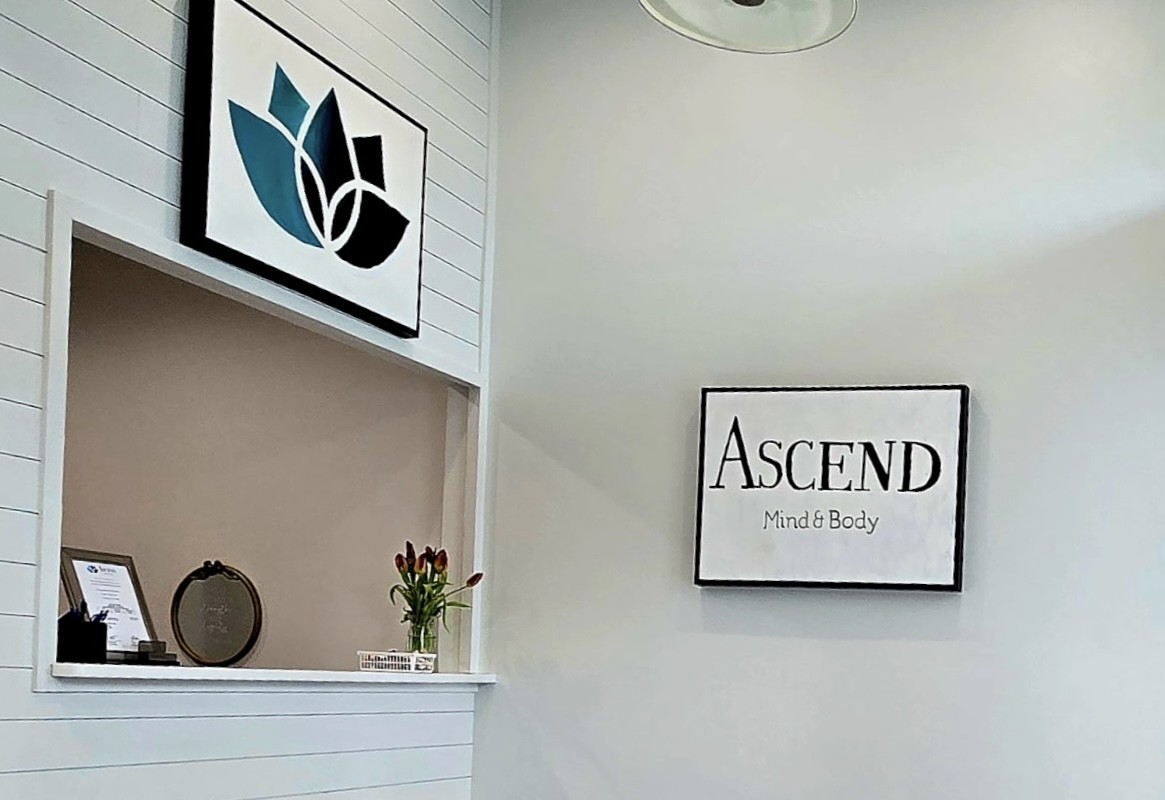 Tampa-Carrollwood office
Medication reconciliation and most senior care happen by video from home; the Tampa office is reserved for the hands-on parts of the exam.
Five or more regular medications is the usual working definition, and reviewing them is among the highest-yield hours in senior medicine, because every added drug raises interaction risk and prescribers rarely speak to one another. This is one task video does better than a clinic, for a mundane reason: the bottles never had to be packed, carried, and remembered.
The brown-bag review is standard geriatric practice with a standard failure mode. Someone brings the bottles they think count and leaves behind the eye drops, the supplements, and whatever a daughter picked up last month. That failure largely disappears when nothing has to travel. We ask you to clear the kitchen table, gather everything within reach, and open the cabinet on camera. What turns up, routinely, is a dozen prescriptions written by four prescribers, two drugs from the same class that nobody spotted as duplicates, and at least one container that expired several years ago.
There is a second advantage no examination room can reproduce. The pill organiser can be seen as it is genuinely filled, and it becomes obvious whether the person filling it is you or somebody else. So does whether the bottles sit together somewhere sensible or are scattered across three rooms and a handbag. Those details predict whether a regimen will actually be taken as written far better than any promise made across a desk, and none of them survive the trip to a clinic.
The American Geriatrics Society's Beers Criteria sits underneath this conversation without running it. It catalogues medications carrying elevated risk in older adults. It is not a stop-order, and a clinician who works it as a checklist delivers worse care than one who never opened it.
Combinations that get specific attention
Anticholinergic burden
Several ordinary things carry a small anticholinergic effect: the older sedating antihistamines, a number of bladder medications, some antidepressants. Individually none looks like a problem. Summed across a full list they produce worsened confusion, a dry mouth, constipation, and a higher chance of falling. The reason it goes unnoticed is structural rather than careless, since no prescriber ever sees the total; each is looking at their own line item. We add the whole load together instead of judging any single drug alone. And over video, somebody reading a label aloud will very often mention the shop-bought sleep aid that appears on no chart anywhere, which is frequently the largest contributor of the lot.
Sedative-hypnotic and opioid combinations
Sedatives, sleep aids, muscle relaxants and opioids stacked together push up both fall risk and respiratory depression in older adults, and that stack gets named explicitly during review. Where something should change, the safer route is worked out with whoever prescribed it rather than stopped dead, since abrupt withdrawal carries its own hazards. Having the conversation at home adds two things a clinic cannot: we learn what hour the sedating medication is genuinely taken, and we can watch what the walk to the bathroom afterwards actually looks like.
The "triple whammy"
A diuretic, an ACE inhibitor or ARB, and a non-steroidal anti-inflammatory such as ibuprofen or naproxen taken at the same time is a well-documented combination associated with acute kidney injury risk in observational research. It recurs because each of the three was prescribed for a separate and entirely sensible reason, and because the third one usually was not prescribed at all; it came off a shelf. That is the whole argument for asking to see the medicine cabinet rather than only the prescription bottles.
Deprescribing, done carefully
None of the above makes any particular medication wrong for you. Responses differ between people and so do risk-benefit calculations, which is the reason these decisions are made against a full history rather than off a list. Where something looks as though it may have outlived its purpose, it is tapered, and the prescriber who started it is brought into that. Remote care makes the follow-up rhythm easier rather than harder: a short video check a week into a taper costs nothing but a few minutes, so changes can be made in small careful steps rather than one large one followed by a three-month wait to find out what happened.
American Geriatrics Society. "2023 Updated AGS Beers Criteria for Potentially Inappropriate Medication Use in Older Adults." J Am Geriatr Soc. 2023;71(7):2052-2081. Lapi F, et al. BMJ. 2013;346:e8525.
What a camera in your home catches that an exam room never will
Fall risk, assessed in the room where the falls happen
Here is the honest case for doing this part by video. In an exam room, a physician asks you whether there are loose rugs at home and you answer from memory. On a telehealth visit, you carry the tablet down the hallway and we both look at the actual floor. Every fall-prevention conversation in a clinic is a reconstruction. This one is not.
The structure follows the CDC's STEADI framework (Stopping Elderly Accidents, Deaths, and Injuries): falls and near-falls in the past year, a review of medications that raise fall risk (sedatives, some blood pressure medications, anything that causes dizziness), and vision and footwear. Then we ask you or whoever is helping to carry the camera through the route you walk at two in the morning, which is where a large share of falls actually occur.
- The path from the bed to the bathroom, walked slowly on camera, with the lights set the way you actually leave them at night.
- Thresholds, cords, and the rug corner that has been curling for a year, seen rather than described.
- The bathroom itself: whether there is a grab bar, whether it is anchored into a stud or suction-cupped to tile, and what you are currently grabbing instead.
- The stairs, if there are any, including whether the handrail runs the full length and which side it is on.
- The shoes actually by the door, not the shoes you would have worn to an appointment.
- Whether the prescribed cane or walker is within reach, or parked in a closet because it does not fit through the kitchen doorway.
What video cannot assess, said plainly
A camera does not replace hands. Formal gait and balance testing, where a clinician watches you rise, walk a measured distance, turn, and sit while timing it and standing close enough to steady you, is not something we will pretend to do over a video connection. Neither is an orthostatic blood pressure measurement done correctly, which requires readings taken lying down and again after standing, on a calibrated cuff, with someone present in case you become lightheaded. Both are real parts of a fall workup.
So when your history points that direction, we say so and we schedule the in-person visit at our Carrollwood office rather than working around the gap. Recurrent unexplained falls, new unsteadiness, or dizziness on standing are the common triggers. The rest of the assessment stays where it belongs, in your home.
Cognitive screening by video, and its limits
A short structured cognitive screen forms part of the Medicare Annual Wellness Visit and one runs every year here. Treat it as a planning instrument rather than a diagnostic test, because that is what it is. The U.S. Preventive Services Task Force, reviewing the question most recently, found the evidence insufficient to weigh benefits against harms for screening every asymptomatic older adult for cognitive impairment. None of that argues for skipping it. It argues for describing the result accurately: an opening for a conversation and a baseline to watch, never a verdict delivered on a video call.
Video adds one wrinkle worth naming. Several screening instruments were validated in person, and hearing difficulty, an unfamiliar interface, or a poor connection can depress a score for reasons that have nothing to do with cognition. We account for that rather than treating a video score as equivalent, and when a result is borderline or a family member describes a change that worries them, we bring you in or refer for fuller testing instead of repeating the same screen.
Between appointments, what earns attention is function rather than a test score. A question asked twice inside one conversation. A familiar route that stopped being familiar. Bills or a chequebook that suddenly take effort they never took. When any of those surface, the response is a proper history, a look at whether a medication or an untreated condition is contributing, thyroid disease, depression, sleep apnea, a urinary tract infection all being ordinary culprits, and a referral to neurology or for neuropsychological testing where a fuller workup is warranted. Some drift in memory with age is unremarkable. A change that takes away your ability to run your own day is not something to sit on and watch.
The things a video visit is unusually good at catching
Two of the most correctable contributors to falling, to apparent confusion, and to withdrawing from company are uncorrected sight and uncorrected hearing. Both get missed constantly, because loss that arrives gradually gets absorbed rather than noticed. A video call exposes a hearing problem inside about a minute and a half for a simple reason: the conversation is itself the test, and the connection removes every visual cue a person has been unconsciously leaning on. We ask when your eyes were last dilated and press for an annual look.
Changes in sleep, energy, appetite and weight deserve investigation rather than being filed under getting older, since they are frequently the first visible edge of something treatable, sleep apnea and medication side effects being two of the commonest. Losing more than roughly five percent of body weight unintentionally across six to twelve months earns a workup, not an observation period. Age-related muscle loss, sarcopenia, is one of the things quietly driving fall risk, and it gets addressed with practical guidance on protein, hydration and movement. Easily corrected deficiencies such as vitamin B12 and vitamin D are checked on the panels you have drawn near you.
Two more things the camera gives us. We can see the kitchen, which tells us more about nutrition than any question does. And we can see who else is in the house, which tells us something about isolation that a patient sitting alone in an exam room rarely volunteers.
Immunizations, and where Riverview patients get them
Immunisation after 65 involves rather more than the yearly flu shot most people default to, and several entries on the list target risks that climb steeply with age. The list gets reviewed at every Annual Wellness Visit instead of being assumed current, and orders go to a pharmacy near you. Almost all of these are stocked within a short distance of most Riverview neighbourhoods, which is the practical reason the appointment and the injection do not have to occur in the same building on the same day.
- Shingles (recombinant zoster vaccine): for adults 50 and older, a two-dose series, to reduce shingles and the nerve pain that can follow it.
- Pneumococcal vaccines: for adults 65 and older; the specific vaccine and timing depend on your prior vaccination history.
- RSV vaccine: for adults 60 and older, particularly those with underlying heart or lung disease.
- Influenza: annual, with a higher-dose formulation available for adults 65 and older because immune response weakens with age.
- COVID-19: updated boosters on a schedule that changes over time; we confirm current recommendations at each visit.
- Tdap/Td: a booster every 10 years, or sooner after a significant wound.
We record what you actually received, because a vaccine given at a pharmacy does not reliably appear in a physician's chart on its own, and a gap in that record is how people end up either missing a dose or getting one twice.
CDC STEADI initiative; Bergen G, et al. MMWR. 2016;65(37):993-998. US Preventive Services Task Force. JAMA. 2020;323(8):757-763. Advisory Committee on Immunization Practices (ACIP), CDC Adult Immunization Schedule.
Referrals, hospital discharges, and the paperwork nobody schedules time for
Most senior primary care does not need a specialist, but recognizing when it does and closing the loop afterward is part of the job. The week after a hospital discharge is the highest-risk window in senior medicine, and it is also the week a patient can least afford a car trip. That is the single strongest argument for remote follow-up.
When primary care is enough, and when it is not
For a stable patient under chronic disease management, the recurring panels, basic metabolic, lipids, HbA1c, thyroid function, plus whatever else is indicated, come round somewhere between every three and every twelve months. Which end of that range depends on what is being managed and how settled it has been; it is a judgment rather than a calendar entry. Riverview patients have the draw done at a local Quest or LabCorp and the results arrive electronically ahead of the appointment, so the visit is spent interpreting numbers rather than waiting for them.
A referral goes out when a condition genuinely needs specialist-level management. Cardiology for heart disease that is complex or unstable. Endocrinology where diabetes or thyroid disease has become difficult. Neurology when a cognitive screen raises concern. Urology for problems past what primary care handles well. Sending the referral is not the end of the job. Records go across, the specialist's note gets chased until it comes back, and anything they changed is reconciled against your full medication list, since a specialist adding a drug while seeing only their own slice of the picture is among the most reliable ways to manufacture an interaction.
The days right after a hospital stay
What happens to a medication list on an inpatient ward does not reliably reach the outpatient side. Doses get changed, home medications are held and then never restarted, and the discharge summary turns up days after everyone has gone home. Medicare acknowledges the danger directly by funding a transitional care management service for a follow-up booked inside a defined window after discharge.
Call us after any hospitalization or emergency visit rather than waiting for your next scheduled appointment. This is where remote care earns its place most clearly. A patient three days out of the hospital is tired, possibly still unsteady, and often cannot drive. Asking that person to arrange transportation to a clinic in order to review a medication list is how follow-ups get skipped. A video visit gets it done from the couch, with the discharge paperwork and the new bottles both in frame.
Advance care planning under Florida law
Planning ahead means getting your wishes onto paper while you are still the one deciding. In Florida the governing law is Chapter 765 of the statutes, which covers health care advance directives: a living will setting out what you want regarding life-prolonging treatment, and the naming of a health care surrogate authorised to speak for you when you cannot.
One point causes real trouble and is worth stating separately: if you want emergency responders to honor a do-not-resuscitate decision outside a hospital, Florida requires a specific yellow Do Not Resuscitate Order form, DH Form 1896. A living will on its own does not instruct paramedics in the field. Families discover this at the worst possible moment.
These come up repeatedly as part of ongoing care rather than once as a box to tick, and drafting and executing the documents properly is work for an elder law attorney, to whom we refer you. Nobody here is an attorney and nobody here prepares the paperwork. The purpose is not to hurry anyone into a decision; it is to ensure that if you ever cannot speak for yourself, what happens next reflects what you wanted rather than whatever the default is.
Caregivers, consent, and the family member who lives elsewhere
Relatives coordinating a parent's care can sit in on visits where the patient consents, and where a signed HIPAA authorisation naming them is on file, can talk with us about that patient's health information between appointments. One precision worth insisting on: an authorisation of that kind lets us speak with you and nothing more. It confers no authority to decide anything. Decision-making authority arrives through a health care surrogate designation or a court-appointed guardianship, which are separate documents answering a separate question. We will gladly explain the difference; we cannot draft either.
This is the quiet advantage of remote visits for families. An adult child in Ohio joins the same call as easily as one in Brandon. Nobody takes a day off work, nobody flies in for an appointment, and the person who actually fills the pill organizer is in the room for the conversation about what goes in it. Coordinating a parent's care from another state is ordinarily miserable. This is the part of it that stops being miserable.
Signs it may be timeWhen a longer, senior-focused visit starts making sense
No particular birthday triggers this. A few patterns do, and any of them is a reasonable prompt to ask for a different kind of appointment than a standard adult physical.
- Appointments feel rushed, and you leave with the questions you meant to ask still unasked.
- Five or more regular medications, more than one prescriber, and no one has gone through the whole list together in over a year.
- A fall or a near-fall in the last twelve months that never came up with a doctor.
- Somebody in the family has mentioned a change in memory or judgment and you waved it off.
- You have skipped appointments because getting there, or the wait once you arrived, was more than it was worth.
- Several chronic conditions, several specialists, and a clear sense that none of them are talking to each other.
None of these on its own means something is wrong. Together they usually mean the visit structure has stopped fitting the situation. The fifth one in particular is worth taking seriously, because transportation is the barrier people are least likely to name to a physician and most likely to quietly let decide their care.
Insurance and access, stated plainly
Dr. Saylor is in-network with Aetna, ChampVA, and UnitedHealthcare. We do not bill Medicare directly for primary care. We verify your benefits before your first visit, share the full self-pay picture up front, and issue superbills for out-of-network reimbursement. Unlike a single-network senior center, we are not locked to one capitated plan.
In-network today
Dr. Saylor is currently in-network with Aetna, ChampVA, and UnitedHealthcare.
If you need a self-pay bridge
Self-pay is an option, and our medical billing team confirms the full picture with you up front when you call (813) 670-3331, before you book, so there are no surprises. Third-party financing programs are available, and we provide superbills for out-of-network reimbursement if your plan allows it. We would rather you know exactly where you stand than discover a gap after the visit.
How Ascend compares to the Riverview senior centers
The choice in Riverview is usually between a Medicare Advantage-only senior center built for volume, a large hospital-system practice, and a practice like Ascend that keeps a broader payer mix, a slower visit pace, and a telehealth-first model. Each has real tradeoffs worth naming honestly.
How Ascend compares to your other options
The tradeoffs are real, and we would rather you know them before you call.
| Model | Same physician each visit | Where care happens | Payer flexibility |
|---|---|---|---|
| Ascend Mind and Body (telehealth) | Dr. Saylor every visit | Video from home; optional Tampa office 30 min away | Broader payer mix |
| Medicare Advantage senior center | Often shared across a large panel | In person only, at their own centers | Locked to one capitated network |
| Large hospital-system practice | Often a rotating provider | In person; some telehealth for follow-ups | Broad, but access to in-system specialists is the draw |
Ascend's telehealth-first senior care is a strong fit if you want a real relationship with one physician, you value a longer visit over a same-day walk-in slot, getting to appointments has become a hassle, and your insurance situation allows some flexibility.
It may be a less natural fit if you specifically need a Medicare Advantage plan's zero-copay senior-center model right now and cannot bridge the current window, if you prefer all of your care to be hands-on and in person, or if you need highly complex geriatric specialty services beyond a family medicine scope, in which case we will tell you that directly and help point you toward the right resource.
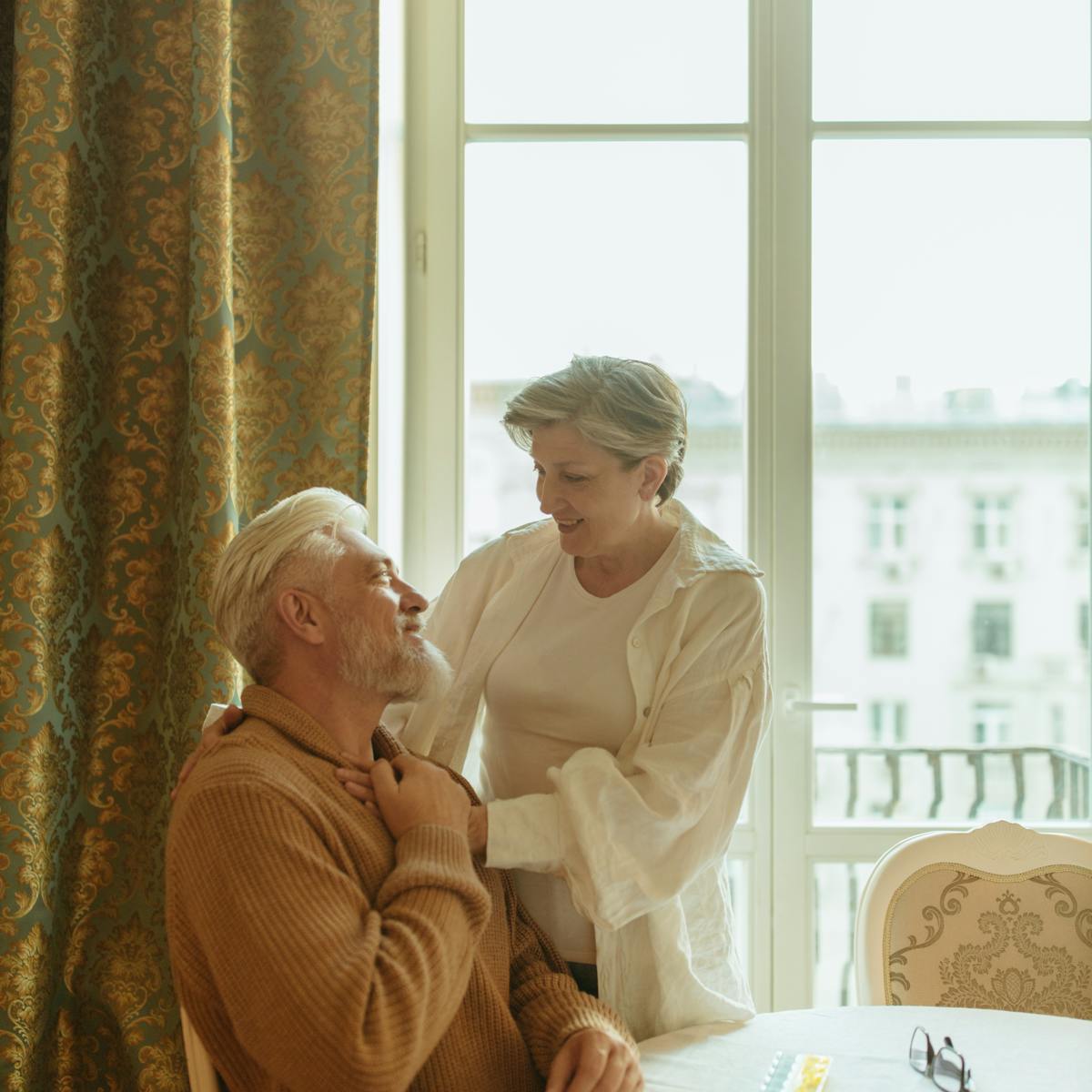 Illustrative
Senior care is built around what matters to you: staying mobile, managing medications safely, and keeping the people and routines you value, from your own home.
Areas we serve, and the in-person option when you need it
We serve Riverview (33569, 33578, 33579) and the surrounding Hillsborough County communities by Florida telehealth, with labs at a local Quest or LabCorp. When a hands-on exam is needed, the Tampa-Carrollwood office is at 3971 Moran Road, Suite 101, Tampa, FL 33618. Because care is by telehealth, any Florida resident is covered for eligible visits.
There is no Ascend office inside Riverview, and we would rather be plain about that than pretend otherwise. What there is instead is a way to get unhurried primary care from a single physician without leaving home: a secure video visit from your living room, bloodwork at the Quest or LabCorp nearest you, and the Tampa office held in reserve for the once-a-year in-person exam. For many Riverview seniors, that is the better deal, not the compromise.
Advance care planning, and why it belongs at a routine visit
Advance care planning has a reputation problem. People hear it as a conversation about dying, so it gets postponed, and then it happens in a hospital corridor at two in the morning with a family being asked to guess. It is better understood as a conversation about who speaks for you and what matters to you, and it belongs at an ordinary appointment while nothing is wrong.
Two documents do most of the work in Florida. A health care surrogate designation names the person who makes medical decisions if you cannot, which matters because without one the decision may fall to someone you would not have chosen, or be contested among people who each believe they know best. A living will records your wishes about life-prolonging treatment in specific circumstances. Both can be completed without a lawyer, both can be changed at any time, and both are only useful if copies actually exist somewhere findable rather than in a drawer nobody knows about.
The document is the smaller half. The larger half is telling the person you named what you would want, in plain terms, so that they are carrying out a decision rather than making one under pressure. Families who have had that conversation describe the difference in the moment as enormous, and the ones who have not describe the guilt of guessing as lasting for years.
There is a separate order form, sometimes called a POLST, that is different in kind: it is a medical order signed by a physician for people with serious illness, and it travels with you and directs emergency responders. It is not for everyone, and it is worth asking whether it applies to your situation rather than assuming either way.
None of this restricts your care or signals that anybody has given up. You can want everything done and record that. The point is that the person deciding for you knows what you would have said, and that the decision does not have to be reconstructed from memory by someone who is frightened.
We serve seniors across Riverview (33569, 33578, 33579) and the surrounding Hillsborough County communities, including Brandon (33510, 33511), Apollo Beach (33572), Ruskin (33570), and Lithia (33547). If you are a Florida resident, the license covers you for eligible telehealth visits regardless of ZIP code. Because the practice also covers primary care, psychiatry, and other services, a Riverview senior who also needs a medication evaluation or coordinated mental health care can be referred within the same organization, by telehealth, rather than starting over elsewhere.
Related nearby senior care: senior care in Brandon, Valrico, and Apollo Beach. For the full clinical scope, see the senior care service overview, and for the in-person option, the Tampa-Carrollwood office in Tampa.
Function and frailty: what the chart does not tell you, and what a camera sometimes does
Give two people the same diagnoses and the same laboratory results and they can still be living entirely different lives, because independence tracks function far more closely than it tracks any number on a panel. Date of birth explains almost none of the difference. Capability explains nearly all of it.
Nobody simply has frailty or lacks it. It sits on a gradient, and a person's position on that gradient changes how hard a given treatment is worth pushing. What suits a robust, independent 80-year-old can be actively unsuitable for a frail 72-year-old, and no chart anywhere records which of those two you are.
So we ask about specific tasks rather than general wellbeing. Whether you can rise from a chair without pushing off with your arms. Whether you carry groceries in from the car yourself, and in how many trips. Whether something you used to enjoy has quietly dropped off the schedule because of pain, balance, or fatigue. Whether you still drive, and whether it still feels the way it used to. Concrete questions get accurate answers; asking someone how they are doing does not.
Video adds a layer here that is easy to underrate. We watch you stand up from your own chair, in your own house, in the shoes you actually wear. We see whether you steady yourself on the counter on the way past it. We see the stairs you told us you manage fine. A patient who has arranged transportation, dressed for an appointment, and sat in a waiting room has already filtered out most of what we are trying to see. None of that filtering happens at home, and the unfiltered version is the useful one.
What video cannot do is measure it. Timed testing and formal balance assessment need a clinician in the room, and when the picture calls for that we schedule the Carrollwood visit rather than approximate it from a screen.
Driving, and the conversation nobody wants to start
Nothing in senior primary care is harder to raise than driving, and it does not get raised reflexively or because of a birthday. Something specific has to prompt it: a crash or a near miss, a change in vision, a cognitive change touching judgment, or a medication producing sedation. When one of those appears it gets said out loud, and a formal driving evaluation through occupational therapy is available by referral. That evaluation is a real functional assessment and considerably more useful than the same argument recirculating at Sunday dinner. Blanket recommendations based on age are not made here. The question is function, and only function.
There is an honest advantage to having this discussion remotely. A conversation about whether someone should still be driving does not, in our case, require them to have driven to it. That removes a real and slightly absurd disincentive, and it also means losing the keys does not mean losing the physician.
This page is informational and does not substitute for a clinical visit, legal advice, or a review of your specific insurance plan. Coverage of services depends on your specific Medicare or insurance plan; advance directive documents should be reviewed with a qualified attorney for your situation.
FAQs about senior care in Riverview
Still deciding? These are the questions Riverview seniors and their families ask most before they call.
Does Ascend have a senior care office in Riverview?
Not a physical office in Riverview. Riverview-area seniors see our board-certified family medicine physician by HIPAA-secure Florida telehealth from home, with labs drawn at a Riverview-area Quest or LabCorp. When a hands-on exam is needed, the nearest in-person office is Tampa-Carrollwood, at 3971 Moran Road, Suite 101, Tampa, FL 33618. For most senior care, telehealth is the point: no travel, no waiting room, the same physician each visit.
How does telehealth senior care actually work for Riverview patients?
You get a secure video link by email and text, and we walk you through it the first time. From your living room, we do medication reconciliation, blood pressure and chronic disease review, a depression screen, and a cognitive check-in over secure video. Lab orders route to a Riverview-area Quest or LabCorp, and results come back before your visit so we review them together. A family member is welcome to join from the same device or a separate one.
What senior visits still need an in-person trip to Tampa?
The parts of the Medicare Annual Wellness Visit and any focused physical exam that require hands-on assessment are best done in person. Many Riverview seniors come to the Tampa-Carrollwood office once a year for that in-person piece and handle the rest of the year, chronic care check-ins, medication reviews, and care coordination, by telehealth from home.
Do you take Medicare for Riverview seniors?
We do not bill Medicare directly for primary care. Currently the practice is in-network with Aetna, ChampVA, and UnitedHealthcare. We verify your benefits before your first visit. Unlike a single-network senior center, we are not locked to one capitated Medicare Advantage plan.
How is Ascend different from the Medicare Advantage senior centers in Riverview?
The large local senior centers are built around a single capitated Medicare Advantage contract and higher patient volume, which often means a shared or rotating provider and shorter visits. Ascend keeps a broader payer mix, gives you the same physician every visit, and delivers most care by telehealth from home so you skip the waiting room entirely.
What is the Medicare Annual Wellness Visit, and can it be done by telehealth?
The Annual Wellness Visit is a yearly, no-copay Medicare risk assessment: health history review, medication review, cognitive screen, fall risk assessment, depression screen, and a personalized prevention plan. Much of it works well over telehealth, though the hands-on physical exam component is best done in person, which is why many Riverview seniors pair a once-a-year Tampa office visit with telehealth for everything else.
Where do I get lab work and bloodwork if visits are by video?
We send your lab orders electronically to a Riverview-area Quest Diagnostics or LabCorp near you. You go in for the draw at your convenience, and results return to us before your telehealth visit so we can review them together. Annual labs typically include a CBC, comprehensive metabolic panel, lipid panel, HbA1c if you are diabetic, thyroid function, and vitamin D and B12 as indicated.
What do I need for a telehealth visit if I am not tech-savvy?
A smartphone, tablet, or computer with a camera and a reasonably stable internet connection is enough, and in most cases there is no software to download ahead of time. If technology is the barrier, a family member can help set up the first call or join from another device. Florida law requires you to be physically in Florida during the session, which your provider confirms at the start.
How long is a senior telehealth visit, and do I see the same physician?
You see Dr. Jason Saylor, DO each time, not a rotating panel. First visits run about an hour, and follow-ups run roughly 30 to 45 minutes, with telehealth visits often a bit shorter. We do not schedule five-minute appointments.
What areas and ZIP codes near Riverview do you serve?
Riverview (33569, 33578, 33579) and the surrounding Hillsborough County communities, including Brandon (33510, 33511), Apollo Beach (33572), Ruskin (33570), and Lithia (33547). Because care is by Florida telehealth, any Florida resident is covered for eligible visits regardless of ZIP code.
Can a family member or caregiver join my telehealth visits?
Yes, with your consent. A family member can join a telehealth visit from the same device or a separate one, and a signed HIPAA authorization on file lets us discuss your health information with them between visits. That authorization is separate from a legal healthcare surrogate designation, and we are glad to explain the difference.
I was just discharged from the hospital. Can you follow up by telehealth?
Yes, and you should not wait for your next routine appointment. Call us after any hospitalization or ER visit and we will schedule a prompt telehealth follow-up. We reconcile the medication changes made in the hospital against your outpatient list, a step where errors commonly happen, and review your discharge instructions with you.
Still have a question? Talk it through with our team.
(813) 670-3331Sources
- Centers for Medicare & Medicaid Services, Telehealth Coverage
- Centers for Medicare & Medicaid Services, Yearly Wellness Visits
- American Geriatrics Society, 2023 Updated AGS Beers Criteria
- Centers for Disease Control and Prevention, STEADI: Stopping Elderly Accidents, Deaths & Injuries
- U.S. Preventive Services Task Force, Screening for Cognitive Impairment in Older Adults
- American Diabetes Association, Standards of Care, Older Adults section
- Advisory Committee on Immunization Practices, CDC Adult Immunization Schedule
- Florida Statutes, Chapter 765, Health Care Advance Directives
Last medically reviewed by Dr. Jason Saylor, DO, Chief Medical Officer, on 2026-07-06.
This page is educational and does not replace an individualized clinical evaluation. Coverage of services depends on your specific Medicare or insurance plan, and advance directive documents should be reviewed with a qualified attorney.
Start with a conversation, not a commitment
Tell us what is going on and we will get you scheduled with Dr. Saylor, usually within the week, by Florida telehealth from home, with the Tampa office available when a hands-on exam helps. Real visit length, real medication review, real continuity.
In crisis right now? Call or text 988 anytime. Senior primary care is not an emergency service.