Diana Frances Smith, MS, RMFTI
Registered marriage and family therapist intern
Video visits across Florida · in person in Lakeland
Couples Therapy · Telehealth for Florida residents
Secure video sessions together or from two locations, with a marriage and family therapist.

You’ll see Diana Frances Smith, MS, RMFTI.
Start here
Request a video visit
Tell us how to reach you. We confirm your coverage before your first visit.
Quick answer
Online couples therapy at Ascend Mind and Body is with Diana Frances Smith, MS, RMFTI, a registered marriage and family therapist intern, by secure video for couples in Florida, from the same room or from two locations. In-person sessions are at our Lakeland office. We work with many major commercial plans and offer self-pay options. Coverage varies by plan and service. Our team will confirm with you.
Send the form or call (863) 510-2624. A care coordinator calls you back, usually within one business day, and confirms your coverage before your first visit.
Meet Diana Frances Smith, MS, RMFTI, by secure video, from the same room or from two locations in Florida.
Sessions focus on how you talk, argue and repair, with things to try between sessions.
The clinician who will see you.
Registered marriage and family therapist intern
Video visits across Florida · in person in Lakeland
Call the office to book, or use the form and a care coordinator will call you.
Telehealth visits are for patients who are physically in Florida at the time of the visit. Florida residents only.
A session with Diana Frances Smith, MS, RMFTI, lasts 50 minutes and usually happens once a week. On the day, a secure video link arrives by email or text. There is no app to download and no account to create.
Either way, each of you has to be physically located in Florida while the session is happening. Choose a room with a door that closes, out of earshot of children and anyone else in the house. If you are in separate rooms of the same home, agree beforehand that neither of you will listen in on the other.
The work itself is the same as it would be in an office: paying close attention to how the two of you speak to each other when something matters, and to what happens in the moment it starts to go wrong.
Couples come to video sessions for many of the same reasons they would come to an office: arguments that loop, rebuilding trust after an affair, getting ready for marriage, the strain of a new baby, a move or a retirement, or parenting disagreements. Early sessions are mostly about understanding where you are before trying to change anything.
You talk about what is happening now, what each of you would like to be different, and how long the current pattern has been going on.
Each partner gets room to describe the problem in their own words. You may not agree on the story yet, and that is expected. Hearing both sides is how the pattern between you starts to come into focus.
Instead of a loose aim like communicating better, you and Diana agree on specific changes that the two of you can actually see from one week to the next.
You leave with something to practice before the next session, so progress does not rest entirely on the hour you spend on camera.
How many sessions you need depends on what you are working on. Diana gives you a realistic sense of the timeline early, rather than leaving it open-ended. If one partner is not ready to join, you can still begin on your own. Our guide to couples therapy for one explains what that can and cannot do.
Diana holds a Master of Science in Marriage and Family Therapy. Her training in Emotionally Focused Therapy includes the EFT Externship and the complete set of EFCT Core Skills courses, and she is pursuing EFT certification. Trained and certified are different steps: training means that coursework is done, while certification adds supervised casework and a review of recorded sessions. As a registered marriage and family therapist intern, she practices under the supervision of a licensed clinician.
EFT grows out of attachment research. It treats the argument you keep having as the visible part of a cycle: one partner reaches out, often in a way that sounds like criticism, the other pulls back to protect themselves, and each move sets off the next. Neither person is choosing the cycle, and both usually feel the other one started it.
The model moves through three stages:
None of this requires sitting on a couch across from your therapist. A cycle shows up on a video call the same way it shows up in an office. For more on how the model works, read our plain-English guide to Emotionally Focused Therapy.
Joint sessions only work when both partners can speak honestly without paying for it afterward. If your relationship involves physical violence, threats or coercive control, couples therapy is not a safe place to start, on video or in person.
Video adds its own concerns. A therapist can only see what the camera shows. If your partner could be listening from the next room when you are meant to be alone, or if you are worried about what happens once the call ends, that is a sign to set joint sessions aside for now.
The safer first step is support for you on your own, along with a safety plan.
Sometimes video is the wrong format for simpler reasons. One of you will be outside Florida during sessions, or there is no private space at home. In those cases, sessions in person at our Lakeland office, or individual therapy to start, may be the better place to begin. Diana also works with families through family therapy when the strain reaches beyond the two of you.
By secure video anywhere in Florida, or in person at our office.
By video
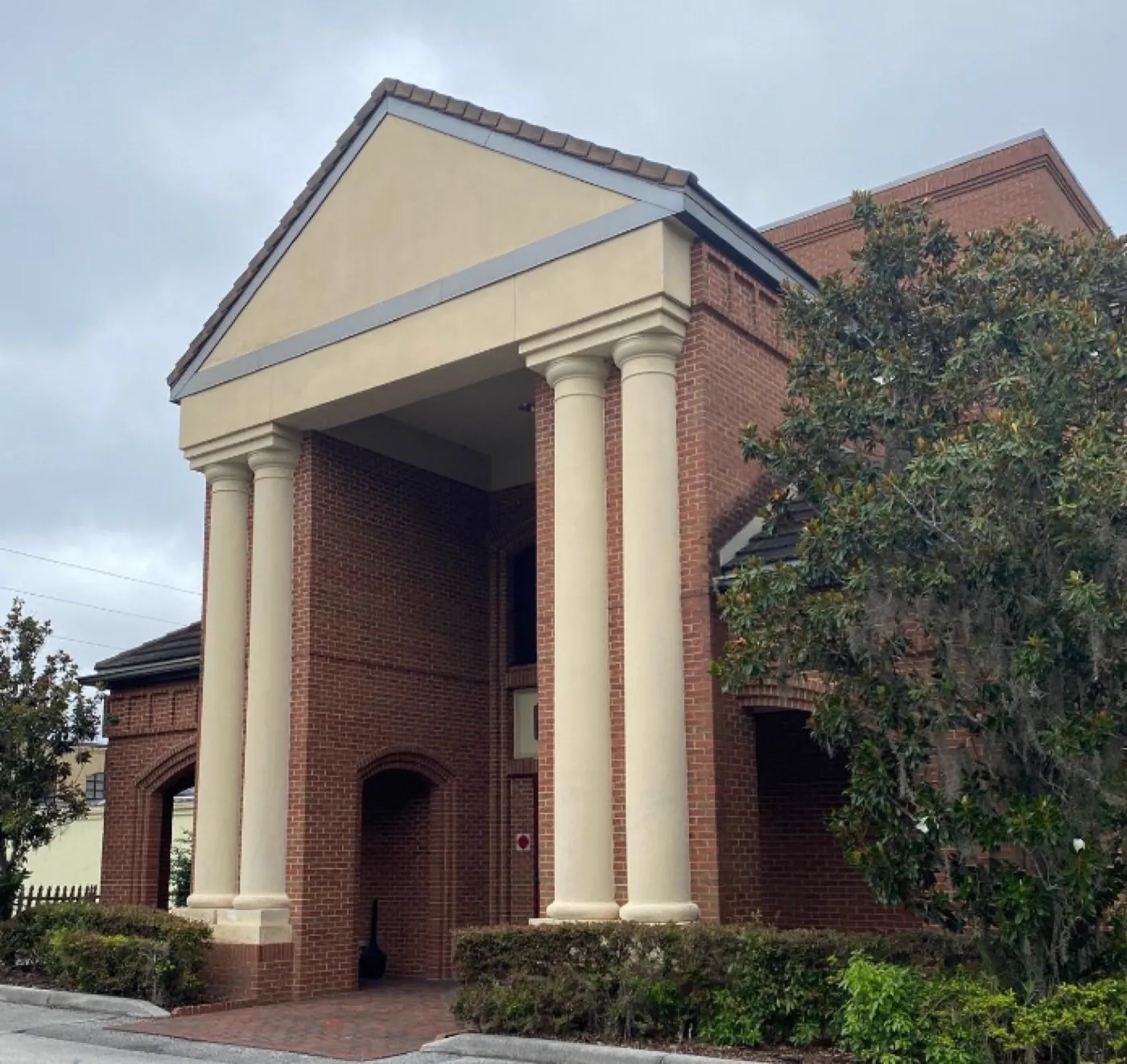
In person
We work with many major commercial plans and offer self-pay options. Coverage varies by plan and service. Our team will confirm with you.
Insurance questions go to our care team, who confirm your coverage with you before your first visit.
For many couples, yes. Sessions follow the same structure as in the office, and you can join from the same room or from two locations in Florida.
Yes. Both partners need to be physically in Florida during the session.
You can still start on your own. Call us to talk through how sessions would work, and read couples therapy for one.
Yes. In-person sessions are at our Lakeland office, 832 Florida Ave S Ste 1, Second Floor, Lakeland, FL 33801.
We work with many major commercial plans and offer self-pay options. Coverage varies by plan and service. Our team will confirm with you. Insurance questions go to our care team, who confirm your coverage with you before your first visit.
Send a request and a care coordinator will call you back, or call us now. Insurance questions go to our care team, who confirm your coverage with you before your first visit.