Kaylee Mills Brenneman, LMHC
EMDR, DBT, CBT, Mental Health Counseling
In person in Lakeland · video visits across Florida
EMDR Therapy · Lakeland office
In-person EMDR at our downtown Lakeland office with EMDR-trained therapists, plus video sessions across Florida.


You’ll see Kaylee Mills Brenneman, LMHC, Ashley Huston, RMHCI.
Start here
Request a visit
Tell us how to reach you. We confirm your coverage before your first visit.
Quick answer
EMDR therapy in Lakeland at Ascend Mind and Body is offered in person at our downtown office, 832 Florida Ave S Ste 1, Second Floor, by EMDR-trained therapists Kaylee Mills Brenneman, LMHC, and Ashley Huston, RMHCI, and by secure video for clients anywhere in Florida. We work with many major commercial plans and offer self-pay options. Coverage varies by plan and service. Our team will confirm with you.
Send the form or call (863) 510-2624. A care coordinator calls you back, usually within one business day, and confirms your coverage before your first visit.
Your therapist takes a history and builds coping skills first, in the office or by secure video.
EMDR sessions work on specific memories once you are ready, and your therapist checks progress with you throughout.
Pick a clinician and book a time that works for you.
EMDR, DBT, CBT, Mental Health Counseling
In person in Lakeland · video visits across Florida
Booking opens the clinician’s Zocdoc calendar in a new tab, set to new-patient video visits. Prefer to talk to someone first? Use the form and a care coordinator will call you.
Telehealth visits are for patients who are physically in Florida at the time of the visit. Florida residents only.
EMDR follows a set structure of eight phases, described by the EMDR International Association. Not every phase takes a whole session, and some, like closure, happen at the end of every visit.
Your therapist learns your history at a level of detail you are comfortable with, then works out with you which memories or present-day triggers to start with, and in what order.
You learn ways to settle your body and mind quickly, so those tools are ready before any hard memory is touched. This is also when trust gets built. For people with a heavy trauma history, the association notes this phase can take longer.
You choose one target memory and pin down the image, the negative belief about yourself, the emotion and the body sensation tied to it. You also pick the positive belief you would rather hold.
With the memory in mind, your therapist guides short sets of eye movements, sounds or taps. After each set you say briefly what came up, and the next set picks up from there.
Once the memory carries less charge, the focus turns to strengthening the positive belief you chose.
You bring the original memory back and notice whether any tension remains anywhere in your body. Whatever is left gets more processing.
Every session ends with you feeling steadier than when you came in, whether or not the memory is finished. Your therapist helps you use calming skills if it is not.
The next session opens by checking what has shifted since last time, and that decides where the work goes next.
From the outside, a reprocessing session does not look like much. The sets of eye movements, tones or taps are short, and between them your therapist asks something simple, such as what you notice now. You do not have to explain or analyze it. A few words are enough.
What comes up can change from one set to the next. A detail of the memory might sharpen and then fade. A different memory might surface. A wave of emotion or a physical sensation can rise and then ease. Your therapist keeps track of all of it, so you do not have to.
You stay in control throughout. You can raise a hand to stop a set whenever it feels like too much, and your therapist will help you come back to steady using the skills from preparation. There is time to settle before you leave, so you are not walking out onto Florida Avenue in the middle of something.
Processing can keep going between sessions. New thoughts, dreams or feelings about the memory may show up in the days after. A short journal of what you notice gives you and your therapist something concrete to look at during the next reevaluation.
Some clients prefer the office and others prefer home. Your therapist helps you weigh what fits your situation and your history before reprocessing begins.
EMDR was designed to help people recover from trauma and PTSD. It is often worth asking about when a specific event keeps intruding, such as a crash, an assault, a frightening diagnosis or a sudden death, or when strong reactions today seem tied to something older. If you dread having to tell the whole story out loud, EMDR relies less on detailed retelling than many talk-based approaches. Our PTSD page has more on symptoms and treatment options.
Reprocessing asks a lot of your nervous system, so it begins only once you have enough steadiness to handle it. Your therapist may spend more time on preparation, or point you to other care first, when:
Waiting is not a refusal. It is part of the method, and the skills you build in that time are useful on their own. If you are in crisis now, call or text 988.
Kaylee Mills Brenneman, LMHC, is the Therapy Lead for the Lakeland team, trained in EMDR, DBT and CBT. Ashley Huston, RMHCI, is a registered mental health counselor intern who is EMDR trained and practices under licensed clinical supervision. Both see clients at the Lakeland office and by video anywhere in Florida, and the care team pairs you with whichever one suits what you want to work on. See Kaylee’s profile or Ashley’s profile, or read more about therapy in Lakeland.
By secure video anywhere in Florida, or in person at our office.
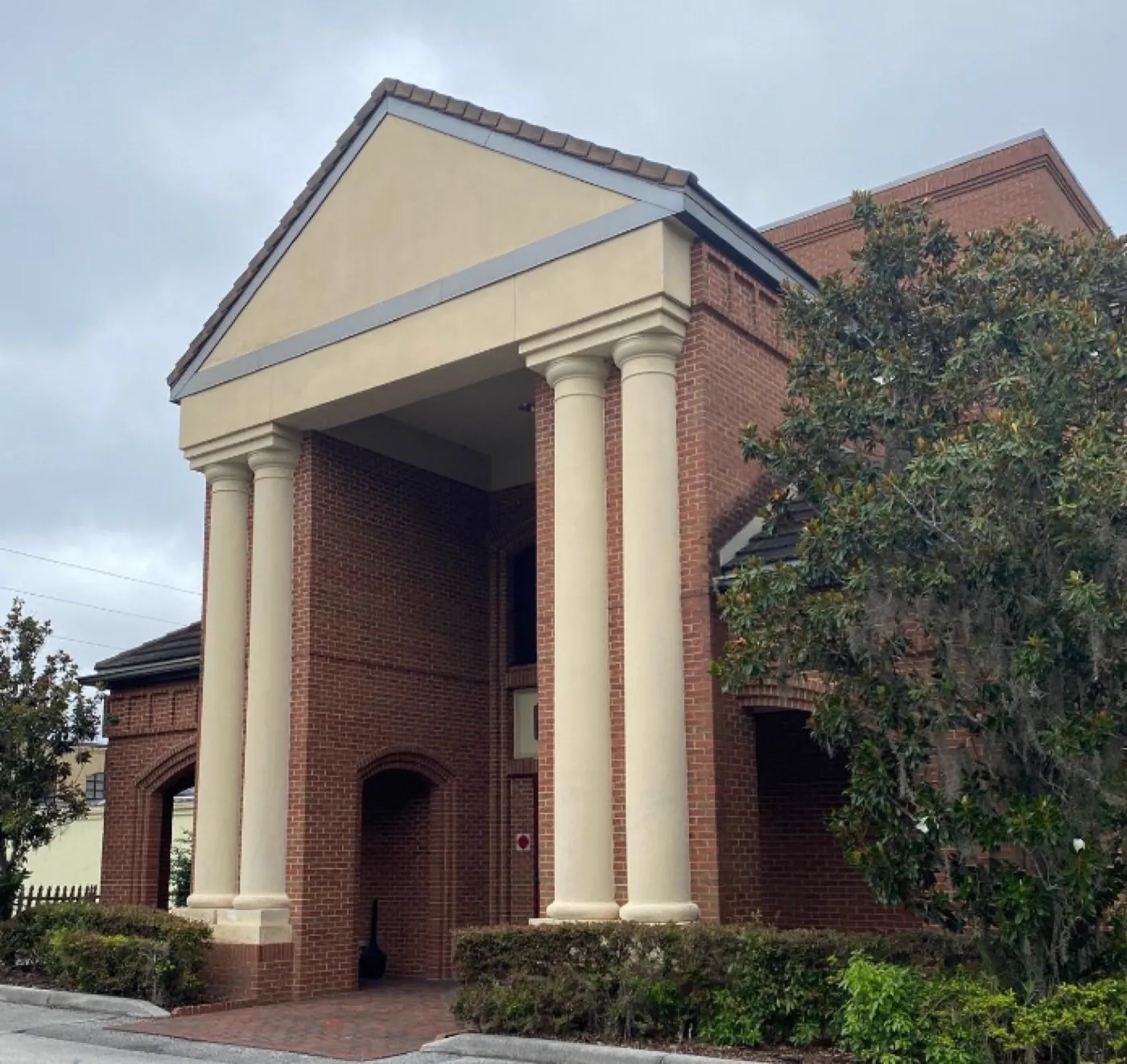
In person
Second floor, between Memorial Boulevard and Lime Street. Street parking is available plus a lot behind the building. Hours: Monday through Friday, 9:00 AM to 5:00 PM.
By video
We work with many major commercial plans and offer self-pay options. Coverage varies by plan and service. Our team will confirm with you.
Insurance questions go to our care team, who confirm your coverage with you before your first visit.
832 Florida Ave S Ste 1, Second Floor, Lakeland, FL 33801. Second floor, between Memorial Boulevard and Lime Street. Street parking is available plus a lot behind the building.
Kaylee Mills Brenneman, LMHC, our therapy lead, and Ashley Huston, RMHCI, both EMDR trained.
Yes. Many clients do EMDR by secure video anywhere in Florida; others prefer the office. Your therapist helps you decide what fits.
It depends on what you are working on. Your therapist reviews progress with you regularly and adjusts the plan.
We work with many major commercial plans and offer self-pay options. Coverage varies by plan and service. Our team will confirm with you. Insurance questions go to our care team, who confirm your coverage with you before your first visit.
Send a request and a care coordinator will call you back, or call us now. Insurance questions go to our care team, who confirm your coverage with you before your first visit.